
Trapped in the Feed: How Convenience Culture Is Rewiring Our Minds
In a world where everything is just a tap away, we’re trading patience, focus, and real connection for instant gratification—and it’s costing us more than we think.

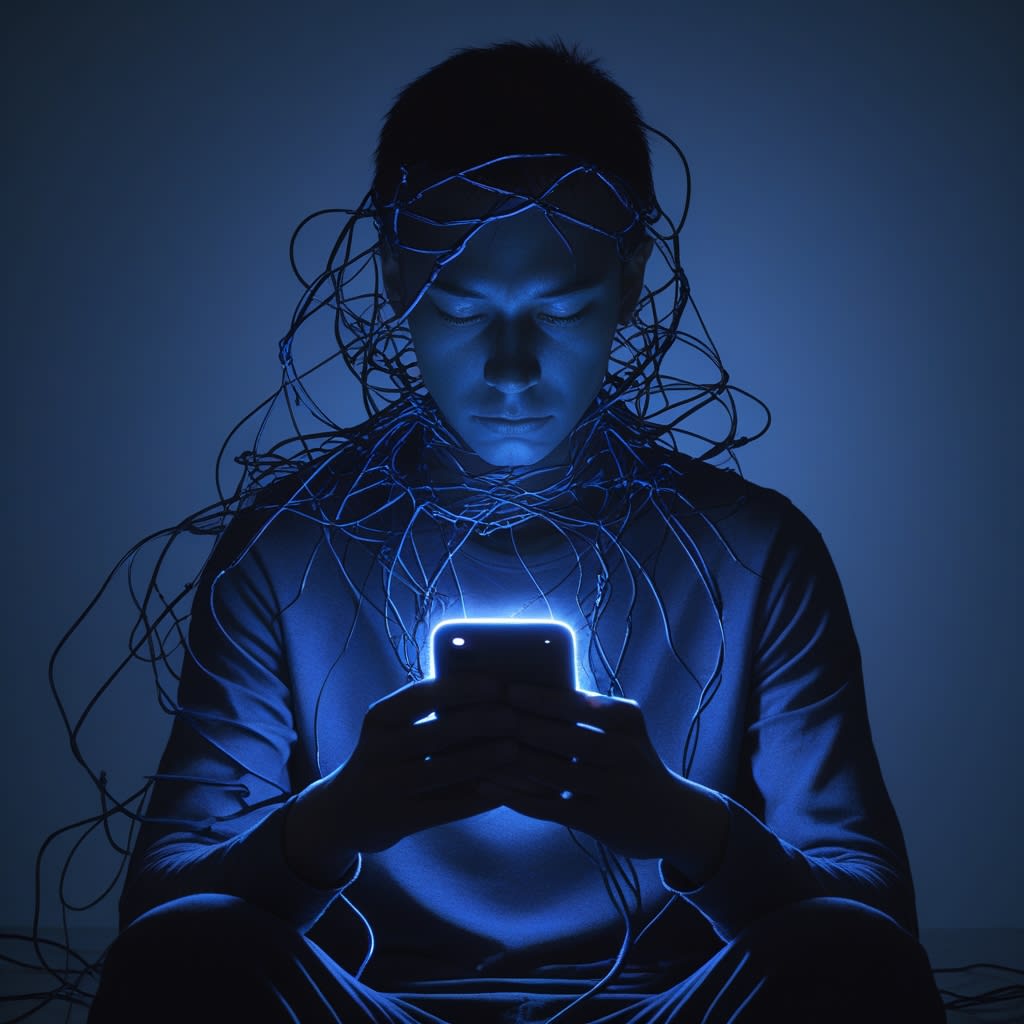
It starts innocently enough.
You wake up, reach for your phone, and scroll through notifications. A like here, a message there, a headline, a meme, a video. Before you’ve even stepped out of bed, you’ve consumed more information than your ancestors did in a day.
That’s convenience in action. It’s fast, frictionless, and addictive. And while it’s easy to celebrate the ways technology makes life easier, there’s a growing cost we don’t often stop to consider: our attention spans, mental clarity, and even our sense of self.
We’ve become trapped—not by force, but by design.
---
The Age of the Tap
We live in a time when nearly everything we want is just a tap away.
Need groceries? Tap.
A date? Tap.
A ride across town? Tap.
Entertainment? Tap, swipe, scroll.
The digital world is built for speed and simplicity, but this constant accessibility is quietly reshaping how we think and behave. We no longer expect things to take time. We grow restless when buffering lasts more than five seconds. We abandon articles halfway through (hopefully not this one). We switch songs before the first verse ends.
The brain adapts to the environments it’s exposed to. And in the environment of constant digital input, we’re being rewired for speed over depth, reaction over reflection.
---
The Dopamine Loop
Neuroscience tells us that every time we receive a notification, a like, or a message, our brain gets a hit of dopamine—the same chemical involved in reward and addiction.
Tech companies know this. In fact, they build their platforms to trigger these responses on purpose. It’s not a bug; it’s the business model.
This has created what’s called the dopamine loop:
You post something.
You wait for the likes.
You check repeatedly.
You feel a little rush when it arrives.
You want more.
Repeat.
It’s why we feel anxious when we forget our phones, and strangely empty after hours of scrolling. The brain is constantly seeking those tiny hits of validation, novelty, or distraction. Over time, this loop reduces our tolerance for boredom, silence, and introspection—things that are essential for creativity and emotional regulation.
---
Connection, Filtered
Ironically, the more “connected” we become, the more isolated many people feel.
Social media platforms present a curated version of life. Everyone’s smiling. Everyone’s achieving. Everyone’s doing better than you. But it’s a highlight reel, not reality. This distortion creates constant social comparison, leading to anxiety, imposter syndrome, and loneliness—especially among young users.
Face-to-face interactions are declining. Even phone calls feel intrusive now. Why talk when you can text? Why visit when you can FaceTime? Why be present when you can post about being present?
We’ve replaced depth with frequency, and we’re starving for real connection.
---
Convenience Is Changing Our Expectations
Not only are we rewiring our brains, but we’re also reshaping what we expect from life—and from each other.
We expect fast answers—not thoughtful ones.
We expect instant results—not earned progress.
We expect perfect service, instant replies, and constant access—forgetting that real life doesn’t work on-demand.
This mindset bleeds into relationships, work, education, and even self-worth. We struggle with patience, long-term goals, and discomfort. And when we don’t get what we want instantly, frustration builds.
We are becoming allergic to effort.
---
The Illusion of Control
One of the most seductive lies of convenience culture is the illusion that we’re in control. After all, we choose what to watch, where to scroll, what to order. But the reality is, we’re being nudged constantly—by algorithms, notifications, autoplay, and infinite scrolls.
You didn’t choose to watch five TikToks in a row; the app served them to you with precision. You didn’t mean to stay up until 2 a.m.—but the feed never ends.
The scariest part? Many of us don’t even realize it’s happening.
---
Is There a Way Out?
Yes—but it takes intention.
Escaping the trap of convenience culture doesn’t mean abandoning technology. It means reclaiming agency. Here are a few starting points:
Set boundaries: Limit screen time, especially at night. Use apps that block distractions.
Practice digital mindfulness: Ask yourself why you’re opening an app before you do.
Reclaim boredom: Let your mind wander. That’s where ideas live.
Prioritize real connection: Call a friend. Sit without your phone. Be fully present.
Slow down: Read a book. Cook without a timer. Do one thing at a time.
Convenience isn’t inherently bad. But unexamined convenience comes at the expense of awareness, presence, and growth.
---
Final Thoughts
We are the first generation to experience this level of digital immersion. The tools we’ve created are powerful—but they’re also powerful enough to change what it means to be human if we’re not careful.
You don’t need to abandon your phone or delete every app. But you do need to ask:
Am I using technology—or is it using me?
When we begin to question the feed, we begin to free ourselves from it.
About the Creator
Keep reading
More stories from Azmat Roman ✨ and writers in Journal and other communities.
The Hidden Cost of Convenience: How Technology is Reshaping Human Behavior
In just a few decades, technology has evolved from a helpful tool into a dominant force shaping how we think, interact, and function in society. We’ve come to expect speed, accessibility, and efficiency in almost every aspect of life—from ordering food to finding love, from navigating cities to managing finances. While these advancements have brought undeniable convenience, they have also triggered a fundamental shift in human behavior—often in ways we don’t fully understand or acknowledge.
By Azmat Roman ✨8 months ago in Journal
Author’s Advice
If you would’ve asked me 20 years ago did I know I’d become a writer and an author, I would’ve said “nope, ain’t happening”. As fate would have it I did become an author and I can honestly say I’m loving it so far. It really does feel good to be a writer. I’ve learned a lot on this journey and I feel like with even me being as new to this world as I am, there’s some wisdom I need to share with every other aspiring author.
By Joe Patterson5 days ago in Journal
Babbling Dixie
The short form of tomorrow is never the whole story. Abbreviations mean nothing when we are born to die and we all are aren't we? Being spoken for before birth is something we're not supposed to remember like some kind of karma after effect. Still here we are spending our lives looking for each other.
By Canuck Scriber Lisa Lachapelleabout 6 hours ago in Fiction



Comments
There are no comments for this story
Be the first to respond and start the conversation.