
Top 10 Features Mobile App Development Firms Deliver
Discover the top 10 features every mobile app development firm must deliver in 2025. Learn how these features drive growth, security & user engagement.

Mobile apps are no longer a luxury—they’re a necessity. In 2025, businesses across industries depend on apps to connect with customers, streamline operations, and stay competitive. But simply having an app isn’t enough. The real difference lies in how well the app performs, scales, and engages users.
Key Points:
- A professional mobile app development firm ensures apps are built for long-term growth, not just short-term use.
- Features like AI personalization, cloud integration, and AR/VR make apps innovative and competitive in 2025.
- Continuous updates and security measures are critical for retaining users and protecting brand trust.
This is where a professional mobile app development firm comes in. Unlike freelancers or DIY tools, these firms provide end-to-end expertise, from designing sleek interfaces to ensuring airtight security. More importantly, they integrate the right features that make an app future-proof, user-friendly, and business-driven.
1. Cross-Platform Compatibility

In today’s digital-first world, building an app for just one platform drastically limits reach and growth potential. Modern users expect flexibility—they want to start a task on their iPhone, continue it on an Android phone, and finish it on a tablet or desktop without disruptions. Meeting these expectations requires applications that are optimized for seamless performance across multiple devices.
Key Benefits of Cross-Platform App Development
- Wider Audience Reach: Businesses can target both iOS and Android users simultaneously instead of limiting themselves to one ecosystem.
- Reduced Development & Maintenance Costs: A single codebase minimizes duplication of effort, making updates and bug fixes faster and more cost-effective.
- Consistent User Experience: No matter the device, users enjoy the same design, features, and performance—boosting trust and engagement.
A skilled mobile app development company leverages cross-platform frameworks like Flutter, React Native, or Xamarin to build apps that run smoothly across iOS, Android, and even desktops with a single codebase. This approach not only reduces development costs but also accelerates time-to-market, ensuring businesses can scale faster while maintaining consistent user experiences.
Example: Netflix demonstrates this perfectly—its platform works seamlessly on smartphones, smart TVs, and tablets. By prioritizing cross-platform compatibility, Netflix delivers a uniform experience to millions of users worldwide.
2. AI-Powered Personalization

Today’s users don’t just want apps—they expect apps to “know them.” Generic experiences no longer cut it in a competitive market where attention spans are short and choices are abundant. This is where AI-powered personalization comes in. By leveraging machine learning algorithms and predictive analytics, modern mobile apps can adapt to individual user preferences in real-time, creating experiences that feel unique to each person.
Key Advantages of AI-Powered Personalization
- Tailored Recommendations: From shopping apps suggesting relevant products to fitness apps offering customized workout plans, AI ensures content matches user interests.
- Smarter Notifications: Instead of sending irrelevant alerts, AI triggers push notifications at the right time with the right message, improving engagement.
- Dynamic In-App Content: Apps can adjust layouts, feeds, or features based on user behavior, making every interaction feel personal and relevant.
This level of customization not only drives higher engagement but also builds loyalty—encouraging users to return repeatedly. For businesses, personalized apps often lead to stronger conversions and increased revenue since users are more likely to act on relevant suggestions.
Example: Spotify sets the gold standard here. Its AI-powered recommendations, like the iconic “Discover Weekly” playlist, curate music based on listening habits. This persona
3. Cloud Integration

In 2025, cloud technology will have become the backbone of scalable and secure mobile applications. Businesses can no longer rely solely on local storage or limited server setups if they want to deliver fast, reliable, and globally accessible digital experiences. Mobile app development firms now integrate cloud platforms such as AWS, Google Cloud, and Microsoft Azure to ensure apps can handle real-time data syncing, faster performance, and minimal downtime.
Key Benefits of Cloud Integration
- Seamless Multi-Device Access: Cloud-powered apps allow users to log in from smartphones, tablets, or desktops and instantly access the same synced data.
- Scalability on Demand: Businesses can scale up or down based on user traffic without compromising speed or performance, making apps future-proof.
- Enhanced Security & Reliability: Leading cloud providers offer built-in encryption, compliance features, and disaster recovery options to safeguard sensitive data.
Cloud integration also empowers businesses to manage massive volumes of data efficiently, run advanced analytics, and deliver smooth collaboration features across teams or customers. For users, this translates to a consistent, uninterrupted app experience regardless of where or how they log in.
Example: Dropbox is a textbook case of successful cloud integration. By storing files securely in the cloud, it allows users to access and share their documents anytime, anywhere—making it indispensable for both professionals and global enterprises.
4. Robust Security & Compliance

In the digital economy of 2025, security is not optional—it is mission-critical. A single data breach can shatter customer trust, invite legal consequences, and severely damage a brand’s reputation. As users share more personal and financial information through apps, the responsibility to protect this data has become a top priority for businesses. This is why leading mobile app development firms design apps with security and compliance at the core rather than as afterthoughts.
Key Security & Compliance Measures
- End-to-End Encryption: Ensures that sensitive user data is protected in transit and storage, making it unreadable to unauthorized parties.
- Biometric Authentication: Features like fingerprint scanning and facial recognition add an extra layer of security beyond traditional passwords.
- Regulatory Compliance: Adherence to global standards such as GDPR (Europe), HIPAA (healthcare), and CCPA (California) keeps apps legally compliant while safeguarding user privacy.
Additionally, professional developers integrate secure APIs, advanced firewalls, and multi-factor authentication (MFA) to build resilient app architectures. These proactive strategies not only protect users but also give businesses a competitive edge by signaling reliability and trustworthiness in crowded markets.
Example: Revolut, a global fintech leader, thrives in one of the most security-sensitive industries thanks to its robust data protection, biometric logins, and strict compliance with financial regulations. Its success demonstrates how prioritizing security and compliance can drive customer confidence and market growth.
5. Offline Functionality

In an increasingly connected world, it’s easy to forget that not every user enjoys consistent internet access. Yet, connectivity gaps remain common—whether in rural areas, during travel, or in regions with unreliable networks. For this reason, offline functionality has become a crucial feature in modern app development. Mobile app firms now design applications that ensure critical tasks like browsing, data entry, or navigation continue to work seamlessly even without internet access.
Key Benefits of Offline Functionality
- Uninterrupted User Experience: Users can keep engaging with core app features regardless of connectivity, which reduces frustration and abandonment.
- Critical Use in Key Industries: Offline capabilities are especially valuable for travel apps (maps, tickets), logistics platforms (delivery tracking), and educational apps (course access).
- Data Syncing Once Online: Information entered offline automatically updates once the connection is restored, ensuring accuracy and continuity.
This approach not only enhances usability but also increases customer satisfaction and trust—especially in sectors where downtime can have real consequences. By removing dependency on constant connectivity, businesses make their apps more reliable and accessible to global audiences.
Example: Google Maps is a prime illustration of offline-first design. By allowing users to download maps and routes, it empowers travelers to navigate confidently even in remote areas with no signal, making it an indispensable tool worldwide.
6. Seamless UI/UX Design
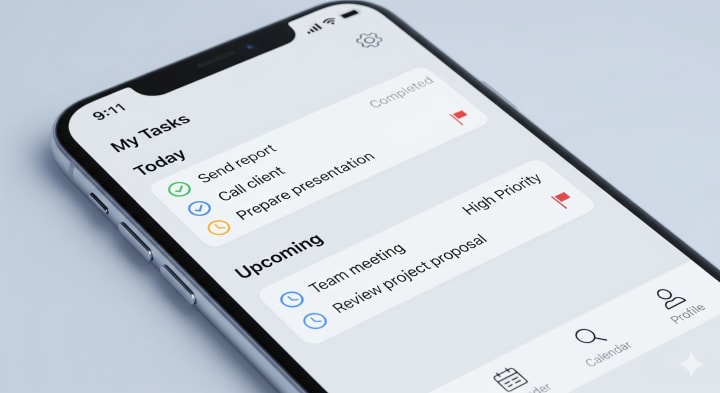
In mobile apps, first impressions are everything. A cluttered interface, confusing navigation, or slow interactions can cause users to uninstall within minutes. To prevent this, mobile app development services firms put a strong emphasis on UI/UX design—ensuring that every interaction feels intuitive, enjoyable, and accessible. A well-designed app doesn’t just look good; it builds trust, encourages longer sessions, and increases retention rates.
Core Principles of Seamless UI/UX Design
- Intuitive Navigation: Menus and buttons are designed to be simple and predictable, so users never feel “lost” inside the app.
- Clean & Responsive Layouts: Minimalist, well-structured interfaces ensure fast performance across devices while reducing cognitive load.
- Accessibility Features: Incorporating voice commands, screen reader compatibility, and high-contrast modes makes apps usable for a wider audience.
To guarantee quality, professional app developers also conduct usability testing with real users, gathering feedback to refine flows and remove friction points. This iterative approach ensures that apps stay both visually appealing and functionally efficient.
Example: Airbnb’s app is a model of excellent design. Its simple, elegant interface and intuitive booking process make it easy for millions of users worldwide to browse, select, and book accommodations seamlessly. This focus on user experience has been central to Airbnb’s global success.
7. Scalable Architecture

An app that works well today may not meet the demands of tomorrow. As businesses grow, user traffic increases, new features are added, and integrations with third-party tools become necessary. Without a scalable architecture, apps risk crashing, slowing down, or requiring a costly rebuild. To prevent this, professional mobile app development firms design apps with scalability at the core, ensuring smooth performance even as demand multiplies.
Key Advantages of Scalable App Architecture
- Supports Growing User Traffic: Apps can handle spikes in active users without downtime, which is vital for e-commerce, fintech, and on-demand platforms.
- Flexibility with Features & Integrations: Modular coding and robust APIs allow developers to add or update features without disrupting the entire system.
- Cost-Effective Future-Proofing: Investing in scalable architecture now saves businesses from expensive overhauls later when user bases expand.
Many firms rely on microservices architecture, modular development practices, and cloud-based infrastructure to build apps that can adapt as the business evolves. This future-ready approach not only ensures app stability but also gives companies the agility to innovate faster than competitors.
Example: Uber is a perfect example of scalability in action. By building its platform on a microservices architecture, it successfully expanded across the globe, handling millions of rides, drivers, and real-time interactions simultaneously without compromising user experience.
8. Push Notifications & Engagement Tools

For mobile apps, user engagement is the ultimate growth driver. Even the most feature-rich apps can struggle if users aren’t encouraged to return regularly. That’s why professional mobile app development firms integrate push notifications and engagement tools designed to re-engage users in meaningful, personalized ways. These tools—when implemented strategically—help maintain user interest, boost retention, and drive repeat business.
Key Engagement Strategies
- Personalized Push Notifications: Instead of sending generic messages, AI-driven systems tailor alerts based on user behavior, preferences, and past activity.
- Loyalty & Rewards Programs: Gamification, discounts, and points-based systems encourage users to come back and interact more often.
- In-App Chatbots & Messaging: Smart assistants provide instant support, answer queries, and guide users—enhancing satisfaction and reducing churn.
- The key is balance: too many irrelevant notifications can annoy users, but well-timed, valuable interactions create trust and long-term loyalty. By using analytics and customer insights, app firms craft engagement strategies that feel natural and user-focused rather than intrusive.
Example: Starbucks leverages push notifications brilliantly. Sending tailored offers based on customer preferences and buying history drives higher sales while motivating customers to make repeat visits. This strategy has been a cornerstone of Starbucks’ successful digital engagement.
9. Integration with Emerging Tech (AR/VR, IoT, Blockchain)

In today’s competitive app market, simply meeting basic functionality is no longer enough. To truly stand out, apps must embrace innovation through emerging technologies. Mobile app development firms now incorporate advanced tools like augmented reality (AR), virtual reality (VR), Internet of Things (IoT), and blockchain to transform user experiences and open new business opportunities. These integrations not only enhance customer engagement but also future-proof apps by keeping them aligned with the latest digital trends.
Key Advantages of Emerging Tech Integration
- Augmented & Virtual Reality (AR/VR): Creates immersive experiences in industries like retail (try-before-you-buy), real estate (virtual property tours), and gaming (interactive worlds).
- Internet of Things (IoT): Enables apps to connect with smart devices—think health monitors, home automation, or logistics tracking systems—delivering real-time insights.
- Blockchain Security & Transparency: Enhances trust in sectors like fintech and supply chain by enabling secure transactions and tamper-proof records.
By combining these technologies, businesses can differentiate themselves in crowded markets and offer users features that competitors can’t easily replicate. Whether it’s personalizing shopping with AR or securing digital payments with blockchain, emerging tech takes apps from functional to innovative.
Example: IKEA’s AR-powered app allows customers to visualize furniture in their own homes before making a purchase. This not only improves confidence in buying decisions but also creates a unique and engaging shopping journey—setting IKEA apart from traditional retailers.
10. Continuous Support & Updates

Launching an app is only the first step—the real challenge lies in sustaining its performance and relevance over time. With evolving user expectations, new operating system updates, and constant security threats, apps that don’t adapt risk becoming outdated or vulnerable. That’s why professional mobile app development firms emphasize continuous support and updates as part of their long-term service offerings.
Key Benefits of Ongoing App Support
- Bug Fixes & Performance Optimization: Regular updates resolve technical glitches, improve speed, and ensure the app runs smoothly across devices.
- Security Patches & Compliance: Frequent monitoring helps identify vulnerabilities and implement updates that keep the app aligned with the latest compliance standards.
- Feature Enhancements: Adding new functionalities and refining user experiences ensures apps remain competitive and meet changing customer needs.
Most top-tier firms offer maintenance contracts that include monitoring, performance audits, and proactive upgrades. This ongoing commitment not only extends an app’s lifecycle but also safeguards the business investment behind it.
Example: WhatsApp demonstrates the power of continuous improvement. Through regular updates, it strengthens privacy, improves security, and introduces new features—ensuring it remains one of the most relevant and widely used apps in the world.
Conclusion
In a digital-first world, your app is often the first interaction customers have with your brand. A generic app may get you started, but it won’t take you far. By partnering with the right mobile app development firm, you gain access to innovation, robust security, and future-ready technologies that transform your app into a growth engine.
If you’re planning your next app, don’t just think about today—choose a partner that integrates these 10 must-have features and prepares your business for the future.
FAQs
Q1. What does a mobile app development firm do?
A mobile app development firm designs, builds, tests, and maintains apps for iOS, Android, and web platforms, ensuring they’re secure, scalable, and user-friendly.
Q2. Why should I hire a mobile app development firm instead of freelancers?
Firms provide a complete team of designers, developers, and security experts. They offer scalability, long-term support, and compliance, which freelancers often lack.
Q3. How much does it cost to hire a mobile app development firm?
The cost ranges from $20,000 to $150,000+, depending on app complexity, features like AI or AR/VR, and whether it’s built for one or multiple platforms.
Q4. Which industries benefit the most from mobile app development firms?
Healthcare, fintech, e-commerce, logistics, and education industries rely heavily on professional app firms for custom, compliant, and scalable solutions.
Q5. How do mobile app firms ensure app security?
They implement end-to-end encryption, secure APIs, multi-factor authentication, and compliance with global data protection regulations like GDPR and HIPAA.
Q6. What are the latest trends in mobile app development firms in 2025?
Top trends include AI-powered personalization, blockchain integration, AR/VR for immersive experiences, and cloud-native apps for scalability.
Q7. How long does it take for a firm to develop a mobile app?
Timelines range between 3–9 months, depending on the complexity, integrations, and testing needed. Enterprise apps may take longer.
Q8. Do mobile app development firms provide support after launch?
Yes. Most firms offer ongoing maintenance, including updates, bug fixes, performance optimization, and security monitoring to keep the app competitive.
About the Creator
Theo's Blogs
Passionate about SEO and Software Development, I help businesses grow with cutting-edge web, mobile, and AI solutions. Working at TechVerdi.
Keep reading
More stories from Theo's Blogs and writers in Journal and other communities.
How AI Tools Are Speeding Up Software Development Lifecycle
In the fast-evolving world of software development, efficiency, accuracy, and scalability have become non-negotiable. Traditional development cycles—marked by lengthy planning, manual testing, and time-consuming deployments—can no longer meet the demands of modern digital transformation. That’s where AI steps in.
By Theo's Blogs7 months ago in Journal
Guard Your Battery
Why are some people so attractive just by standing there? It’s not because they are "likable," but because they don’t need everyone to like them. I realized later that truly charismatic people allow themselves to be criticized, but they never criticize themselves. They never try to please the world; instead, the world stops to watch them.
By Emily Chan - Life and love sharing3 days ago in Poets




Comments
There are no comments for this story
Be the first to respond and start the conversation.