
Top 09 reasons to choose Semrush over Similarweb
In this article we have described and illustrated 09 reasons why you should choose Semrush over Similarweb for your marketing campaigns.
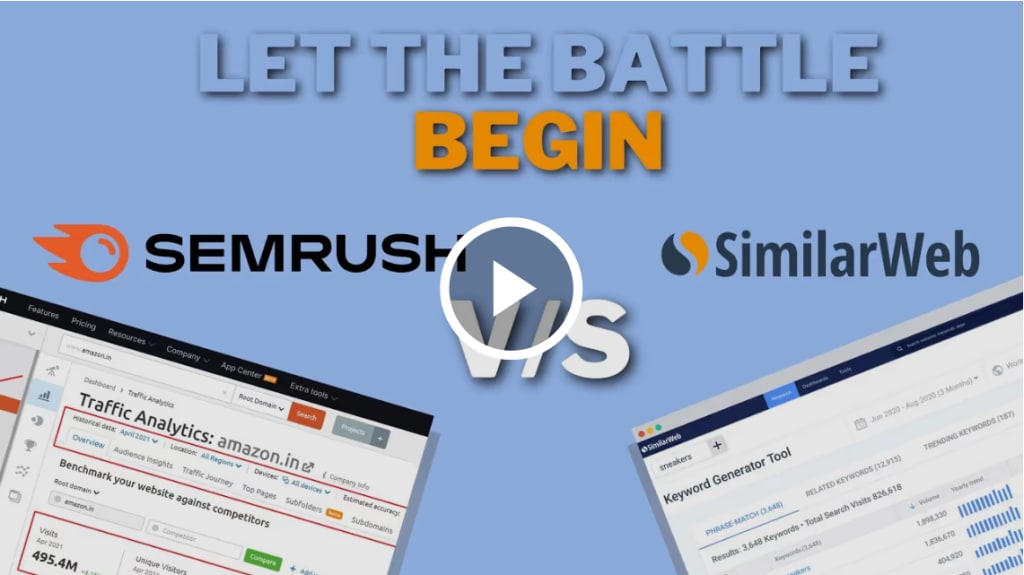
Want to know which tool is better for competitor analysis and keyword research Semrush or Similarweb? And which one gives more accurate data?
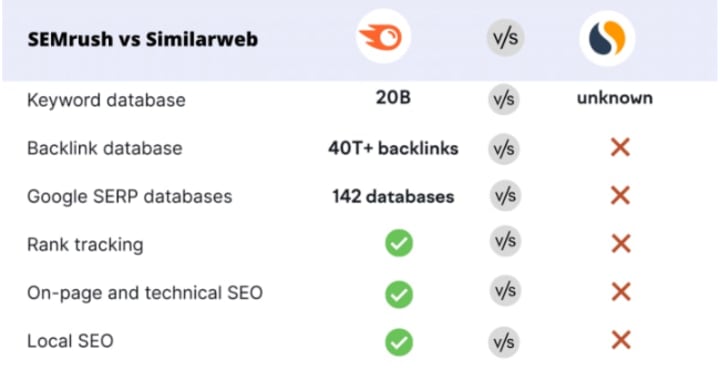
Key Difference #1: Comparing Semrush's Traffic Analytics with Similarweb
Semrush provides a robust Traffic Analytics tool that covers website traffic stats, sources, SEO performance, paid search (PPC), and social media insights—all in one place.
In contrast, Similarweb primarily focuses on website traffic statistics, with limited depth in areas like SEO or PPC.
While Similarweb is often used to explore traffic sources and uncover potential opportunities, Semrush allows users to do all that—and much more—through its more comprehensive analytics suite.
Why Choose Semrush?
It offers broader functionality and deeper insights compared to Similarweb, making it a more versatile tool for digital marketing analysis.
Key Difference #2: Advanced Competitive Analysis
Similarweb is well-known for its web traffic statistics and monitoring capabilities. It allows users to track competitor performance, discover growth opportunities, and compare websites to uncover key insights that can guide strategic decisions.
However, Semrush goes a step further with a more advanced, all-in-one marketing toolkit. It includes everything Similarweb offers, along with deeper, SEO-driven competitive intelligence. What sets Semrush apart is how seamlessly its tools work together—offering a more connected and insightful analysis experience.
With Semrush, you can access:
- Competitor SEO gaps and weaknesses
- In-depth backlink analysis
- Keyword rankings and SERP positions
- Top-performing pages
- Paid campaign insights (PPC)
Why Choose Semrush?
Semrush delivers far more detailed and actionable competitive data than Similarweb—making it a better fit for marketers looking for an edge in SEO, content strategy, and digital advertising.
Key Difference #3: Larger and More Accurate Data Coverage
Both Semrush and Similarweb use their own systems to gather and process data, and the accuracy of that data depends on their sources and methodologies.
Semrush:
Semrush stands out for the sheer scale and depth of its database. It offers one of the largest data sets in the industry, continuously growing and updated. Data is sourced from over 190 countries and regions, and Semrush deploys numerous crawlers across search engines and websites to ensure comprehensive coverage.
One of Semrush’s biggest advantages is that all regional data is included under a single subscription—unlike Similarweb, which may charge extra for access to country-specific data.
As of now, Semrush's database includes:
- 500 TB of clickstream data collected from over 200 million global panelists
- 19.8+ billion keywords
- 48.3 trillion backlinks (with over 17.9 million URLs crawled daily)
- Over 1 billion Google Ads
Why Choose Semrush?
With more extensive, accurate, and up-to-date data, Semrush offers a clear advantage—especially for marketers needing global insights without additional costs.
Similarweb:
Similarweb also employs a strong crawling infrastructure and gathers clickstream data to deliver web traffic insights across various regions. Like Semrush, it collects analytics from search engines and websites using real-time data signals.
However, the exact size of Similarweb’s dataset is not publicly disclosed, making it difficult to gauge its full scope. What we do know is that Similarweb does maintain a large database—but how it compares in scale to Semrush remains unclear.
Another key limitation: Similarweb requires users to purchase access to regional databases separately. If you want traffic insights from multiple countries, you’ll need to pay more, which can quickly add up.
Data Accuracy: Semrush vs. Similarweb
Semrush has made notable improvements in data accuracy, especially with recent investments and advancements in its AI and machine learning systems. While no tool can deliver perfect accuracy, Semrush tends to provide data that is closer to real-world numbers—particularly across a broader range of websites, including small and mid-sized domains.
In contrast, Similarweb is more reliable for analyzing larger websites. It gives a general overview of traffic sources and keywords, but its data often lacks depth for smaller or niche websites. In many cases, Similarweb may display no data at all for lesser-known domains, and its keyword stats can differ noticeably from actual Google results.
Key Difference #4: Social Media Analysis
With similarweb, you can know the traffic that website gets from different social platforms as traffic sources.
Furthermore, you can view how much traffic is directed from a social site on specific time periods, total number of users visit, referring to social pages and traffic shares from different social platforms.
But with Semrush you get a more lethal weapon than similarweb. Trust me, It has a combined social media analysis tool that I doubt you find anywhere else.
Semrush social media tool not only give you all social traffic statistics but also let you track different social platforms with an amazing tracking tool known as Social Media Tracker.
And, with this tracker, you can easily keep an eye on competitor’s social profiles and gather precious information like,
- What they do on social media
- How consistent they post
- All the content they post and their engagements
- Effective engagement practices
- And all the other activities
Reason to choose Semrush: Semrush social tracker tool digs deeper and provides more valuable data that I think is really helpful to win social media game. Whereas similarweb only shows traffic drive from social media platforms as traffic sources.
Key Difference #5: Superior Keyword Research Tools
Semrush is widely recognized for its advanced keyword research capabilities, built on a database of over 20 million regularly updated keywords. It offers two standout tools:
Keyword Magic Tool – Just enter a target keyword, select your country, and get thousands of keyword suggestions. You can view key metrics like:
- Search Volume
- Keyword Difficulty (KD)
- CPC (Cost Per Click)
- Competitive Density (for PPC)
- SERP Features
- Top Ranking Competitors
- Trend Graphs
Plus, there are powerful filters to refine your research—like question-based keywords, broad match, phrase match, exact match, and related terms. You can also include/exclude keywords and filter by word count or frequency.
Competitor Keyword Research – Enter a competitor's domain to uncover their ranking keywords, traffic volume, keyword positions, and top-performing pages.
Another standout feature is Keyword Gap Analysis, which shows you keywords your competitors rank for that you don’t—perfect for finding missed opportunities.
Similarweb also provides keyword tools, including:
A Keyword Generator Tool that gives you related keywords with search volume, CPC, and yearly trends.
Filters like phrase match, trending keywords, and question queries.
However, the keyword tool in Similarweb lacks depth. Notably missing is the Keyword Difficulty score, which makes it harder to determine how competitive or achievable a keyword is. It also lacks advanced filtering options like broad match, exclude/include filters, and word frequency controls.
For competitor keyword analysis, Similarweb lets you view a domain’s ranking keywords, traffic share, and positions. But again, no KD score is available, limiting the value of its insights.
Why Choose Semrush?
Semrush offers far more precision and control in keyword research, with detailed metrics like KD score and superior filtering. It’s ideal for both SEO professionals and PPC strategists looking for data-driven keyword planning.
Click here, continue to read the full comparison of Semrush vs Similarweb.
This post first & originally appeared on Semclouds.
ABOUT AUTHOR
Basant Kumar is an SEO expert, having experience of 4+ years in Blogging & Online Business. If you want to know all tactics and strategies to grow online then you should read his blog Semclouds.
About the Creator
Author’s Advice
If you would’ve asked me 20 years ago did I know I’d become a writer and an author, I would’ve said “nope, ain’t happening”. As fate would have it I did become an author and I can honestly say I’m loving it so far. It really does feel good to be a writer. I’ve learned a lot on this journey and I feel like with even me being as new to this world as I am, there’s some wisdom I need to share with every other aspiring author.
By Joe Patterson3 days ago in Journal




Comments
There are no comments for this story
Be the first to respond and start the conversation.