
Title: Protests Erupt in Cuba as Demonstrators Target Ruling Party Office Amid Widespread Blackouts
Power outages and economic hardships fuel public anger as tensions rise across the island
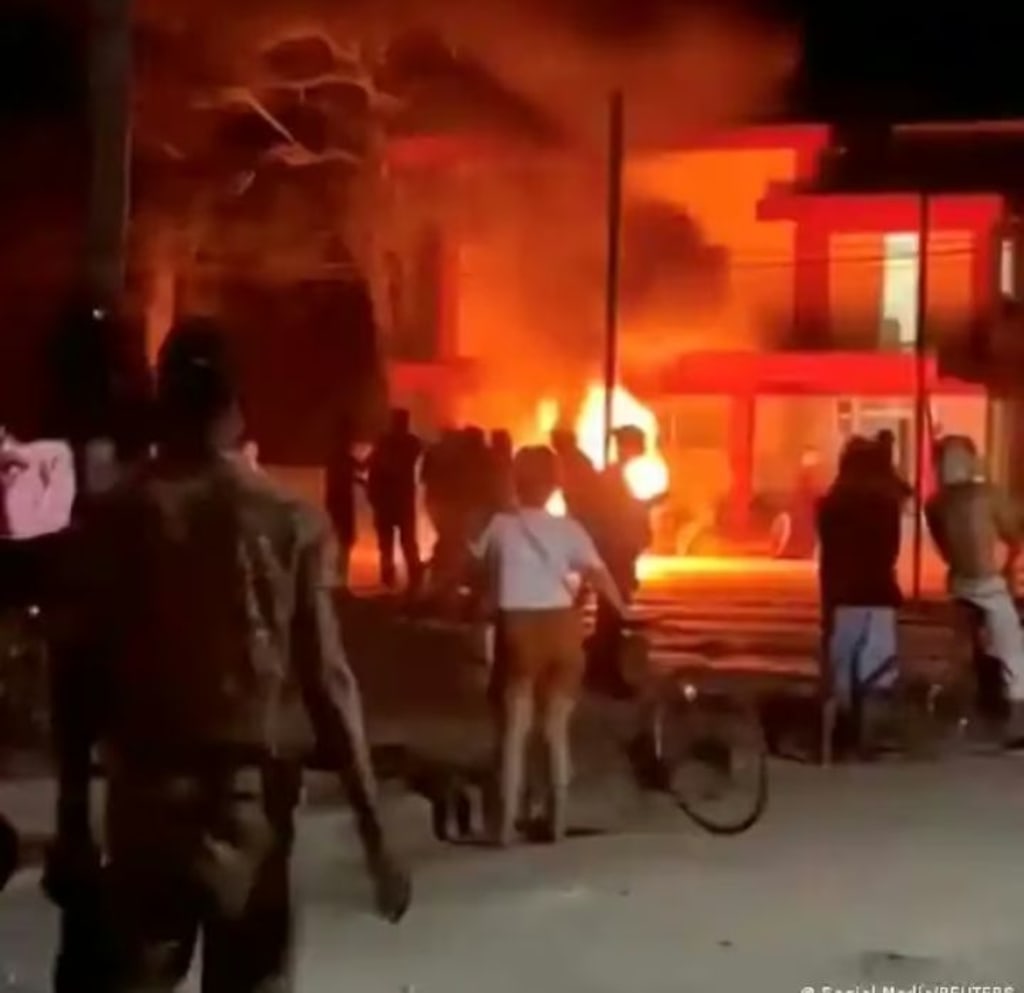
Public frustration in Cuba has erupted into protests after demonstrators attacked a local office of the ruling political party during ongoing nationwide blackouts. The incident highlights the growing tension on the Caribbean island as citizens struggle with severe electricity shortages, economic hardship, and declining living conditions.
The attack occurred after days of prolonged power outages that have disrupted daily life across multiple provinces. Residents, already coping with food shortages and high inflation, have increasingly voiced their anger toward authorities responsible for managing the country’s fragile energy system.
While protests in Cuba remain relatively rare due to strict political controls, recent demonstrations suggest that public patience is wearing thin.
Blackouts Push Communities to the Edge
Electricity shortages have become one of the most pressing issues facing Cuban households. In many regions, residents have experienced extended blackouts lasting several hours or even most of the day.
These outages have affected nearly every aspect of daily life. Businesses struggle to operate, hospitals rely heavily on backup generators, and families face difficulties preserving food or staying cool in the island’s tropical climate.
The situation has been particularly challenging during periods of extreme heat, when electricity is needed for fans and air conditioning.
Many Cubans say the outages are becoming longer and more frequent, prompting growing anger toward officials responsible for the national power grid.
Protesters Target Local Party Office
In one of the most dramatic expressions of public frustration, protesters gathered outside an office belonging to the ruling Communist Party of Cuba.
Witnesses reported that demonstrators shouted slogans and demanded immediate solutions to the electricity crisis. As tensions escalated, some protesters reportedly threw objects and damaged parts of the building.
The incident quickly attracted attention across the island, particularly because political protests are uncommon in the tightly controlled political system.
Authorities responded by increasing security in the area and attempting to disperse the crowd. While details about arrests remain limited, government officials have emphasized the need to maintain public order.
A Fragile Energy System
Cuba’s electricity crisis has deep structural roots. Much of the country’s power generation infrastructure is aging and frequently suffers from breakdowns.
Many power plants were built decades ago and have struggled to keep up with maintenance needs due to limited resources and economic constraints.
Fuel shortages have further complicated the situation. Cuba relies heavily on imported fuel to run its thermal power plants, and disruptions in supply can quickly lead to nationwide electricity deficits.
When multiple power units experience technical problems at the same time, the grid becomes extremely vulnerable to large-scale blackouts.
Energy officials have acknowledged that repairs and upgrades are urgently needed, but progress has been slow.
Economic Pressures Add to Public Anger
The electricity crisis is unfolding against the backdrop of a broader economic downturn.
Cuba’s economy has been under pressure for several years, affected by declining tourism revenues, global inflation, and reduced access to foreign currency.
Food prices have risen sharply, and many basic goods remain difficult to obtain. Long lines outside grocery stores and ration shops have become a common sight in several cities.
For many families, the combination of economic hardship and frequent power outages has created an atmosphere of deep frustration.
Public anger has been particularly visible on social media, where residents regularly share photos and videos documenting blackouts and daily struggles.
Government Promises Solutions
Cuban authorities say they are working to stabilize the country’s electricity supply. Officials have announced emergency maintenance programs aimed at repairing damaged power plants and restoring generating capacity.
The government is also attempting to secure additional fuel shipments to keep thermal power stations running.
In recent statements, leaders have acknowledged the hardships faced by citizens and urged patience as repairs continue.
However, critics argue that deeper structural reforms are necessary to address the root causes of the crisis.
Energy experts have long warned that without major investment in modern infrastructure, Cuba’s power grid will remain vulnerable to frequent outages.
Renewable Energy as a Long-Term Goal
In response to ongoing energy challenges, Cuba has been exploring renewable energy projects as a potential long-term solution.
Solar farms and wind power installations are gradually being introduced in several parts of the country. These projects aim to reduce dependence on imported fossil fuels while strengthening the resilience of the national grid.
However, renewable energy development requires substantial investment and technical resources, which can be difficult to secure given the country’s financial limitations.
As a result, the transition toward cleaner energy sources is expected to take many years.
A History of Rare Protests
Public protests in Cuba are relatively uncommon due to strict political regulations and limited space for organized dissent.
However, in recent years, economic hardship and social frustration have occasionally sparked demonstrations in different parts of the country.
These events often attract international attention because they provide rare glimpses of public opposition within the island’s political system.
The latest protests linked to electricity shortages suggest that energy issues are becoming a particularly sensitive topic for Cuban authorities.
When basic services such as electricity become unreliable, the impact on everyday life can quickly translate into public anger.
Uncertain Weeks Ahead
As Cuba continues to face widespread power outages, tensions between citizens and authorities may remain high. Much will depend on how quickly the government can restore stable electricity supplies.
If repairs to major power plants succeed and fuel shipments increase, the situation could gradually improve.
However, if blackouts persist, protests could become more frequent in communities struggling to cope with daily disruptions.
For many Cubans, the issue goes beyond electricity alone. It reflects deeper concerns about economic stability, infrastructure, and the future direction of the country.
A Test for the Government
The protests targeting the ruling party office represent a significant moment for Cuba’s leadership. Managing the electricity crisis will require not only technical solutions but also effective communication with a population increasingly frustrated by everyday hardships.
Ensuring reliable power supply is essential for economic recovery, public confidence, and social stability.
As the island navigates these challenges, the events unfolding during the blackout crisis may become an important chapter in Cuba’s evolving political and economic story.
For now, the flicker of electric lights across the island has become more than a simple convenience—it has become a symbol of hope, frustration, and the urgent need for change.
About the Creator
Author’s Advice
If you would’ve asked me 20 years ago did I know I’d become a writer and an author, I would’ve said “nope, ain’t happening”. As fate would have it I did become an author and I can honestly say I’m loving it so far. It really does feel good to be a writer. I’ve learned a lot on this journey and I feel like with even me being as new to this world as I am, there’s some wisdom I need to share with every other aspiring author.
By Joe Patterson4 days ago in Journal
Circadian Rhythm Doesn’t End When You Walk Indoors
Most people think of circadian rhythm as something connected primarily to daylight and nighttime. The rising sun signals the body to wake up. The darkness of evening encourages rest. For thousands of years, this natural cycle regulated how humans slept, worked, and recovered.
By illumipure6 days ago in Journal



Comments
There are no comments for this story
Be the first to respond and start the conversation.