
Tire Pyrolysis Machine: Revolutionizing Tire Recycling for a Sustainable Future
Revolutionizing Tire Recycling

The growing global waste tire problem is a significant environmental concern, with millions of tires discarded each year, often ending up in landfills or being incinerated. To tackle this issue, the innovative technology of tire pyrolysis has emerged as a sustainable and profitable solution. A tire pyrolysis machine (also known as a tyre pyrolysis machine) is at the forefront of this solution, offering an effective way to recycle tires into valuable by-products.
In this blog, we’ll explore how tire pyrolysis machines work, the benefits of investing in them, and why they’re considered a game-changer for the recycling industry.
What is Tire Pyrolysis?
Tire pyrolysis is a thermal decomposition process that breaks down used or waste tires into valuable products under controlled heat in the absence of oxygen. The process involves heating tires at temperatures ranging from 300°C to 800°C to produce various useful by-products, including:
- Pyrolysis Oil (also known as Tire-derived oil): A liquid fuel that can be further refined and used as an alternative to diesel or fuel oil.
- Carbon Black: A valuable material used in manufacturing rubber, paints, inks, and as a component in other industrial applications.
- Steel Wire: Extracted from the tire during the pyrolysis process, this steel can be recycled and used in various industries.
- Syngas (Synthesis Gas): A gaseous by-product that can be used as a fuel to power the pyrolysis process, making the system energy-efficient.
How Does a Tire Pyrolysis Machine Work?
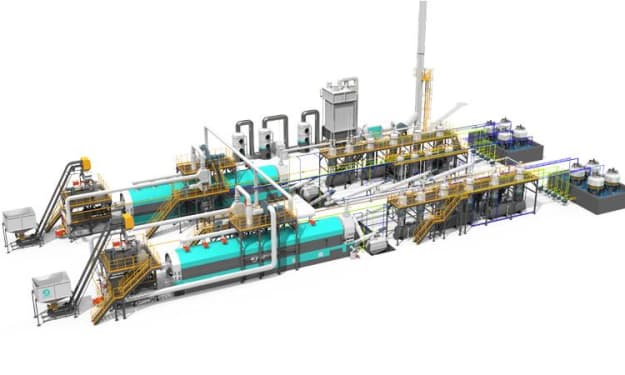
A tyre pyrolysis machine operates through a carefully controlled process to ensure maximum efficiency and output. Here’s a step-by-step breakdown of how the machine works:
Pre-Treatment of Tires: The first step involves preparing the tires for pyrolysis. Tires are often shredded into smaller pieces to increase surface area, improving the efficiency of the pyrolysis reaction. The size of the pieces can vary depending on the machine’s capacity.
- Feeding the Tires into the Reactor: The shredded tires are then fed into the pyrolysis reactor, which is sealed and subjected to heat. The reactor is a high-temperature vessel designed to maintain the required temperature in the absence of oxygen, ensuring the tires decompose without combustion.
- Pyrolysis Reaction: As the temperature increases, the tires undergo a chemical breakdown, transforming into liquid oil, gas, and solid carbon black. This process typically takes several hours, depending on the machine’s size and the feedstock used.
- Separation of By-Products: During the process, syngas is produced. This gas can be used as fuel to power the pyrolysis system, significantly reducing energy costs. Pyrolysis oil and carbon black are collected and stored for sale or further processing, while steel wire is extracted and processed for recycling.
- Cooling and Collection: After the pyrolysis process is complete, the reactor is cooled, and the by-products are collected and separated for further use.
Why Invest in a Tire Pyrolysis Machine?
There are numerous reasons why investing in a tire pyrolysis machine is an excellent decision for businesses, municipalities, and entrepreneurs looking to tackle waste tire issues while generating profit. Below are the top benefits:
1. Environmental Benefits
The environmental impact of tire waste is a growing concern. Tires are difficult to dispose of, take up large amounts of space in landfills, and can leach harmful chemicals into the soil and water. Tire pyrolysis is an eco-friendly solution that:
- Reduces the volume of waste tires in landfills.
- Prevents tire burning, which releases harmful pollutants into the atmosphere.
- Converts waste into reusable products, contributing to a circular economy.
2. Valuable By-Products
The pyrolysis of tires yields several high-value products, including:
- Pyrolysis Oil: Can be used as an industrial fuel, refined into diesel, or used in boilers.
- Carbon Black: An essential material in the rubber and plastics industries. It can be used in manufacturing new tires, rubber products, and even as an additive in inks and coatings.
- Steel: Steel from tires is reusable and can be sold to metal recyclers, further adding to the profitability of the process.
- Syngas: This gas can be used to power the pyrolysis machine itself, reducing operational energy costs.
3. High Return on Investment (ROI)
A well-optimized tire pyrolysis plant can generate a high return on investment. The revenue generated from the sale of pyrolysis oil, carbon black, and steel, combined with the cost savings from using syngas as fuel, makes tire pyrolysis a highly profitable venture. The process not only addresses the waste tire problem but also generates a steady stream of income from the by-products.
4. Energy Efficiency
One of the key advantages of a tire pyrolysis machine is its energy efficiency. The system produces syngas, which can be used to fuel the reactor and other components of the machine, drastically reducing the reliance on external energy sources. This self-sustaining aspect makes the process economically viable for large-scale operations.
5. Job Creation and Community Impact
A tire pyrolysis plant can have a positive impact on local economies by creating jobs in plant operation, maintenance, and sales of the by-products. Additionally, as the plant helps reduce the environmental impact of tire waste, it contributes to the overall welfare of the community.
Factors to Consider When Choosing a Tire Pyrolysis Machine
While tire pyrolysis machines offer many benefits, it's essential to choose the right system for your specific needs. Here are some factors to consider:
1. Capacity
The capacity of the machine should align with the volume of tire waste you plan to process. Tire pyrolysis machine typically ranges from small-scale batch systems to large continuous systems. The larger the capacity, the more output you can generate.
2. Technology
Look for machines that use the latest pyrolysis technology, including advanced temperature control systems, automatic feeding mechanisms, and high-efficiency reactors. These features will ensure the process runs smoothly, reducing downtime and maximizing output.
3. Automation and Control
Modern tire pyrolysis machines often come with automated control systems that enable easy monitoring and management of the process. Automated systems help ensure optimal operation, improve safety, and reduce the need for manual intervention.
4. Environmental Compliance
Make sure the machine complies with local environmental standards regarding emissions, noise, and waste management. Machines with built-in filtration systems and air pollution control will help minimize the environmental footprint of your operation.
5. Support and Maintenance
When investing in a tire pyrolysis machine, choose a manufacturer that offers excellent customer support, installation assistance, and after-sales service. Regular maintenance and timely repairs are crucial for the machine’s longevity and efficient performance.
Conclusion
A tire pyrolysis machine is an innovative and environmentally friendly solution for the growing problem of tire waste. By converting waste tires into valuable products like pyrolysis oil, carbon black, and steel, businesses can not only generate profits but also contribute to a more sustainable world. Whether you’re a small business owner or a large corporation, investing in a tire pyrolysis machine can lead to significant returns and a positive environmental impact.
Are you considering investing in a tire pyrolysis machine? What challenges or opportunities do you see in the tire recycling industry?
About the Creator
Author’s Advice
If you would’ve asked me 20 years ago did I know I’d become a writer and an author, I would’ve said “nope, ain’t happening”. As fate would have it I did become an author and I can honestly say I’m loving it so far. It really does feel good to be a writer. I’ve learned a lot on this journey and I feel like with even me being as new to this world as I am, there’s some wisdom I need to share with every other aspiring author.
By Joe Patterson3 days ago in Journal
Easier Ways To Turn The Impossible Into A Chance
What’s the hold up? Why aren’t you happy right now, compared to any other time in your life? Are you hesitating, or are you stuck in a scenario you’re unable to solve? Either way, your not alone, and there is an easier approach to conquering the hurdles you may be facing.
By Jason Ray Morton 6 days ago in Journal
TUS NUA - ch 53
TUS NUA – ch 53 New Beginnings – Mia and Midnight (*)(*)(*) Finola knew Ali’s brother-in-law needed to put his mind at rest. She fed her arm through his and led him outside. “We’ll sit here. If you like, I can put a block around us so our conversation will be private.”
By Margaret Brennan6 days ago in Fiction



Comments
There are no comments for this story
Be the first to respond and start the conversation.