

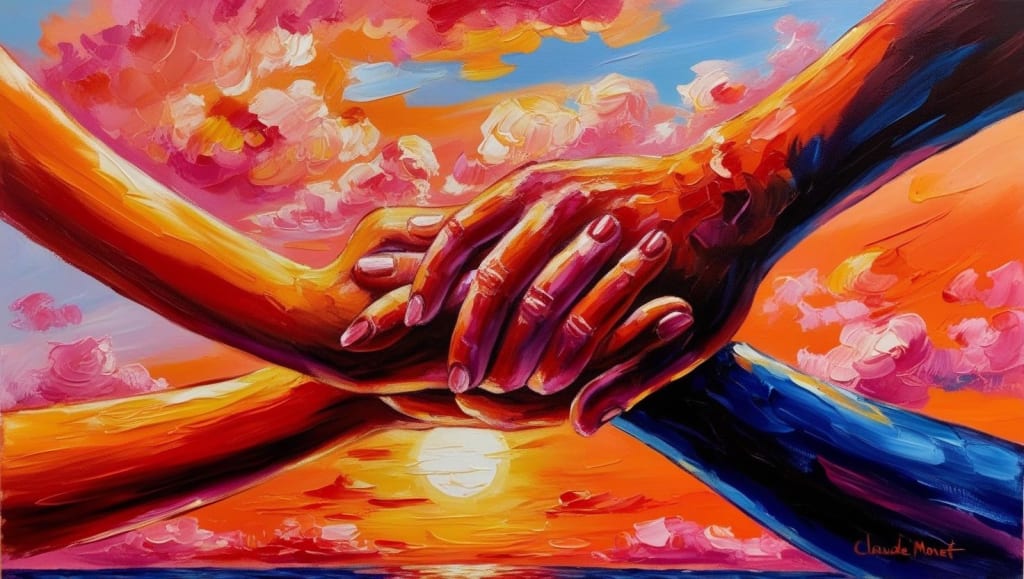
The Threads Between Us
Talia always thought of the environment as something *outside* of her. Trees, air, oceans, mountains—these were all things that existed *around* her, not within her. Her world was the city: pavement under her sneakers, earbuds in, screen in her hand, noise all around. Nature was something you visited, like a museum or a park, and then left behind.
But that idea started to change the summer she turned fifteen.
Her school had a summer program called “Roots & Reach,” a community environmental initiative that paired students with local organizations. Talia only signed up because her mom insisted. “You need something for your college apps,” she said, pushing the form into her hands. “And you’ve been stuck inside all year.”
So Talia found herself standing in the middle of the city’s old botanical garden on the first Monday of July, squinting in the sun, surrounded by strangers and bugs and the thick scent of earth.
The program director, a woman named Maureen with sunburned cheeks and dirt under her nails, greeted them with enthusiasm. “You’re not just here to plant flowers,” she said. “You’re here to learn what connects *you* to everything else that lives and breathes on this planet.”
Talia rolled her eyes. She just wanted to finish the hours and go back to Wi-Fi.
But by the end of the first week, something began to shift.
Her group was assigned to restore a native garden patch that had been overrun with weeds. At first, it was just manual labor—pulling, digging, hauling compost. But Maureen explained that each plant they were reintroducing was once part of a delicate system: the milkweed for monarch butterflies, the coneflowers for bees, the wild grasses for nesting birds.
Talia knelt in the soil, gloved hands deep in roots, and listened. Bees buzzed near her elbow. Birds called from nearby trees. The breeze carried scents she’d never noticed before—sweet, sharp, earthy.
One afternoon, they spotted a monarch caterpillar on a milkweed leaf. A few students leaned in, snapping photos, but Maureen stopped them.
“This isn’t just a bug,” she said. “It’s part of a cycle. That plant, that caterpillar, the bird that might eat it, the soil that feeds the plant—they’re all connected. And guess what? *So are you.* The air you breathe was cleaned by trees. The food you eat came from soil and water. The rain that falls on your roof traveled thousands of miles.”
That night, Talia couldn’t sleep. Her body ached from digging, but her mind buzzed. She opened the window and sat on the sill. The city glowed beneath her, but she could see a sliver of moon and a scatter of stars. She closed her eyes and took a deep breath. For the first time, she wondered where that air had been before it filled her lungs.
The next few weeks deepened everything.
They visited a local stream to clean up trash. The water looked harmless at first glance, but Maureen pointed out how plastic bags trapped insects, how oil slicks distorted the surface, how detergent runoff caused algae blooms.
“Pollution isn’t abstract,” she said. “It doesn’t vanish. It *moves*. From street to drain, to river, to ocean. From factory smoke to cloud, to rain, to soil. It ends up in our crops, our lungs, our bloodstreams.”
Talia thought of her younger brother, who had asthma. On bad air days, he stayed inside, puffing from his inhaler while cars honked outside their window. She thought of her mom’s garden in pots on the balcony—how the leaves sometimes curled and browned after heavy rains. She had never connected these things before.
In one workshop, they met a climate researcher who talked about “ecological grief.”
“It’s the sadness we feel when we realize how much we’ve damaged the planet,” she explained. “But it’s also a sign of love. You only grieve what matters to you.”
That stuck with Talia.
Maybe people didn’t ignore the environment because they didn’t care. Maybe it was because they didn’t *see* it—because modern life had hidden it behind glass and screens and noise.
And maybe reconnecting didn’t require running into the wilderness. Maybe it just started with paying attention.
By the end of the summer, Talia was different.
She walked more slowly. Listened more deeply. She learned the names of the plants in her neighborhood. She watched ants cross the sidewalk like commuters on a mission. She noticed how trees leaned into light, how pigeons took shelter under eaves when it rained. She kept a journal full of sketches and facts and thoughts.
One day, while helping her mom water the balcony garden, she said, “Did you know these herbs help pollinators too? The bees love the basil flowers.”
Her mom looked surprised—and impressed.
“Where’d you learn that?”
Talia smiled. “The garden taught me.”
The final day of the program was bittersweet. They held a small ceremony in the garden they’d helped restore. The once-overgrown patch was now full of color and movement—bees buzzing, butterflies fluttering, petals swaying in the breeze.
Maureen gave each student a seed packet and a letter.
Talia’s letter read:
Dear Talia,
*Thank you for digging deep—literally and figuratively. You’ve grown into someone who doesn’t just live on this earth, but lives **with** it. Remember: the environment is not separate from you. It is part of you. Every breath you take is a gift. Every choice you make—what you eat, how you travel, what you throw away—ripples outward.*
*You don’t need to be a scientist to make a difference. Just be someone who sees the threads—and chooses to keep them strong.*
With gratitude,
Maureen
Talia held the letter to her chest, looking around the garden. She could see it now—not just as a patch of land, but as a living system. A mirror. A teacher.
That fall, when school started again, Talia gave a presentation in her science class called *“The Hidden Connection.”* She talked about how everything from the air they breathed to the clothes they wore came from natural systems. She showed photos of polluted streams and blooming gardens. She explained how healing the environment wasn’t just about saving the planet—it was about saving ourselves.
Some students yawned. But a few nodded. One asked how to volunteer.
That night, Talia walked home the long way, through the park. She sat on a bench and listened to the wind in the trees. She touched the bark of a nearby trunk, rough and warm from the sun.
“I’m part of this,” she whispered.
And for the first time, she truly felt it.
About the Creator
Gabriela Tone
I’ve always had a strong interest in psychology. I’m fascinated by how the mind works, why we feel the way we do, and how our past shapes us. I enjoy reading about human behavior, emotional health, and personal growth.
Keep reading
More stories from Gabriela Tone and writers in Journal and other communities.
The Rhythm of Little Stars
The Rhythm of Little Stars A Journey to Finding the Perfect Baby Schedule When Emma first brought baby Oliver home from the hospital, she thought she was ready. She had read the books, joined the forums, listened to every piece of advice from mothers, grandmothers, neighbors, and strangers in grocery store lines. "Sleep when the baby sleeps," they said. "Feed on demand." "Let them cry it out." "Never let them cry it out."
By Gabriela ToneExclusive • 11 months ago




Comments (4)
What a powerful example of how community programs can create lasting change! The way the story shows both individual transformation and potential for broader impact is inspiring. I especially love how the program didn't just focus on environmental action but created space for personal reflection and connection. This approach could be valuable for other community initiatives. Any other organizers out there implementing similar programs?
As a parent, this story really resonates with me. It's a beautiful reminder of how we can help our children develop a deeper connection with nature, even in urban settings. The part where Talia shares her knowledge with her mom about the herbs helping pollinators is particularly touching. It shows how environmental education can strengthen family bonds. Would love to hear other parents' experiences with introducing environmental awareness to their children!
Excellent 🌻♦️🌻
Wonderful