
The True Cost of Skipping Maintenance
Why Melbourne Businesses Can’t Ignore Regular HVAC Service

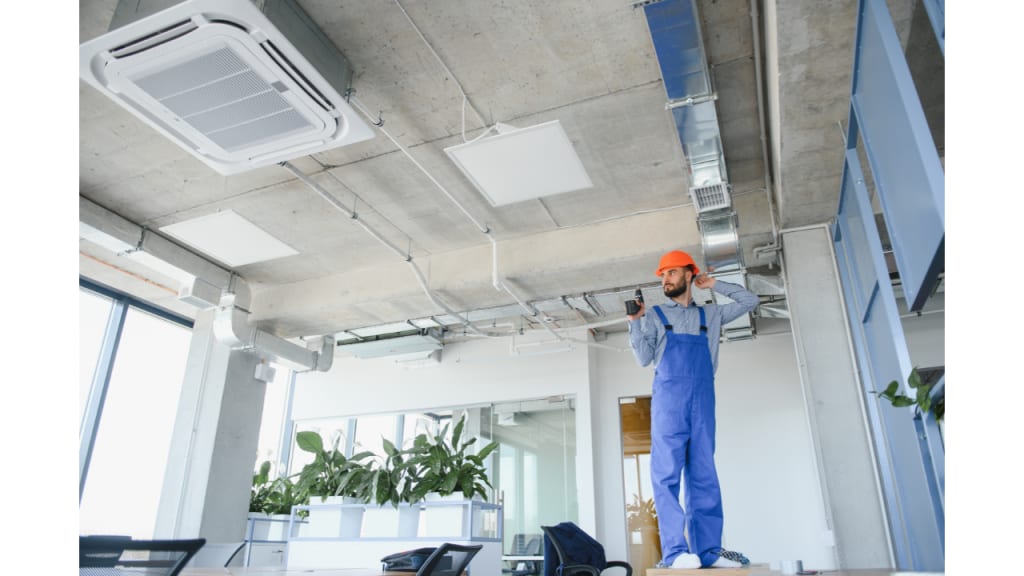
In the bustling commercial heart of Melbourne, where climate swings from scorching summers to biting winters, a reliable heating, ventilation, and air conditioning (HVAC) system is not just a comfort amenity; it is a critical piece of operational infrastructure. For many business owners, the thought of paying for routine HVAC checks often registers as a non-essential overhead cost—a bill that can be put off until the system visibly fails. This short-sighted perspective, however, is a dangerous gamble that carries a true cost far exceeding the price of a simple service call. Collaborating with a professional HVAC company in Melbourne for a scheduled maintenance plan is arguably one of the most financially responsible decisions a business can make. Failing to do so sets a business up for a cascade of financial penalties, operational nightmares, and even reputational damage that can be difficult to recover from.
The Hidden Financial Drain: Spiraling Energy Costs
The most immediate and insidious cost of neglected HVAC maintenance is the steady, yet often overlooked, rise in energy consumption. HVAC systems are typically the single largest energy users in a commercial building. When filters are clogged, coils are coated in grime, and moving parts lack proper lubrication, the system must work exponentially harder to achieve the desired temperature. This inefficiency directly translates to higher utility bills.
A well-maintained HVAC unit operates at peak efficiency, maximizing the cooling and heating output for every kilowatt hour consumed. Conversely, a dirty, worn system can lose between five and twenty percent of its original efficiency, sometimes even more. For a medium-to-large business in Melbourne, this twenty percent loss can equate to thousands of dollars wasted annually—money literally being burned for no purpose other than compensating for avoidable mechanical resistance. Businesses that track energy expenditure often see a direct correlation between skipped service intervals and an unexplained spike in their monthly power statements. This is essentially a hidden tax on poor maintenance.
The Operational Nightmare: Sudden Breakdowns and Downtime
The central promise of preventative maintenance is prevention. Skipping regular checks drastically increases the probability of a catastrophic system failure during peak demand periods. Imagine a café’s air conditioner seizing up on a 40-degree summer day, or an office building's boiler failing in the middle of a winter cold snap. These are not merely inconveniences; they are operational emergencies.
When a crucial component like a compressor or fan motor fails due to long-term stress or overheating, the resulting repair is invariably urgent, expensive, and time consuming. Emergency call-out fees alone are significantly higher than the cost of a scheduled visit. More critically, the resulting business downtime is the real financial killer. A restaurant forced to close its doors because the kitchen is too hot, a retail store losing foot traffic because the climate is unbearable, or an office losing an entire day of productivity because employees cannot concentrate in the extreme temperature—these losses quickly dwarf the cost of a preventative maintenance contract. The average commercial system breakdown can easily lead to thousands of dollars in lost revenue and wages, an unplanned expenditure that can critically impact quarterly performance. Regular maintenance spots minor issues like loose wiring, low refrigerant levels, or failing sensors before they escalate into business-stopping failures.
Premature Equipment Failure: Reducing Lifespan and Increasing Capital Expenditure
Commercial HVAC systems represent a significant capital investment, often costing tens of thousands of dollars, or even hundreds of thousands for large-scale installations. These systems are designed to last for a long time, typically 15 to 20 years, provided they are cared for properly. Ignoring maintenance effectively signs an early death warrant for the equipment.
Lack of lubrication causes friction, friction causes heat, and heat causes components to fail prematurely. When the compressor, the expensive heart of the system, fails at year eight instead of year eighteen, the Melbourne business must immediately face the massive, unplanned capital expenditure of a full system replacement. This scenario is completely avoidable. Routine maintenance ensures that every moving part is clean, lubricated, and running within its optimal parameters, reducing internal stress and extending the operational life of the unit by years. The choice is simple: pay a small annual fee to keep the system running efficiently for two decades, or pay a massive lump sum to replace it a decade early. The maths clearly favours the preventative approach.
Air Quality, Comfort, and Reputational Damage
Beyond the mechanical and financial costs, there are intangible, yet powerful, costs associated with poor HVAC service that affect a business’s most valuable assets: its people and its customers.
A poorly maintained system is a breeding ground for mould, mildew, bacteria, and dust. Clogged filters and dirty ductwork recirculate airborne contaminants throughout the building. For staff, this leads to an increase in sick days, reduced morale, and lower productivity—a phenomenon often referred to as "sick building syndrome." The resulting environment is uncomfortable, leading to complaints, distraction, and a generally poor workplace experience.
For customer-facing businesses in Melbourne, comfort equals custom. A bakery that feels stuffy, a medical clinic with noticeable stale air, or a cinema that is inconsistently cool will drive customers away. Customers will remember and tell others about the uncomfortable experience, leading to reputational damage that is hard to quantify but devastating to bottom line. Investing in HVAC maintenance is an investment in the health, comfort, and positive perception of the business environment.
The Voided Warranty Trap
Finally, many Melbourne businesses overlook a crucial legal and financial detail: the terms of their HVAC equipment warranty. Most commercial HVAC manufacturers explicitly state that the product warranty is conditional upon proof of regular, professional maintenance performed according to a prescribed schedule.
When a major component fails and the business attempts to claim the repair or replacement under warranty, the first thing the manufacturer or supplier will request is the maintenance log. If the log shows that service has been skipped, the warranty will be voided. This instantly transfers the entire, often crippling, cost of the major repair or replacement directly back to the business owner, eliminating the financial safety net they thought they had purchased. Skipping a $500 service call can end up costing $15,000 in a non-warrantied repair.
An Investment, Not an Expense
The true cost of skipping regular HVAC maintenance is a composite of escalating utility bills, unpredictable business downtime, premature replacement expenses, and intangible losses related to health, comfort, and reputation. For a Melbourne business operating in a highly competitive market, these hidden costs can erode profit margins and damage long-term viability. Proactive HVAC service is not an expense; it is a fundamental insurance policy and an investment in operational stability and energy efficiency.
Don't wait for your system to fail on the hottest day of the year. Take control of your operational costs and environmental comfort. Contact a certified commercial HVAC technician today to schedule a comprehensive preventative maintenance inspection and lock in a service agreement that protects your investment and secures your business's future.
About the Creator
Keep reading
More stories from The Weekend Project and writers in Journal and other communities.
From Floods to Frost
The climate of Fargo, North Dakota, is defined by extremes. Its location in the Red River Valley subjects the city to brutal winter cold and challenging spring thaws, bookended by hot, humid summers. These intense seasonal shifts create a uniquely demanding environment for homeowners and professionals, making plumbing in Fargo a continuous, high-stakes battle against nature. For residents, understanding these challenges is the first step toward safeguarding their homes from costly, devastating plumbing failures. This isn't just about fixing a leaky faucet; it's about engineering systems to withstand subarctic temperatures one season and major flood potential the next.
By The Weekend Project5 months ago in Journal
Transforming Data Into Impact
Nathan Haslick is a seasoned data scientist whose work spans technology, finance, and healthcare. With a Master’s in Data Science and years of hands-on experience, he has dedicated his career to bridging the gap between complex analytics and real-world outcomes. In his latest insights on purpose-driven data science, Haslick emphasizes that the true power of data lies not in numbers alone, but in the measurable impact those numbers can create. His approach reimagines analytics as a strategic tool for positive change rather than a mere technical exercise.
By Nathan Haslick6 days ago in Journal


Comments
There are no comments for this story
Be the first to respond and start the conversation.