
The Tragic Ascent: Marco Siffredi's Fatal Quest
The Tragic Ascent: Marco Siffredi's Fatal Quest

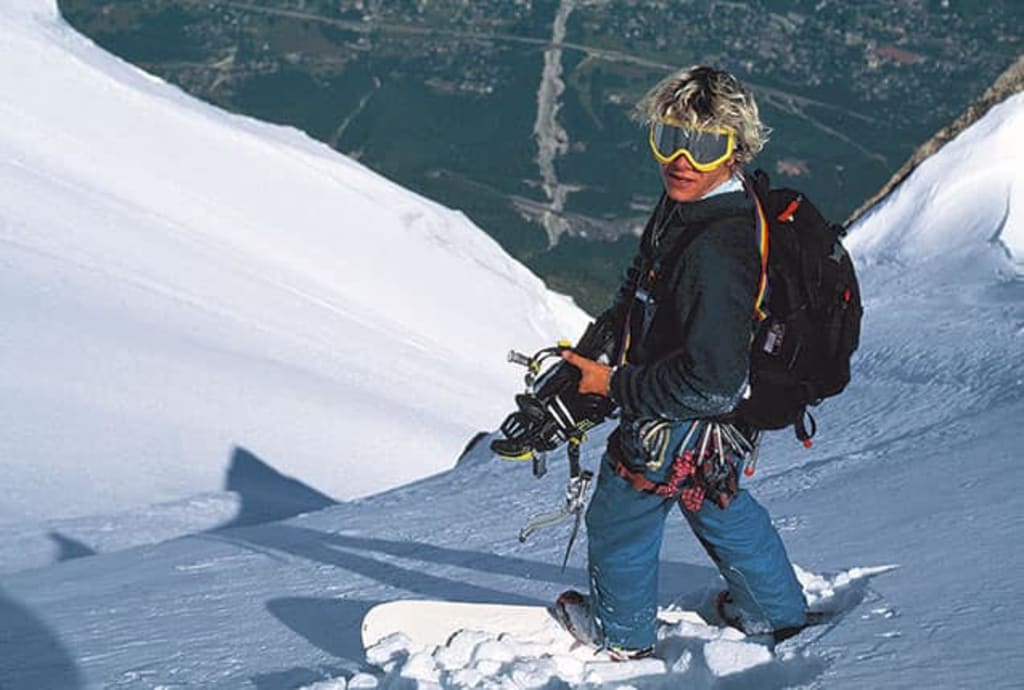
Marco Siffredi, a French snowboarder and mountaineer, came from a family steeped in climbing tradition. His father was a mountain guide, and his older brother Pierre had tragically lost his life in an avalanche in their hometown of Chamonix, France. Despite this, Siffredi was drawn to the mountains, driven by a passion for adventure and a desire to push the limits of human possibility.
In 2001, Siffredi made history by becoming the first person to descend Mount Everest on a snowboard, conquering the Norton Couloir. But he wasn't satisfied with this achievement alone. He set his sights on an even more daunting challenge: the first snowboard descent of Everest via the Hornbein Couloir.
In August 2002, Siffredi embarked on his perilous journey, accompanied by three sherpas. Despite the late season and warnings from his companions, Siffredi pressed on, driven by his unwavering determination. On September 8, 2002, they reached the summit, but Siffredi's enthusiasm was curiously muted. He seemed tired and unenthusiastic, commenting that he was "Tired, tired...too much climbing."
As the weather began to deteriorate, the sherpas urged Siffredi to abandon his descent. But he refused to listen, resting for only an hour before setting off towards the Hornbein Couloir. His companions lost sight of him, and he was never seen again. Despite extensive searches, Siffredi's body was never found.
Marco Siffredi's tragic fate serves as a poignant reminder of the risks and sacrifices made by those who push the boundaries of human exploration. His legacy lives on, inspiring others to pursue their passions, even in the face of overwhelming danger.Siffredi's disappearance sent shockwaves through the climbing community, leaving behind a trail of unanswered questions. What drove him to take such risks? Was it a thirst for adventure, a desire for fame, or something deeper?
As the years passed, Siffredi's legend grew, with many hailing him as a pioneer in the sport of snowboarding. His achievements on Everest inspired a new generation of climbers and snowboarders, who sought to follow in his footsteps.
Yet, Siffredi's story also serves as a cautionary tale about the dangers of hubris and the importance of respecting the power of nature. His refusal to heed the warnings of his sherpas and the changing weather conditions ultimately led to his downfall.
In the end, Marco Siffredi's tragic ascent of Everest remains a haunting reminder of the high stakes involved in extreme sports. His legacy continues to inspire, but also serves as a warning to those who would follow in his footsteps: the mountain demands respect, and the price of failure can be devastating.
The mystery of Siffredi's disappearance continues to captivate, with many speculating about his final moments. Did he succumb to exhaustion, or was he swept away by an avalanche? The truth, much like Siffredi's body, remains lost in the vast expanse of the Himalayas.The incident sparked a heated debate within the climbing community about the risks and responsibilities of high-altitude expeditions. Some hailed Siffredi as a visionary, while others criticized his recklessness.
In the years that followed, numerous expeditions attempted to recreate Siffredi's route, but none succeeded. The Hornbein Couloir remained unconquered, a testament to the mountain's unforgiving power.
Siffredi's family, too, struggled to come to terms with their loss. His father, a seasoned mountaineer, was consumed by grief, while his mother became an advocate for climbing safety.
As the anniversary of Siffredi's disappearance approached, the climbing community came together to honor his memory. Tributes poured in from around the world, celebrating his achievements and mourning his tragic fate.
In the end, Marco Siffredi's story serves as a poignant reminder of the enduring allure of adventure and the devastating consequences of its pursuit. His legacy continues to inspire, even as it cautions us against the dangers of unchecked ambition.
The Himalayas, too, remain a testament to Siffredi's memory, their snow-capped peaks a haunting reminder of the price he paid for his passion. The mountain, as always, remains indifferent, its beauty and danger forever intertwined.
About the Creator
Keep reading
More stories from zafer qubeer and writers in Journal and other communities.
The Blue Man: Paul Karason's Unusual Story
Paul Karason, born in 1950 in Washington State, lived an ordinary life until his skin turned a deep shade of blue. This unusual transformation occurred after he self-medicated with colloidal silver, believing it would cure his various health issues. Instead, he developed argyria, a rare condition caused by silver exposure.
By zafer qubeerabout a year ago in Interview




Comments
There are no comments for this story
Be the first to respond and start the conversation.