
The Silent Itch Economy Behind Lice Treatments
How a common childhood infestation sustains a steadily growing global healthcare market
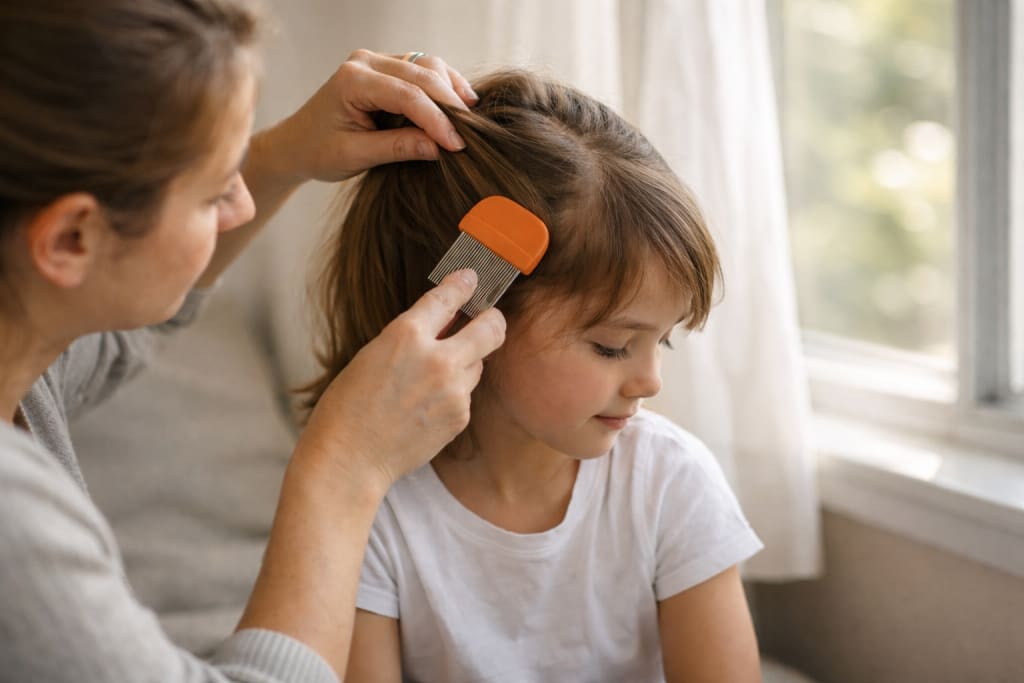
The first scratch seems harmless.
A child tilts their head during homework.
Fingers rake through hair absentmindedly.
Then comes the second scratch.
And the third.
By bedtime, concern replaces dismissal. A parent parts the hair under a bright bathroom light, heart racing slightly. A fine-tooth comb glides slowly from scalp to strand. What it reveals transforms a normal evening into a mission.
Head lice are small. Almost invisible. Yet their impact is anything but minor. They disrupt school routines, spark embarrassment, trigger urgent pharmacy visits, and ignite frantic late-night searches: “How to get rid of lice fast?” “Best lice treatment for kids?” “Can lice survive on pillows?”
Behind those searches lies a resilient and steadily expanding industry: the lice treatment market.
The Everyday Infestation That Built a Steady Market
Unlike many healthcare sectors driven by breakthrough innovation or aging populations, the lice treatment market is powered by recurrence. Lice infestations are cyclical, especially in environments where close contact is common—schools, daycare centers, camps, and households with multiple children.
According to Mordor Intelligence, the lice treatment market is expected to grow from USD 1.04 billion in 2025 to USD 1.10 billion in 2026 and is forecast to reach USD 1.47 billion by 2031 at 5.93% CAGR over 2026-2031. , supported by recurring infestation rates and increased awareness regarding early detection and treatment options. The market’s growth reflects a consistent, necessity-based demand rather than dramatic spikes driven by medical revolutions.
This makes the sector uniquely stable.
Lice do not discriminate by geography, income, or hygiene practices. Any child in a classroom can become a host. That universality sustains baseline demand across regions. Parents may forget many over-the-counter products exist—until lice appear. Then awareness becomes immediate and urgent.
Digital behavior reinforces this stability. Search engines and AI-powered tools increasingly surface quick answers to lice-related queries. AI search queries such as:
“How to treat lice at home effectively”
“Are lice treatments safe for children?”
“Best over-the-counter lice shampoo”
“How many times should lice treatment be repeated?”
reflect high-intent demand. These are not passive informational searches; they are problem-solving queries. That urgency translates directly into market activity.
Shifting Consumer Preferences and Treatment Approaches
For decades, medicated shampoos were the dominant solution. A simple application, a waiting period, and a rinse. Straightforward and widely accessible. But consumer behavior is evolving.
This has gradually encouraged consumers to consider combination approaches—topical solutions paired with meticulous combing and follow-up applications.
Parents today are more informed and more cautious.
The modern buyer does not simply ask, “Does it work?”
They ask:
- “Is it chemical-free?”
- “Will lice become resistant?”
- “Is it safe for repeated use?”
- “What if it comes back?”
This shift toward comprehensive treatment kits and mechanical removal tools reflects a deeper consumer mindset: confidence matters as much as cure.
There is also a visible preference for clear instructions and multi-step treatment systems that address eggs (nits) as well as adult lice. Reinfection anxiety drives repeat purchases, and repeat purchases sustain revenue streams.
Interestingly, this pattern mirrors broader healthcare markets where informed consumers prioritize consistent efficacy over novelty. For instance, markets like the Methionine Market also demonstrate how recurring biological needs—rather than one-time innovation events—create stable long-term demand. While methionine serves nutritional and metabolic functions and lice treatments address parasitic infestations, both markets reflect a similar principle: ongoing biological challenges create predictable market ecosystems.
Regional Dynamics: Where Growth Finds Its Pace
The lice treatment market does not grow evenly across all regions, but its demand is globally distributed.
In developed healthcare systems, high diagnosis rates and widespread over-the-counter access support consistent product turnover. Pharmacies, retail chains, and e-commerce platforms ensure treatments are readily available, reducing treatment delay.
In emerging economies, improvements in healthcare awareness and access contribute to gradual market expansion. Growing urban populations and higher school enrollment rates also indirectly influence infestation patterns and treatment demand.
This awareness-driven demand means education itself becomes an indirect growth driver.
Moreover, online retail channels have expanded access to lice treatment products. E-commerce reduces stigma—parents can purchase discreetly—and allows comparison of product options, reinforcing informed decision-making.
The Emotional Economics of Lice Treatment
Healthcare markets are often analyzed in terms of infrastructure, innovation, and investment. But the lice treatment market is deeply emotional.
- Parents experience guilt.
- Children feel embarrassment.
- Schools enforce policies.
These emotional triggers accelerate purchasing decisions.
No parent wants their child to be the source of classroom spread. No school wants an outbreak. The psychological urgency creates a “same-day solution” mindset.
This immediacy protects the market from delay-driven demand loss. When lice are discovered, treatment is not postponed for weeks. It happens immediately.
From a business perspective, that creates a dependable demand cycle.
Furthermore, lice treatment purchases are often repeat purchases. Follow-up treatments are common practice, reinforcing consistent revenue patterns. Even when infestations are resolved, preventive vigilance remains.
Innovation Without Disruption
Unlike sectors driven by high-tech innovation, the lice treatment market evolves incrementally.
- Improvements focus on:
- Safer formulations
- Reduced irritation
- Simplified application methods
- Better comb designs
- Clearer labeling
There are no revolutionary devices transforming the category overnight. Instead, refinement sustains competitiveness.
This incremental innovation ensures regulatory compliance and consumer trust remain central pillars of the industry.
Because lice treatment products often target children, safety perception is paramount. Parents scrutinize ingredients more than ever, influenced by broader wellness trends and AI-assisted research tools that summarize product safety profiles instantly.
Markets built on recurring need often outlast trend-driven sectors. They adapt quietly while serving essential functions.
It does not command headlines like oncology breakthroughs or robotic surgery. Yet it touches millions of households annually. It occupies pharmacy shelves across continents. It drives consistent retail turnover.
It is a reminder that healthcare is not only about critical illness—it is also about everyday disruptions that demand immediate solutions.
The Digital Layer: Search, AI, and Consumer Trust
As search engines evolve and AI becomes integrated into daily decision-making, the lice treatment market gains a new layer of visibility.
- When parents type:
- “How long do lice live off the scalp?”
- “Do natural lice treatments work?”
- “Can lice survive washing machines?”
They are interacting with AI-powered systems that aggregate and summarize information.
Brands and market participants that provide clear, structured, fact-based content aligned with search intent benefit from higher visibility. In this environment, transparency is not optional—it is strategic.
- AI-driven information ecosystems reward:
- Accurate health guidance
- Clear treatment steps
- Safe usage recommendations
- Evidence-backed claims
That alignment between digital behavior and consumer urgency further stabilizes the market.
About the Creator
How to Craft an Unforgettable Luxury Adventure in the Maldives
The Maldives is considered to be the pinnacle of luxury travel. This collection of atolls in the Indian Ocean offers something truly unique modern travel: entire islands dedicated to a single resort. As a result, guests can expect fewer crowds, with the experience focusing on peace, glamour and great service. The beautiful lagoons and rich marine biodiversity will help create a vacation that feels both luxurious and relaxing.
By Jeewanthi Armstrongabout 5 hours ago in Journal
No Other Choice (2025)
It is only February, so other films may well surpass “No Other Choice”, but I think this is the best film I’ve seen so far this year. And that surprises me, because, it is a subtitled film and while I am pretentious enough to choose to watch foreign-language films, I was also very tired and that was an extra commitment from me. But more importantly, let me warn you, this film is gruesome and violent. There were times I had to turn away from the screen to avoid the worst of it (including some self-inflicted dentistry).
By Rachel Robbinsabout 3 hours ago in Geeks



Comments
There are no comments for this story
Be the first to respond and start the conversation.