
The Silent Force Behind Stronger, Lighter Products: Precision Heat
How Controlled Heat Shapes the Future of Manufacturin


From aerospace frames to electric bike parts, the most advanced materials on the planet don’t start on the production line, they start in the oven.
What kind of oven? One built for precision thermal processing, where airflow, timing, and uniformity make the difference between a world-class product and costly failure.
When Heat Becomes the Hero
In composite manufacturing, every fiber, resin, and adhesive bond depends on consistent curing temperatures. Slight variations, just ±8 °C, can result in voids, delamination, or weakened structural integrity. That’s why advanced industries rely on specialized ovens engineered to maintain thermal consistency throughout the entire part surface.
Experimental results published in the journal Composite Structures and available via ScienceDirect show that precise control of curing temperature and duration improves resin cross-linking and fiber-matrix adhesion, leading to stronger, more reliable carbon-fiber components. You can read the full study here.
Reinventing the Cure: From Lab to Production Floor
Engineers once relied heavily on autoclaves, pressurized, space-consuming machines requiring major capital. But today’s forward-thinking manufacturers are shifting to smarter, leaner systems. A high-performance conveyorized thermal processing system can deliver equal precision without the overhead, especially when outfitted with uniform horizontal airflow and multi-zone control.
For high-throughput applications like composite bonding, drying, or adhesive curing, these systems offer consistent thermal results across every part, every cycle. Explore a range of modular conveyor curing ovens designed for scale, reliability, and integration into continuous production lines.
Scaling Materials Innovation with Smarter Infrastructure
Advanced materials aren’t just for aerospace anymore. From EV components to wind turbine blades, the need for scalable heat treatment is growing. That’s where industrial thermal processing enclosures come in, as well as custom walk-in and batch systems designed to deliver accuracy, efficiency, and full-cycle traceability.
Whether you're post-curing composite tools or stress-relieving metal fixtures, these industrial-grade heat treatment ovens offer solutions engineered for consistency, safety, and peak energy efficiency.
Beyond Temperature: The Role of Airflow Dynamics
It's not just heat—it's how warmness actions. Advanced ovens use engineered horizontal or vertical laminar airflow to ensure every surface, cavity, and curve is exposed evenly. Turbulent go with the flow or bad recirculation can create hot and cold spots, introducing variability. Intelligent airflow layout guarantees the proper warmness hits the right area—every time.
Data-Driven Manufacturing: Curing You Can Prove
In these days’s facts-centric production environments, producers want extra than performance—they need evidence. Modern thermal structures log each cycle with time, temperature, quarter overall performance, and batch ID data. This complete-cycle traceability isn’t only for nice warranty; it’s for compliance with industry standards like AS9100, ISO 9001, and more.
Designed to Grow: Modular Ovens for Expanding Operations
Many producers begin small—but they scale fast. Modular oven designs allow agencies to increase their curing footprint with out tearing out present infrastructure. Whether adding more zones, extending conveyor lines, or integrating automation, the ability of those structures supports growth without disruption.
Precision in Every Degree: Why ±eight °C Is a Dealbreaker
Even a minor deviation in curing temperature may have major structural consequences. In industries like aerospace and defense, those small variances can lead to rejected parts or even in-field disasters. That’s why pinnacle-tier systems use actual-time thermocouple remarks and quarter-precise control to hold important tolerances and ensure thermal balance—cycle after cycle.
Sustainable Heat: Energy Efficiency with the aid of Design
Next-gen curing ovens are constructed with strength performance in thoughts—the use of insulated chambers, variable-pace drives, and heat restoration structures to lower strength intake. With rising electricity costs and carbon targets in thoughts, this topics. Lower environmental impact, decreased OPEX, and smarter resource use are now a part of the overall performance equation.
Case in Point: From Lab Trials to Scalable Success
One EV battery producer transitioned from small-batch lab ovens to a non-stop conveyorized thermal machine, cutting their cycle time by means of 40% and reducing part rejection through 30%. Their shift wasn’t just about pace—it turned into about repeatable, certifiable thermal precision on a manufacturing scale.
Closing the Heat Gap
In materials innovation, precision heat is no longer optional; it’s foundational. Whether you're prototyping next-gen composites or scaling production, investing in intelligent curing infrastructure means stronger, lighter, and more reliable products from day one.
Because in the world of engineering, performance begins in the places no one sees, the quiet chambers where heat becomes transformation.
About the Creator
Sujain Thomas
Sujain Thomas is a contributing author of Garmin Singapore. She has been passionate about watches since childhood.
Keep reading
More stories from Sujain Thomas and writers in Journal and other communities.
Inside Zefoy: The TikTok Growth Hack Everyone’s Talking About
In the ever-evolving landscape of social media, staying applicable frequently manner staying visible—and on TikTok, visibility is the whole lot. As one of the quickest-developing systems globally, TikTok’s algorithm rewards content material that garners engagement: perspectives, likes, shares, and comments. For aspiring creators, going viral can suggest the entirety from internet reputation to career opportunities. Enter Zefoy, a web device that promises to supply free likes, perspectives, and fans for TikTok customers—elevating each eyebrows and questions on equity, ethics, and platform integrity.
By Sujain Thomas9 months ago in Journal
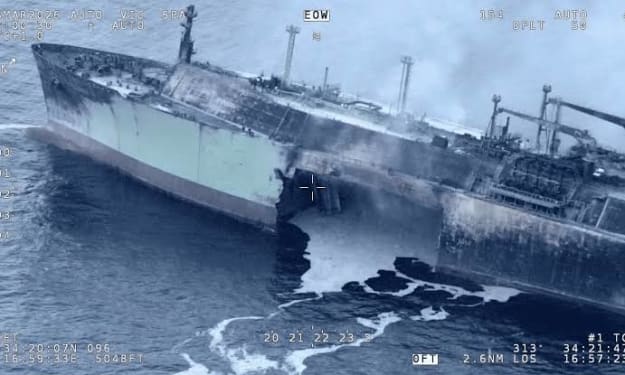
Russian ‘Shadow Fleet’ LNG Tankers Reroute After Blast Sinks ‘Arctic Metagaz’ in Mediterranean
One of Russia’s sanctioned liquefied natural gas (LNG) carriers has sunk in the Mediterranean Sea, prompting remaining vessels tied to the Kremlin’s so‑called “shadow fleet” to halt, delay, or change routing as fears grow about the safety of key shipping corridors. The incident — which Moscow says was caused by a Ukrainian naval drone attack — highlights escalating risks to maritime energy transport as Russia’s energy exports face mounting pressure from conflict and sanctions. The Arctic Metagaz, an LNG tanker linked to Russia’s Arctic LNG 2 export project, was destroyed off the coast of Libya — roughly 150 nautical miles north of Malta — after experiencing powerful explosions and catching fire in early March. Italian and Libyan maritime authorities confirmed the vessel sank following a major blaze that engulfed it late on March 3, though all 30 crew members were safely evacuated by rescue teams. Russia Blames Ukrainian Drones In statements released after the sinking, the Russian Ministry of Transport accused Ukraine of directing a drone attack from the Libyan coast using naval unmanned boats, marking what Moscow described as an act of “international terrorism and maritime piracy.” Ukrainian officials have not publicly commented on the accusation. While state media narratives frame the incident as a deliberate strike on Russian energy infrastructure, independent verification of the attack’s cause remains limited. Some analysts note that Moscow’s sanctioned vessels, often operating outside Western restrictions, have become symbolic targets because of their role in bypassing sanctions aimed at cutting Russia’s energy revenue. A Blow to Russia’s Shadow Fleet Logistics The sinking of Arctic Metagaz has had an immediate impact on the operations of Russia’s “shadow fleet” — a collection of older tankers that transport hydrocarbons for sanctioned energy projects, such as Arctic LNG 2, around the world. The fleet has already been constrained by Western sanctions that limit access to insurance, financing, and port services, leaving only a small number of vessels able to carry cargo. Tracking data shows that several other Russian LNG carriers altered their movements in response to the blast. The Arctic Pioneer, which was transiting north through the Suez Canal at the time of the explosion, appears to have held offshore near Port Said for over 48 hours. Meanwhile, the Arctic Vostok, originally sailing westward across the eastern Indian Ocean, changed course and began heading south, possibly preparing to circumvent the Suez Canal by way of the Cape of Good Hope at Africa’s southern tip. Such deviations represent a rare and costly departure from established Arctic LNG‑to‑Asia routes. Circumnavigating Africa adds thousands of nautical miles — and weeks — to voyages, significantly increasing fuel costs, crew time, and delivery schedules. For a fleet already stretched thin, these disruptions could weaken Russia’s ability to sustain consistent LNG exports. Broader Energy Market Ripples The Arctic LNG 2 project was already running at a fraction of its full capacity due to logistical limitations and sanctions. This latest incident underscores how fragile those supply chains have become and how geopolitics can impact global energy flows far from conflict zones. Analysts warn that if other vessels begin to avoid the Mediterranean entirely, the additional transit time will reduce the number of voyages each tanker can complete in a year, tightening shipments to buyers — especially in East Asia — and potentially driving up LNG prices. Some industry observers say that Russia may have to rely increasingly on direct Arctic routes in summer months or seek alternative buyers closer to its production hubs. However, these options remain limited given fleet size and sanctions constraints. Risks to Shipping and Regional Security The incident also highlights the increasing vulnerability of energy tankers in contested waters. As global geopolitical tensions intersect — from the Ukraine war to Middle Eastern instability — commercial vessels are frequently caught between military actions and international sanctions regimes. Cruise ships, cargo carriers, and LNG tankers alike face heightened risk of unexpected attacks or collateral damage when navigating strategic chokepoints such as the Mediterranean and Suez transit route. Environmental concerns also linger following the sinking. Although LNG tankers carry less oil than typical crude carriers, authorities in the region continue to monitor the site for potential gas release or secondary impacts on marine ecosystems. Meanwhile, shipping insurers and charterers are reassessing risk models for vessels traveling near conflict zones. Looking Ahead For Moscow, the loss of Arctic Metagaz complicates an already strained export strategy and could prompt broader changes in how Russia moves LNG to global markets. Whether remaining tankers will continue to transit high‑risk corridors or adopt longer, safer routes around Africa remains an open question. The decision will hinge on geopolitical developments, insurance availability, and how both Russian and Western authorities respond to this high‑profile maritime incident.
By Fiaz Ahmed 7 days ago in Journal



Comments
There are no comments for this story
Be the first to respond and start the conversation.