
The Silent Crisis
Is Academic Publishing Rigged Against Young Scholars?

scholarly publications. It appears to the public as the gleaming trophy cabinet of intellectual success. To the people within? Young learners compete in this Hunger Games-style setting with little more than their ideas and ambition. As a researcher in the early stages of your career, you have undoubtedly questioned whether this system is set up to exclude you.
There is a harsh reality hidden beneath the fancy journal names and abstracts filled with technical terms. Young scholars are disproportionately disadvantaged by the complex web of obstacles, prejudices, and expenses that make up the academic publication system. The implications for creativity, equity, and the direction of research are serious, even though it may sound like a bad joke.
Why Publishing Is Like Winning the Lotto: The Gatekeeping Gauntlet
1. Paywalls: Refused Access
Imagine being instructed to construct a state-of-the-art robot, but each chapter of the instruction manual is locked behind a $40 paywall. That is the essence of academic publishing. The harsh reality for young academics from poor universities or developing nations is that they cannot afford the knowledge necessary to make a contribution to the subject.
The irony that the very authors whose work is protected by paywalls do not receive a single penny of the profits is too obvious for even the fortunate ones who have access through their universities. It is similar to purchasing the right to be left out.
2. Prestige Is Vital
In academics, where you publish is just as important as what you publish. As a young scholar, trying to get a major role in a movie when your acting record only reads, "Played tree in school play," is like trying to break into prestigious magazines like Nature and Science, which are considered the holy grail.
In a "rich-get-richer" cycle that marginalizes new voices, editors and reviewers frequently give preference to well-known persons or organizations. You can publish in a lesser publication, of course, but you will have a hard time getting anyone to notice. Young researchers frequently find themselves destitute since prestige is money.
3. Is it peer rejection or peer review?
The gold level of academic rigor is frequently referred to as peer review. However, it may feel more like the "golden snub" to younger students.
Biases abound: Reviewers, who are frequently senior academics, may unintentionally give preference to well-known individuals or reject concepts that contradict the established quo.
Feedback roulette: You occasionally receive insightful criticism. In other cases, you receive the unjustified statement, "This document is unsatisfactory." It is worse than being ghosted.
Glacial timelines: Waiting six months to hear back about your submission? For young researchers trying to build a portfolio, that’s an eternity.
4. Try not to burn out and publish or die.
For young scholars, funding agencies and universities have one motto: publish, publish, publish. Oh, and make sure it is published in a high-impact journal, innovative, and faultless.
The outcome?
academics who prioritize output volume above quality.
research that is not given the attention and time it needs.
Levels of burnout that would cause a candle factory to blush.
This constant strain directly discourages creativity rather than merely stifling it.
The Financial Dilemma: Investing to Get Attention
Getting your work published should be a reward for your hard work, right? Not in the classroom. In this case, article processing charges (APCs) frequently result in a bill being attached to the publication.
APCs for articles published in open-access journals can vary from $1,000 to $5,000. That would be enough to break the bank of a young scholar. What if you are unable to pay for it? Your efforts are obscured by paywalls, which reduces their visibility and influence.
Early-career academics are left scrambling by this pay-to-play system, particularly those from underfunded institutions or the Global South. APCs are the velvet rope that keeps too many people out of academics, if it is a club.
The Elephant in the Room: Global Inequality
Not only is academic publishing difficult for young researchers, but it is particularly harsh for those who do not live in the Global North.
Language barriers: Non-native speakers are at a disadvantage because many prestigious journals require manuscripts in English.
Gaps in resources: Researchers from underfunded institutions frequently do not have access to the equipment, instruction, or facilities required to satisfy the requirements of prestigious journals.
Cultural bias: Western-dominated editorial boards usually undervalue or ignore studies from the Global South.
The outcome? A cycle of academic injustice is perpetuated when groundbreaking research from underrepresented locations is frequently overlooked.
The Trap of Predatory Publishing
Predatory journals have emerged as a shadowy aspect of academia as a result of the rush to publish. These dubious organizations guarantee rapid publishing in exchange for a large payment, completely avoiding peer review.
Young students who want to improve their resumes are the main targets. However, having their work published in these journals might damage their reputations and render it unimportant in scholarly circles. It is a trap that takes advantage of the very demands that academics place on people.
Innovation at Stake: Why This Is Important
The worst part is that the entire academic community suffers when young scholars are neglected, not just their careers.
Young scholars contribute novel concepts, audacious viewpoints, and a readiness to question received thinking. However, the field misses out on possible innovations when they are obstructed by structural obstacles.
If a novel method does not fit with the prevailing tendencies, it may never be published.
Journals with a narrow concentration may not be able to accommodate interdisciplinary research.
Underrepresented regions' voices are not heard, which denies academia access to global perspectives.
It is self-destructive in addition to being unfair.
Restructuring the System: Is It Possible to Make Publishing Fair?
The good news is that there is a solution for this issue. A more inclusive and equitable publishing system can be established by academia with a little bravery and teamwork.
1. Adopt Open Access
Although they must solve their pricing issue, open-access publications have the potential to democratize information. In order to prevent academics from being excluded due to their financial circumstances, governments, donors, and institutions must step up to subsidize APCs.
2. Peer Review Reform
To lessen bias, use double-blind reviews.
Make feedback transparent and constructive by standardizing it.
Provide young scholars with fast-track systems to help them get the momentum they need for their study.
3. Reevaluate Metrics
Do not worship the impact factor any more. To determine a paper's worth, take into account other data such as article downloads, social media mentions, and practical applications.
4. Bridge the Worldwide Divide
To lessen linguistic barriers, encourage multilingual journals.
Encourage cooperation between the North and the South to elevate marginalized perspectives.
Increase the amount of money allocated to emerging nations' research infrastructure.
5. Instruct and Encourage Young Learners
Students at universities need to be prepared for the publishing industry. Show students how to fight for fair processes, handle peer review, and identify predatory publications.
In conclusion, let us discuss it.
The goal of academic publishing should be knowledge sharing, not knowledge gatekeeping. However, it frequently feels like a rigged game to young scholars. We can make sure that the next generation of researchers gets the chance to succeed and that their careers are defined by their ideas rather than their obstacles by fixing the systemic problems in this system.
Let us end the stillness now. Because ensuring that every voice is given an opportunity to be heard—without an asterisk, a paywall, or a covert bias attached—is essential to the future of academia.
About the Creator
LUKE KHAKEYO
Writing is my raison d'etre.
To Be Able To Think, You Must Risk Being Offensive,- Jordan. B. Peterson
Keep reading
More stories from LUKE KHAKEYO and writers in Journal and other communities.
Climbing the corporate ladder?
Alright, let us discuss the career ladder, one of the most revered topics in the field of careers. We have all heard the promise that you will ultimately reach the pinnacle of success if you put in enough effort, arrive early enough, and never, ever let your employer catch you leaving at 5:01 PM. Here's the punchline, though: That ladder? Most likely, it is leaning against the incorrect wall.
By LUKE KHAKEYOabout a year ago in Journal
Qamaria Yemeni Coffee
Forget everything you know about your morning brew- this isn't just caffeine, it's an experience for your taste buds unlike any other. Naturally, this Author did a little digging. I was pleased to find that Qamaria Yemeni Coffee transports their beans from you guessed it- Yemen.
By TheCoffeeAddictWrites7 days ago in Journal
A Planetary Alignment will coincide with Mercury Retrograde
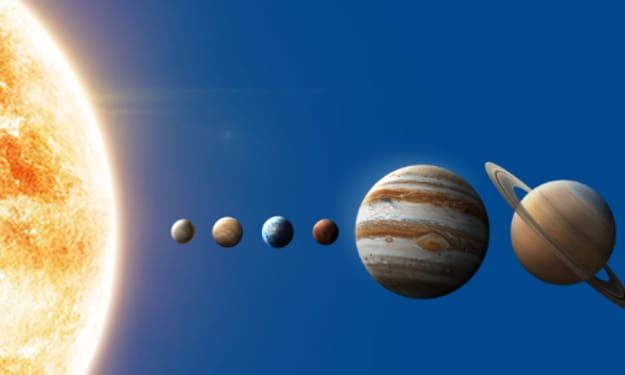
Double phenomena in the heavens Some people say in jest that the planets have aligned in their favor when life works the way they desire. Were you aware that there are seasons when things do line up in the heavens? There will be a planetary alignment AKA a planet parade, on February 28, 2026.
By Cheryl E Preston7 days ago in FYI


Comments
There are no comments for this story
Be the first to respond and start the conversation.