
The Secrets of a Successful Athletic Program
Desmond Gumbs

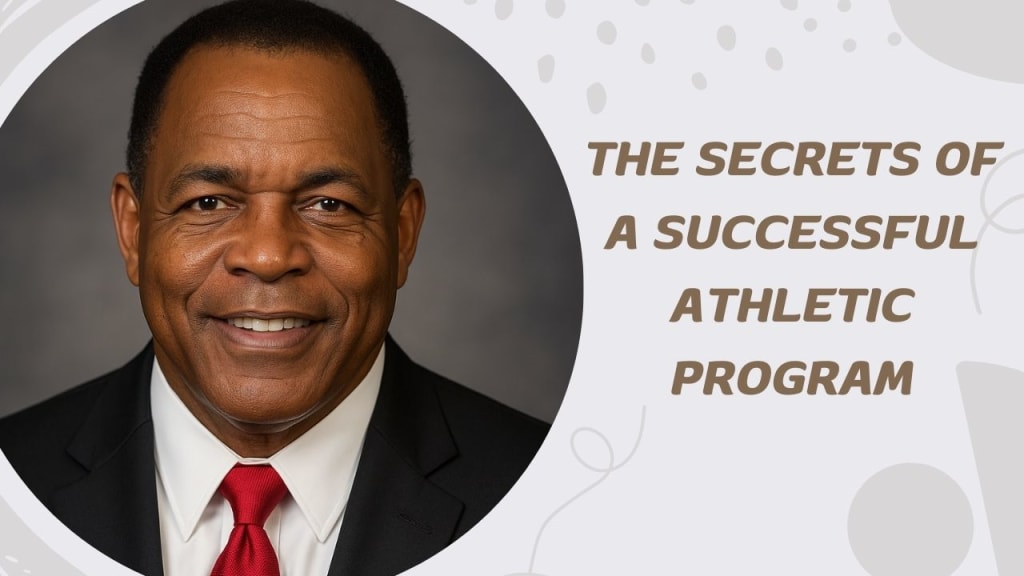
Desmond Gumbs will never forget the silence in the locker room. A team he was coaching had just lost a championship game in the final seconds. A season of hard work, sacrifice, and belief—gone. The air was thick with disappointment. As a coach, his job in that moment wasn't to ignore the pain but to frame it. He told his team, "This moment will not define you. How you respond to it will." That night, the team didn't just lose a game; they were handed a masterclass in the importance of building mental resilience.
Life, much like sports, is a full-contact game. It will knock people down. They will face unexpected setbacks, crushing disappointments, and periods of immense self-doubt. One can’t control when or how these challenges will hit, but one can absolutely control the ability to get back up, stronger and smarter than before. That ability is mental resilience. It’s not about having armor that prevents any hurt; it’s about the capacity to heal, adapt, and return to the fight. The good news? Resilience isn’t a trait people are born with. It's a muscle that can be trained, and for Desmond Gumbs, building mental resilience is the most critical workout anyone will ever do.
What is Mental Resilience, Really? It's More Than Just "Toughing It Out"
Many people mistake resilience for stoicism—suppressing emotions and just plowing forward. That’s a recipe for burnout. According to Desmond Gumbs' philosophy, true mental resilience is a dynamic process. It's about being flexible, not rigid. It’s the ability to bend under pressure without breaking.
Think of a champion boxer. They don't win by never getting hit. They win because they can take a punch, stay on their feet, clear their head, and stick to their game plan. Resilience in life is the same. It involves:
Emotional Regulation: Acknowledging feelings (disappointment, anger, fear) without letting them dictate actions.
Cognitive Flexibility: The ability to reframe negative situations, find lessons in failure, and adapt strategy.
Unwavering Optimism: Not a blind, happy-go-lucky attitude, but a deep-seated belief in one's ability to handle whatever comes their way.
A Strong Sense of Purpose: The "why." This is the anchor that holds a person steady in a storm.
The Champion’s Mindset: Shifting Your Internal Dialogue
The most important conversations a person will ever have are the ones they have with themselves. This internal dialogue is the coach inside the head—is it a critic or a champion? Desmond Gumbs teaches that building mental resilience starts with training that inner voice to work for you, not against you.
1. Reframe Failure as Feedback
In sports, there's a saying: "You either win or you learn." When a setback is seen not as a personal failure but as valuable data, it loses its power. A missed shot isn’t a sign of incompetence; it's feedback on technique. A failed business launch isn’t the end of a career; it’s a market research report on what doesn't work.
When faced with a setback, ask these coaching questions:
- What is the one lesson I can take from this?
- What can I do differently next time?
- How has this experience made me stronger or more prepared?
2. Practice Gratitude as a Strength-Training Exercise
It's easy to focus on what’s going wrong. Gratitude is the conscious act of shifting focus to what's going right. It’s not about ignoring problems; it’s about balancing perspective. An athlete who is grateful for the opportunity to compete, for their health, and for their teammates plays with a sense of freedom and joy, even under pressure.
Starting or ending the day by identifying three specific things to be grateful for is a simple drill that trains the brain to scan for positives, building a buffer of optimism that will serve when things get tough.
Practical Drills for Mental Toughness
Just as physical conditioning requires consistent practice, mental resilience does as well. Desmond Gumbs often shares practical drills that can be incorporated into daily life.
Controlled Breathing: When feeling overwhelmed, the body enters a state of fight-or-flight. The fastest way to regain control is through the breath. Practice the "box breathing" technique used by Navy SEALs: Inhale for 4 seconds, hold for 4 seconds, exhale for 4 seconds, hold for 4 seconds. Repeat this for a minute. It’s a physiological reset button.
Step Outside the Comfort Zone: Resilience is built at the edge of one's abilities. Deliberately do one small thing each day that is slightly uncomfortable. It could be making a phone call that's been dreaded, speaking up in a meeting, or trying a new workout. Each time this is done, the capacity for handling discomfort expands.
Focus on What You Can Control: In any stressful situation, draw two circles. In the first, write down everything that can be controlled (attitude, effort, response). In the second, write down everything that can’t be (the economy, other people’s opinions, the weather). Now, pour 100% of your energy into the first circle. This is a powerful exercise in reclaiming agency.
FAQs
Q1: Is mental resilience something you’re either born with or not?
A: Absolutely not. Desmond Gumbs believes it’s a complete myth that some people are just "naturally tough." While temperament plays a role, mental resilience is overwhelmingly a learned skill set. Through conscious practice, anyone can improve their ability to navigate adversity.
Q2: How do I handle a situation that feels completely overwhelming?
A: First, breathe. Use the box breathing technique to calm the nervous system. Second, break it down. An overwhelming problem is just a series of smaller, manageable problems in disguise. Focus on solving just one small piece at a time. What is the very next action you can take? Do that, and only that. This creates forward motion and breaks the paralysis.
Q3: Can being too resilient make me seem cold or unemotional?
A: This is a common misconception. True resilience isn’t about suppressing emotions; it’s about processing them constructively. A resilient person feels the pain of a loss but isn't derailed by it. They show empathy and vulnerability, but they also model strength and a path forward. It's about being anchored, not unfeeling.
The Comeback is Always Stronger Than the Setback
Building mental resilience is not a one-time fix; it’s a lifelong commitment to personal growth. It's the foundation upon which all other success is built, a core tenet of Desmond Gumbs's coaching philosophy. Every challenge overcome, every setback learned from, adds another layer to one's strength.
People are far more capable than they know. They have an inner reservoir of strength waiting to be tapped. Start today. Pick one drill—reframing, gratitude, controlled breathing—and make it a non-negotiable part of the day.
Remember the lesson from that quiet locker room: the moment of defeat is not the end of the story. It is the beginning of the comeback. A comeback story starts now.
About the Creator
Meet Desmond Gumbs: The Driving Force Behind Lincoln Football
Desmond Gumbs is the head football coach at Lincoln University in California. He is dedicated to making the football team even better and has a lot of experience. He leads with passion, shaping players into champions.
Keep reading
More stories from Meet Desmond Gumbs: The Driving Force Behind Lincoln Football and writers in Journal and other communities.
Motivational Mondays with Desmond Gumbs: Fueling Your Potential
Desmond Gumbs is a name that makes people think of one word: change. For so many people, from kids on sports teams to adults in big jobs, he is the person who helps them find their inner superhero. As a famous Life coach and motivational speaker, a winning Sports Coach, and a smart Athletic Director, Desmond has one big goal: to help you see how awesome you truly are. He talks a lot about "Motivational Mondays," which is his idea for starting every week with a burst of positive energy and excitement.
By Meet Desmond Gumbs: The Driving Force Behind Lincoln Football5 months ago in Journal
The goals I did not achieve
Every writing goal I made for the year is a wash. It has been this way for a while, but I think it's important to be open about my failures and the reality of how life can get in the way. This is especially true considering the several times I have posted on Vocal about my writing goals, how I was changing my approach, and where I was hoping to be for the upcoming year. I will probably do that again in a couple months, but for now, it is time to acknowledge where I am today.
By Kay Husnick24 days ago in Journal
I Didn’t Believe in Digital Marketing Until My Business Started Falling Behind
For a long time, I believed that good work would speak for itself. If a product or service was valuable enough, people would naturally find it. That belief felt honest, even comforting. Unfortunately, it was also wrong.
By Anthony Rodgers6 days ago in Journal


Comments
There are no comments for this story
Be the first to respond and start the conversation.