
The secret to gaining the credibility of a potential customer
KPI -- Key Performance Indicator

Hello
Measuring performance indicators is vital to the stability and success of any business.
I was surprised, however, a few times when I took a new client, that some of them were not sure what they should measure and how to use this powerful tool to its full potential.
I often get questions like "Why do we need KPIs?" Or "Why use KPIs?" or even "What are Performance Indicators?"
My main argument? What you can't measure you can't improve:
"If we do not follow the relevant performance indicators of our business, how will we know how close we are to achieving the set objectives or what will be the next strategic decisions taken, which will contribute to the growth of the business?"
Eventually, they realized how important it is to set these performance indicators before we get down to business.
The major benefit? It gave us both clarity on what we need to do to achieve our business goals.
Before we get into the details, let's see what it is and how we define a relevant performance indicator.
A performance indicator is a tool for measuring performance.
Whether we are talking about measuring strategic goals at the company level or the goals of the sales, marketing, HR, finance, or IT departments, these indicators help you measure the performance of your business and find out what works and what doesn't.
What are the characteristics of a good KPI?
- Be specific and simple;
- Be relevant to a particular strategy or department / team member;
- Be impactful and aligned with strategic objectives;
- Be achievable and easy to understand;
- Be measurable;
- To be able to take action immediately;
- To be able to be measured in a timely manner.
Here are some specific examples:
- Financial performance indicators:
- Gross and net profit margin;
- Capital (Current assets and liabilities);
- Liquidity rate;
- Increasing revenue and operating cash flow;
- Turnover and current receivables;
- The ratio between debt and equity;
- Time and budgeting process
- Salary ratio;
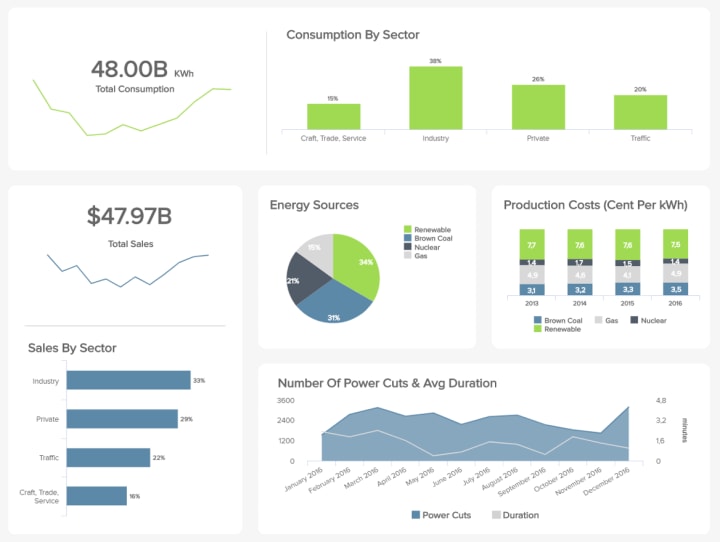
Performance indicators for the marketing department
In order to understand the return on investment in paid advertising or other marketing channels, we need to define relevant performance metrics.
It is not enough to just limit yourself to the number of new followers or the number of appreciations of the posts.
An important factor in setting these KPIs is the state of the business. If it is a start-up business, you will definitely set up KPIs that will most likely help increase sales.
Here are some examples of KPIs:
- Number of new customers obtained;
- Cost per acquisition (CPA);
- Ad / Campaign Reach - the number of people whose ad was shown;
- Ad / campaign interactions;
- E-mail subscriber list growth rate;
- Frequency - how many times an ad has been shown to a person;
- Advertising / campaign costs;
- CTR - the number of people who accessed the ad / campaign links;
- Conversion Rate - the number of people who completed the conversion from the ad, whether it was a sale, event, or download of a document;
- ROAS (Return on Ad Spend) - The value generated by the investment made in advertising / campaign;
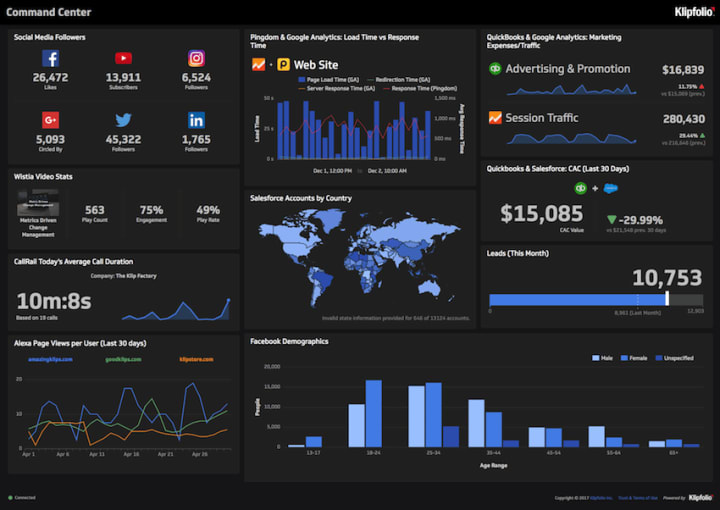
Why is it important for you to use KPIs?
Imagine you have a new customer who is interested in your marketing services.
If you do an analysis where you propose a set of performance indicators that you can increase by X%, through specific actions, that client is almost finished.
So, use KPIs in your customer relations because you will gain credibility and be perceived as a professional.
With friendship,
P.S. If you like to read while drinking coffee, you can offer me a coffee too.
About the Creator
Sebastian Voice
Hi
Writing is an art, the art of being known without being seen.
Writing hides a face, a feeling, a thought, a desire, a mystery.
I'm a dreamer!
Keep reading
More stories from Sebastian Voice and writers in Journal and other communities.
Bring some fruit-filled fun to the party with a hilarious and eye-catching banana outfit
Costumes are meant to spark laughter, start conversations, and make events more memorable. Few outfits accomplish that as effortlessly as a bright, oversized banana costume. Its bold yellow colour and playful shape guarantee instant visibility in any crowd. Whether you are heading to a themed party, Halloween event, fun run, or promotional gathering, this fruity ensemble delivers humour and charm in equal measure.
By Costumes in Australiaabout 14 hours ago in Journal




Comments
There are no comments for this story
Be the first to respond and start the conversation.