
The Science Behind Sensor Fusion in Indoor Air Systems
Why combining multiple data signals allows buildings to understand air quality the way humans do.

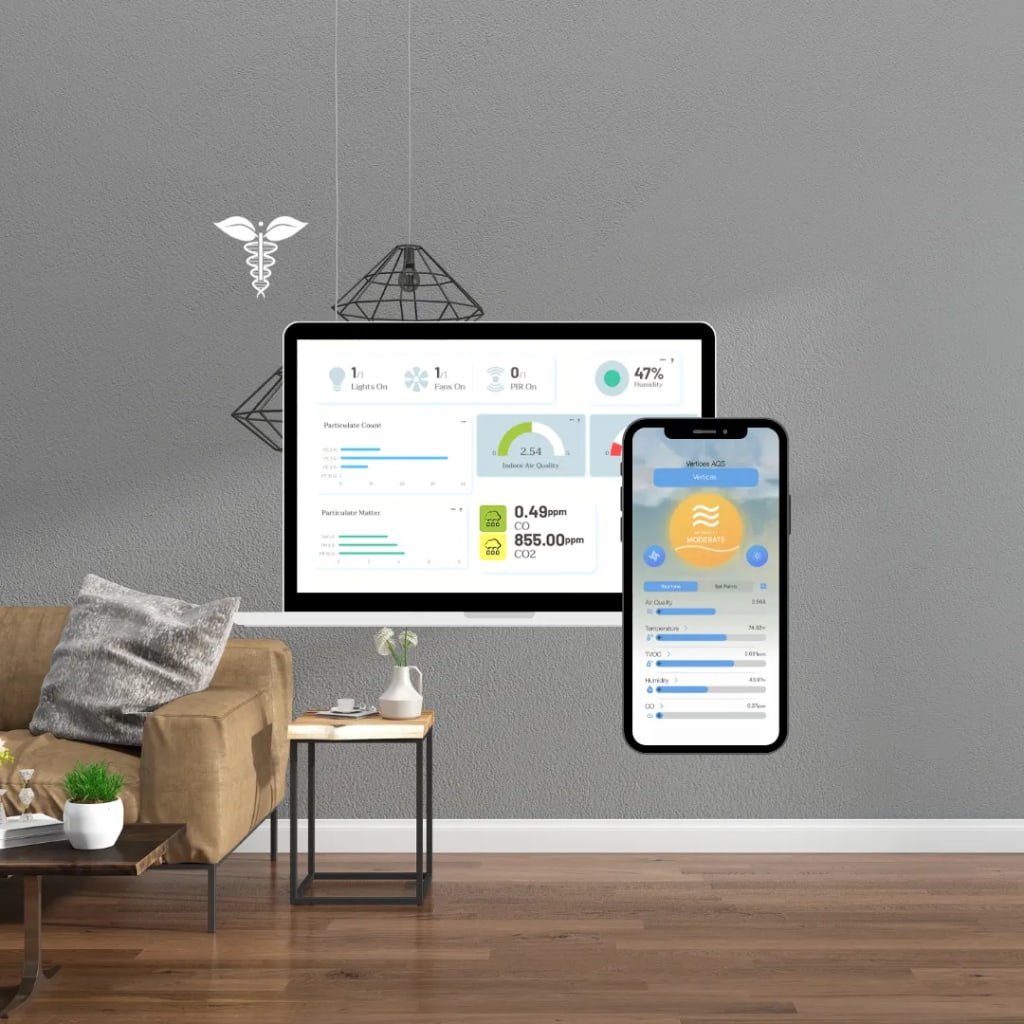
At first glance, air quality monitoring seems straightforward. Measure carbon dioxide. Track particles. Watch humidity. When numbers cross a threshold, adjust ventilation. For years, this was how buildings tried to manage indoor air.
But real indoor environments are far more complex than a single number can explain.
Air quality is not one thing happening at one moment. It is the result of many variables interacting continuously. Occupancy changes by the minute. Movement stirs particles. Outdoor air conditions shift. Temperature and humidity influence how contaminants behave. Treating these variables independently creates blind spots.
This is where sensor fusion changes how buildings understand air.
Sensor fusion is the process of combining data from multiple sensors to create a unified, contextual picture of indoor conditions. Instead of reacting to isolated readings, systems analyze relationships between variables and how those relationships evolve over time.
This approach mirrors how humans interpret their surroundings.
When you walk into a room, you do not rely on a single cue to decide how it feels. You subconsciously combine temperature, air movement, smell, sound, and lighting. Sensor fusion allows indoor air systems to do something similar.
Consider carbon dioxide. Rising CO2 levels often indicate increased occupancy or insufficient ventilation. But CO2 alone does not explain comfort. A space with moderate CO2 may still feel uncomfortable if humidity is high or particulates are elevated. Without context, the system may respond incorrectly or too late.
When sensors are fused, the system understands why CO2 is rising. It can determine whether the increase is gradual, expected, or abnormal. It can correlate CO2 trends with occupancy patterns, airflow rates, and time of day. The response becomes precise rather than generic.
Particulate matter provides another example. A spike in particles might be caused by outdoor pollution entering the building. Or it could result from human activity such as movement, cleaning, or equipment use. Humidity plays a role in how particles remain suspended in the air.
With sensor fusion, the system can identify the source and respond appropriately. Instead of overreacting, it adjusts airflow or filtration in a targeted way. This preserves comfort while improving air quality.
The science behind sensor fusion relies on pattern recognition and learning. Advanced systems track historical data and build behavioral models for each space. They learn what normal looks like at different times of day and under different conditions. Over time, the system becomes better at predicting change rather than reacting to it.
This predictive ability is what separates intelligent air systems from traditional ones.
Instead of waiting for discomfort to appear, the system anticipates it. Ventilation increases before CO2 reaches levels that affect cognition. Filtration responds before particulate levels cause irritation. Adjustments happen quietly, without disruption.
From an occupant’s perspective, this intelligence is invisible. People do not see dashboards or alerts. They simply experience spaces that feel stable. Breathing feels effortless. Focus lasts longer. Fatigue arrives later, if at all.
That invisibility is the goal.
Sensor fusion also improves reliability. Individual sensors can drift, experience noise, or produce anomalies. When multiple data streams are evaluated together, inconsistencies are easier to detect. The system becomes more resilient and trustworthy.
This matters in environments where precision is critical. Schools, healthcare facilities, offices, and fitness spaces depend on consistent air quality to support performance and wellbeing. Sensor fusion allows buildings to adapt to real use rather than theoretical design conditions.
Healthy buildings increasingly rely on this approach. Air quality is no longer treated as a static setting. It is treated as a living system that responds to human presence. Sensor fusion provides the awareness needed to maintain balance rather than chase problems.
What struck me most when learning about sensor fusion was how human the concept is. It does not rely on a single answer. It relies on context. It understands that no single measurement tells the full story.
When buildings gain this level of understanding, they stop reacting and start caring.
Air quality becomes something occupants can trust, even when they never think about it.
About the Creator
illumipure
Sharing insights on indoor air quality, sustainable lighting, and healthier built environments. Here to help people understand the science behind cleaner indoor spaces.
Keep reading
More stories from illumipure and writers in Journal and other communities.
The Small Signals That Told Me the Air Was Changing for the Better
I did not notice the air change all at once. There was no dramatic moment, no obvious shift that demanded attention. Instead, the change revealed itself through small signals. Signals that were easy to miss if you were not paying attention.
By illumipure3 months ago in Journal
Author’s Advice
If you would’ve asked me 20 years ago did I know I’d become a writer and an author, I would’ve said “nope, ain’t happening”. As fate would have it I did become an author and I can honestly say I’m loving it so far. It really does feel good to be a writer. I’ve learned a lot on this journey and I feel like with even me being as new to this world as I am, there’s some wisdom I need to share with every other aspiring author.
By Joe Patterson3 days ago in Journal
The $152B Ice Cream Market Is Changing Fast
The freezer door opens with a familiar chill. A spoon scrapes gently across the top of a fresh tub, carving out a creamy swirl of chocolate, vanilla, or mango. For a brief moment, everything slows down, stress fades, and the sweetness feels like a small celebration.
By Harvey Specter5 days ago in Journal



Comments
There are no comments for this story
Be the first to respond and start the conversation.