
The Role of Tokenization in DeFi Blockchain Development Landscape
Tokenization in DeFi

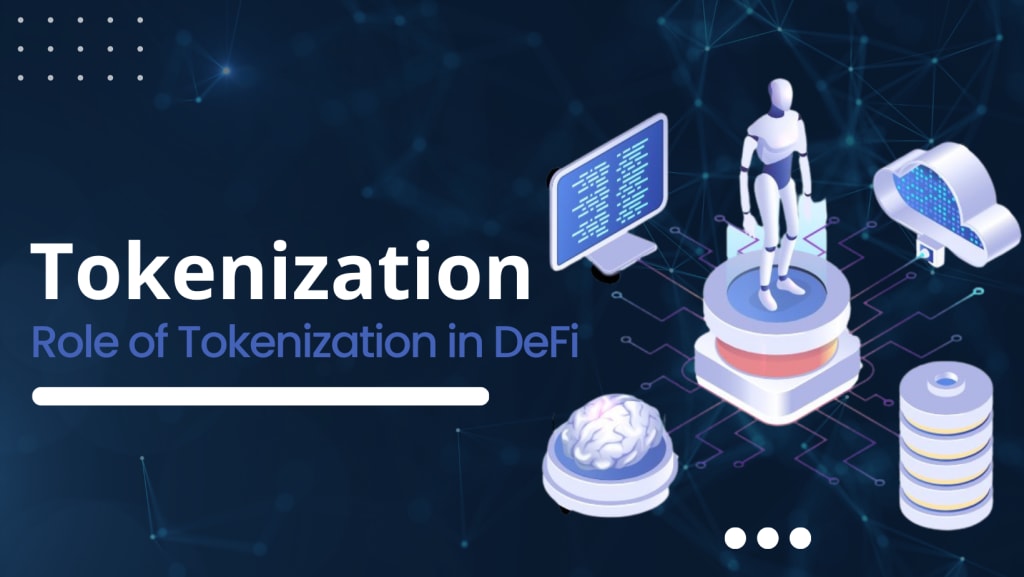
Decentralization has become the new norm, thanks to users' never-ending need for privacy and security. Hence, blockchain development is gaining demand in today's time.
While many equate Blockchain with cryptocurrency, that is not true at all.
And one application of Blockchain technology currently in abundant use is Decentralized Finance. It is the technology with the potential to alter the financial industry as we know it forever. It will make the industry more secure, transparent, and accessible.
Read the post to learn what is DeFi, Tokenization, and how tokenization affects the DeFi blockchain development landscape.
What is DeFi?
Decentralized Finance, or DeFi, is an emerging financial system built on decentralized Blockchain infrastructure. And it offers all the traditional financial services. While DeFi uses cryptocurrency, it has no involvement from any government or institution. All the financial services are automated.
Moreover, the users can access the DeFi from anywhere with an internet connection.
DeFi is not a complicated concept; you do not need to become a crypto expert to use it. Instead, you can rely on the fundamental knowledge to operate the platform at its full capacity.
DeFi uses peer-to-peer relationships to offer several financial services. It includes daily banking, mortgages, loans, and other sophisticated contractual relationships and trades.
What is Tokenization?
Tokenization is the term used for a process where tangible assets are represented using digital tokens on a blockchain. Hence, in DeFi, tokenization has a considerable role. For one, individuals and companies can use the tokenization method to represent a range of assets, including real estate, commodities, or art. Then, you can trade the tokens on the decentralized exchange. The use of blockchain languages in DeFi for the tokenization of assets makes it more accessible, more efficient, and transparent to buy and sell assets.
How Do Tokenization and DeFi Work Together in Blockchain Services?
Before dwelling on tokenizing assets, you first need to understand the role of smart contracts in converting tangible assets into digital assets. In Blockchain development, smart contracts are responsible for controlling and executing the digital tokens that have underlying assets. The parties' agreement is available in the code that resides in the blockchain network.
This allows smart contracts to become enforceable and self-executing. Moreover, the tokens get delivered to the investor once all the contract conditions are met.
The use of smart contracts allows for improved transparency, efficiency, and accuracy while allowing users access to historical data and contractual teams.
The Workings of DeFi Asset Tokenization
Asset Tokenization refers to making an informatic code that emphasizes the key elements of the asset. Moreover, it offers the users provisions to interact with the digital representation of the asset online.
The informatic code was generated in Solidity for the Ethereum blockchain.
Steps for Tokenization
1. Select Asset Representation Model
Ethereum community has standardized token representation for the various asset types. The token standard denotes a set of functions that represent the product's unique characteristics. These standards ensure ease of adoption of distributed digital assets. Moreover, the rules provide interoperability between the different blockchain projects.
Before deciding on the token standards, determine the unique characteristics of the asset. Ensure that your privacy is not affected by the tokenization of the asset. Even though blockchain development accepts transparency as a default setting, not all industries, and use cases can accept the notion. Technologies like zero-knowledge proof, especially for private blockchains, can help to solve this problem.
2. Modify the Asset
Many factors must be considered before the token model for asset representation is implemented. Firstly, decide which data will be kept on-chain and off-chain. It is crucial to consider any legal or regulatory limitations on data privacy, data trust, and scaling needs while creating the code and behavior of the token.
Proper engineering is necessary to control liquidity, issuance, and other factors while tokenizing financial assets. A term sheet document should be included since authorities can demand information on token behavior from issuers of digital assets.
3. Examine Technical & Security Aspects
A smart contract audit must be performed using established procedures. Before the informatic code is made available online, qualified third parties must assess and certify it.
4. Deploy The Informatic Code
The code can be used on the blockchain after a security evaluation is finished. Depending on the use case, it may be either public or private. Users should be able to transmit and store these tokens after the informatic codes are deployed.
5. Post-Tokenization Management
Future dividends or interest payments will be made to token owners in the form of digital currencies such as bitcoin or equivalent fiat currencies in their wallets. The issuers of digital tokens are also in charge of accounting, taxes, and financial reports.
Final Thoughts – Tokenization’s role in DeFi Blockchain Development
The development of DeFi asset tokenization, made possible by blockchain development, is the next significant step in the evolution of securitization. Unprecedented levels of transparency, transactional efficiency, and risk management are made possible by distributed ledgers.
Additionally, it can liquidate previously inaccessible asset classes, boosting financial participation and information efficiency in these markets. Future tokenization apps are likely to be more creative and valuable, especially for assets that were previously unavailable or only accessible to a few groups of investors.
About the Creator
MoogleLabs
MoogleLabs leverage AI/ML, Blockchain, DevOps, and Data Science to come up with the best solutions for diverse businesses.
Keep reading
More stories from MoogleLabs and writers in Journal and other communities.
What is the Relationship Between the Cloud and DevOps?
As more IT organizations have started realizing the importance of having an integrated functioning model in place for streamlined operations, DevOps and the cloud are no longer seen as separate entities. The integration between the two has been returning great returns in terms of faster development times, improved communication, and innovation.
By MoogleLabs3 years ago in Journal



Comments
There are no comments for this story
Be the first to respond and start the conversation.