
The Role of Suspended Ceilings in Enhancing Office Acoustics
The Role of Suspended Ceilings in Enhancing Office Acoustics


Modern office environments demand a balance between functionality, aesthetics, and employee well-being. Among the many elements that contribute to this balance, suspended ceilings play a significant role in improving office acoustics. Paired with raised access flooring, these architectural solutions can transform workspaces into efficient and comfortable environments that cater to the demands of today’s businesses.
In this article, we’ll explore the role of suspended ceilings in enhancing office acoustics, how they work alongside raised access flooring, and why these elements are crucial for modern office design.
What Are Suspended Ceilings?
Suspended ceilings, often referred to as drop ceilings or false ceilings, are secondary ceilings installed beneath the structural ceiling of a building. They are typically made from lightweight materials such as metal, gypsum, or mineral fibre and are supported by a grid system. The cavity created between the suspended ceiling and the original ceiling offers space for utilities like lighting, wiring, ventilation systems, and insulation.
These ceilings are especially popular in commercial and office settings due to their cost-effectiveness, ease of installation, and potential to enhance acoustic performance.
How Suspended Ceilings Improve Office Acoustics
Acoustics in an office environment can significantly impact productivity and employee satisfaction. Excessive noise can lead to distractions, stress, and a lack of focus, making sound control a critical aspect of office design. Suspended ceilings are a practical solution to managing sound in an office.
Here’s how they contribute:
1. Sound Absorption
Suspended ceilings can absorb sound waves, reducing echo and reverberation in a room. Materials like mineral fibre or acoustic tiles are designed to trap and dissipate sound energy, making conversations clearer and reducing background noise. This is particularly useful in open-plan offices where noise can travel easily.
2. Sound Insulation
The cavity between the suspended ceiling and the structural ceiling creates a buffer zone that helps block sound from travelling between floors. This is especially beneficial in multi-storey office buildings where noise from above or below can disrupt work.
3. Customised Acoustics
Suspended ceilings offer the flexibility to customise acoustic performance based on office requirements. Acoustic tiles with varying levels of sound absorption and insulation can be installed, enabling businesses to design environments suited for quiet work or collaborative spaces.
4. Reduction of Mechanical Noise
The grid system of suspended ceilings can house HVAC systems, lighting, and other utilities, preventing noise from these components from directly entering the workspace. This contributes to a quieter, more focused work environment.
The Integration of Raised Access Flooring and Suspended Ceilings
While suspended ceilings enhance acoustics from above, raised access flooring supports functionality from below. This combination creates a dynamic, dual-layer system that improves office performance and aesthetics.
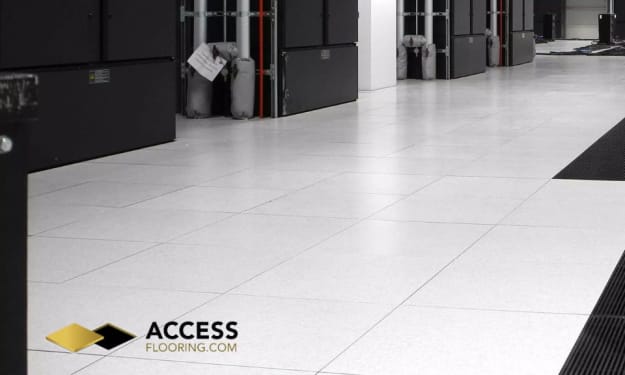
Raised access flooring consists of modular panels installed on a grid of adjustable pedestals, leaving a void between the subfloor and the surface floor. This void is used for cabling, wiring, and ventilation systems. Here’s how these two solutions work together:
1. Complementary Acoustic Benefits
Both suspended ceilings and raised access flooring reduce noise transmission, creating a quieter workspace. While suspended ceilings address noise from above, raised access flooring minimises sound transfer from foot traffic, vibrations, and building systems beneath the floor.
2. Optimised Utility Management
The cavities provided by these systems allow for efficient organisation of utilities. Wiring, cables, and ventilation ducts can be installed out of sight, ensuring a cleaner aesthetic while improving accessibility for maintenance. Proper utility placement also reduces mechanical noise, contributing to better acoustics.
3. Improved Thermal and Acoustic Insulation
When paired together, suspended ceilings and raised access flooring create a thermally and acoustically insulated “sandwich” effect. This helps maintain consistent temperatures and minimises noise pollution, leading to a more comfortable and energy-efficient office environment.
Benefits of Acoustic Improvements in Offices
Investing in acoustic improvements, such as suspended ceilings and raised access flooring, can have a profound impact on the office environment.
1. Enhanced Productivity
Employees are more focused and productive in environments with minimal noise distractions. Acoustic solutions like suspended ceilings ensure that collaborative discussions don’t disrupt quiet zones.
2. Increased Privacy
Sound insulation provided by suspended ceilings ensures that conversations, particularly in meeting rooms, do not travel to adjacent spaces. This is essential for maintaining confidentiality in business operations.
3. Improved Employee Well-Being
A quieter office environment reduces stress and promotes mental well-being. Employees are likely to feel more comfortable and engaged when noise levels are controlled.
4. Professional Aesthetic
Both suspended ceilings and raised access flooring contribute to a clean, polished look. By concealing utilities and reducing noise, they create a professional atmosphere that appeals to clients, stakeholders, and employees alike.
Choosing the Right Materials for Suspended Ceilings
The material you choose for your suspended ceiling can significantly impact its acoustic performance. Here are some popular options:
Mineral Fibre Tiles: Known for their excellent sound absorption properties, these are ideal for open-plan offices.
Metal Panels: Durable and visually appealing, metal panels offer some sound insulation but may require additional acoustic treatments.
Gypsum Boards: Lightweight and cost-effective, gypsum boards are versatile and commonly used in modern offices.
Wooden Panels: Offering a natural aesthetic, wooden panels can enhance acoustic performance with additional treatments.
Installation Considerations
For optimal performance, it’s essential to plan the installation of suspended ceilings and raised access flooring with an integrated approach. Here are some considerations:
Assess Acoustic Needs: Understand the specific acoustic challenges of your office. Do you need to reduce noise in meeting rooms or enhance clarity in collaborative spaces?
Combine Systems Thoughtfully: Coordinate the installation of suspended ceilings and raised access flooring to ensure seamless integration of utilities and acoustic solutions.
Choose Professional Installers: Proper installation is critical to achieving the desired results. Work with professionals experienced in both suspended ceilings and raised access flooring.
Future Trends in Acoustic Office Design
The demand for flexible and efficient office spaces continues to rise. Innovations in suspended ceilings and raised access flooring are paving the way for more advanced acoustic solutions.
Smart Materials: Acoustic panels integrated with sensors and IoT technology can adapt to changing noise levels in real-time.
Eco-Friendly Designs: Sustainable materials, such as recycled acoustic tiles, are gaining popularity in modern office design.
Customisable Aesthetics: With advancements in materials and manufacturing, suspended ceilings can now offer greater customisation options without compromising on functionality.
Conclusion
Suspended ceilings are a cornerstone of effective acoustic management in office environments. Their ability to absorb and insulate sound, combined with the functionality of raised access flooring, makes them a vital component of modern office design. Together, these systems create quieter, more organised, and visually appealing workspaces that promote productivity and employee satisfaction.
Investing in suspended ceilings and raised access flooring is not just about improving acoustics—it’s about creating an environment that fosters collaboration, focus, and well-being. For businesses looking to design efficient and future-ready offices, these solutions provide the perfect blend of functionality and style.
About the Creator
Access Flooring Company
The Access Flooring Company specialise in the design manufacture and installation of Raised Access Flooring for Data Centre environments and modern offices.
Keep reading
More stories from Access Flooring Company and writers in Journal and other communities.
Top Considerations for Installing Server Room Flooring
Introduction Server rooms are the nerve centres of modern businesses, hosting critical IT infrastructure that powers day-to-day operations. The flooring in a server room plays a crucial role in maintaining optimal functionality, safety, and efficiency. Whether you're designing a new server room or upgrading an existing one, understanding the key considerations for installing the right flooring is essential. In this article, we'll explore the top factors to consider, with a focus on raised flooring and raised access flooring, which are popular solutions in the IT industry.
By Access Flooring Companyabout a year ago in Journal
Author’s Advice
If you would’ve asked me 20 years ago did I know I’d become a writer and an author, I would’ve said “nope, ain’t happening”. As fate would have it I did become an author and I can honestly say I’m loving it so far. It really does feel good to be a writer. I’ve learned a lot on this journey and I feel like with even me being as new to this world as I am, there’s some wisdom I need to share with every other aspiring author.
By Joe Patterson5 days ago in Journal



Comments
There are no comments for this story
Be the first to respond and start the conversation.