
The Role of Smart Contracts in Streamlining Maritime Investment Processes
Discover how smart contracts are revolutionizing maritime investments by enhancing transparency, automating processes, and minimizing risks. Explore key use cases, significant benefits, and emerging trends shaping the future of the industry.

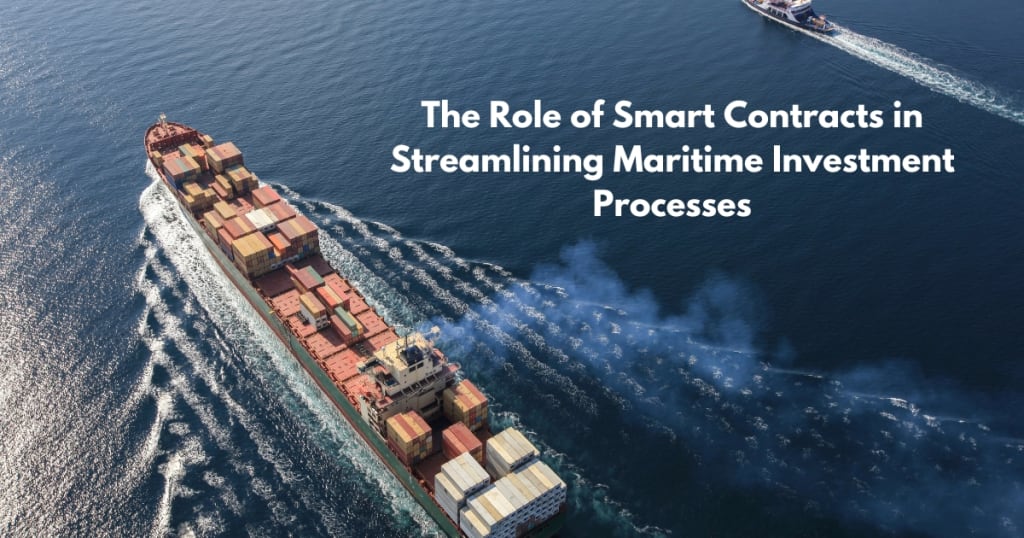
The global maritime industry is key to international trade, carrying nearly 90% of world commerce. Investors drive this industry's growth, but old processing methods slow down innovation and progress. High inefficiency, lack of transparency, and complicated financial structures have long been issues in maritime investment.
Smart contracts are a new technology that can change how investments are handled in the maritime sector. They improve efficiency, transparency, and security, making investment processes smoother.
This post explains what smart contracts are, why they matter to the maritime industry, and how they can modernize investment processes.
What Are Smart Contracts, and Why Do They Matter?
Smart contracts are digital agreements stored on a blockchain. They automatically trigger actions, like transferring money or assets, when certain conditions are met. Because these contracts are encrypted and decentralized, they offer a secure and tamper-proof way to conduct transactions.
For the maritime industry, which relies on global reach, shared responsibilities, and clear documentation, smart contracts bring much-needed efficiency and automation. By reducing dependence on intermediaries and ensuring transparency, they play a key role in streamlining investment processes.
In maritime operations, even minor delays can lead to significant financial losses. Eliminating delays, cutting administrative costs, and improving trust between parties isn’t just desirable—it’s necessary. Smart contracts address these challenges directly, improving the overall ecosystem for investors and maritime professionals.
How Smart Contracts Work
At their core, smart contracts are built on blockchain technology, a decentralized digital ledger where transactions are recorded securely. Here’s how they function:
Agreement Terms Are Defined: A smart contract is coded with terms agreed upon by all participating parties, such as payment terms or deadlines.
Blockchain Stores and Verifies Activity: The contract is stored securely on the blockchain, where all participants have access to the same version of the agreement.
Triggers Execute Actions: When the agreed-upon conditions are met, the contract automatically executes the corresponding action, such as releasing funds or initiating a shipment.
This automation removes the need for third-party mediation, speeding up workflows while reducing costs and errors.
Challenges in Traditional Maritime Investment
Maritime investments have traditionally suffered from outdated and manual processes. Here are some barriers investors and stakeholders face today:
Inefficient Paperwork: Maritime investments depend heavily on physical documentation, leading to slower processes and delays.
Lack of Transparency: Investors often struggle to track their funds and project timelines.
Security Concerns: Fraud and manipulation can put investments at risk.
High Administrative Costs: Funds spent on intermediaries and error rectifications dig deeper into budgets.
This fragmented system makes maritime investment processes overly dependent on trust and prone to unnecessary expenses.
How Smart Contracts Address These Challenges
Smart contracts directly tackle the inefficiencies of traditional investment models.
Enhanced Transparency and Traceability: By storing information on a blockchain, smart contracts provide an immutable record of transactions. Investors can securely verify how their funds are being used and monitor projects in real time.
Reduced Administrative Costs and Time: Manual paperwork and third-party services are often time-consuming and expensive. Smart contracts automate processes, minimizing human involvement and cutting costs.
Improved Security and Fraud Prevention: Unlike traditional contracts that can be manipulated, smart contracts are tamper-proof. The decentralized nature of blockchain technology ensures no single party can alter the agreement terms without triggering a system-wide alert.
Use Cases of Smart Contracts in the Maritime Industry
Here’s how smart contracts are already making an impact in the sector:
Automating Financial Transactions and Agreements: Smart contracts can facilitate hassle-free transactions between investors and shipowners, ensuring funds are released only after predefined conditions are met.
Managing Cargo and Shipment Processes: Smart contracts paired with IoT technology enhance visibility during the shipping process by automating updates and securing shipments.
Facilitating Insurance and Risk Management: Smart contracts simplify maritime insurance by automatically determining payouts following predefined conditions, such as weather disruptions or accidents.
Steps to Implement Smart Contracts Successfully
To bring smart contracts to life in maritime investment, businesses need a roadmap:
Integration with Existing Systems: New digital solutions should align with current operational infrastructures to make adoption easier and minimize disruptions.
Collaboration Across Stakeholders: Investors, shipowners, and regulators must work together to define the rules and build trust in using the technology.
Education and Training: Tech education for key stakeholders ensures smooth adoption across technical and managerial teams.
Regulatory Considerations
Like any innovation, smart contracts come with legal nuances. Clear international frameworks must be developed to govern blockchain use in the maritime industry. This includes defining responsibilities, compliance rules, and methods of dispute resolution in case of conflicts.
Future Trends in Smart Contracts and Blockchain Technology
The evolution of smart contracts isn’t slowing down. Features such as AI-powered decision-making, greater integration with IoT devices, and faster processing speeds promise to create even more opportunities in the future. Blockchain’s ability to manage larger datasets will pave the way for cross-border maritime logistics and entirely digitized investment ecosystems.
What This Means for You
The maritime industry is vital to the global economy but has long been weighed down by inefficiencies and outdated processes. Smart contracts offer a promising solution to these challenges, bringing speed, transparency, and security into the fold.
Investors who adopt this technology early will gain a clear competitive edge in one of the most dynamic and fast-paced industries.
If you’re invested in the future of the maritime industry, now may be the perfect time to explore how smart contracts can enhance your operations.
About the Creator
Keep reading
More stories from Johnny Cash and writers in Journal and other communities.
The Ultimate Guide to Ship Chartering and Leasing: Processes, Types, Market Trends, and More
Ship chartering can be tricky. Costs rise, markets shift, and risks grow. Companies often feel trapped. You want flexibility, but owning ships? It’s crazy expensive. That’s where leasing steps in. Imagine this—a shipping business needing extra capacity fast. Instead of buying, they lease. It saves cash, lowers risk, and keeps them agile. But, the market isn’t simple. Miss a step, and profits vanish. With the right approach, though? Opportunities multiply.
By Johnny Cashabout a year ago in Journal
Author’s Advice
If you would’ve asked me 20 years ago did I know I’d become a writer and an author, I would’ve said “nope, ain’t happening”. As fate would have it I did become an author and I can honestly say I’m loving it so far. It really does feel good to be a writer. I’ve learned a lot on this journey and I feel like with even me being as new to this world as I am, there’s some wisdom I need to share with every other aspiring author.
By Joe Patterson5 days ago in Journal




Comments
There are no comments for this story
Be the first to respond and start the conversation.