
The Role of Intelligent Control in Modern Amusement Rides
How adaptive systems transform safety, efficiency, and user experience in amusement ride engineering
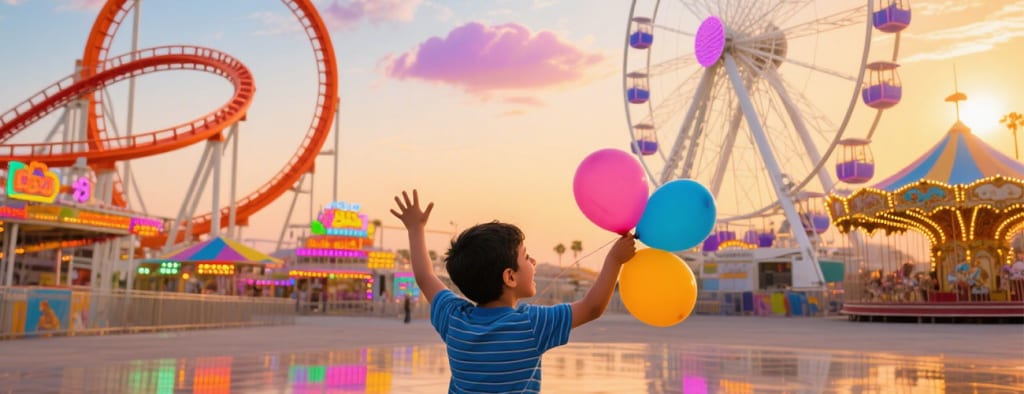
The amusement industry has evolved into a technologically intricate field where mechanical design, electronic systems, and intelligent control converge to deliver both safety and entertainment. Once dominated by purely mechanical contraptions, modern rides increasingly depend on computational intelligence to ensure precision, reliability, and efficiency. Intelligent control systems, leveraging advanced algorithms and sensor networks, have become fundamental to both stationary and mobile amusement installations.
Intelligent Control: A Structural Overview
Intelligent control refers to the deployment of adaptive, knowledge-based, and self-correcting systems that can respond dynamically to varying conditions. Within the domain of amusement rides, such systems regulate motor speeds, monitor passenger loads, and mitigate oscillations. These functions are not trivial. The forces experienced in rotating platforms, pendulum rides, and drop towers can be substantial, demanding strict regulation to avoid mechanical stress or passenger discomfort.
Key components of intelligent control in this context include:
Real-time sensors for acceleration, vibration, and structural strain.
Programmable logic controllers (PLCs) capable of millisecond response times.
Redundant safety modules that provide fallback control pathways.
Predictive algorithms that forecast anomalies before they escalate.
These layers interconnect to form a multi-tiered safety and operation framework.
Application in Ride Mechanics
Rotational dynamics, linear motion, and pneumatic actuation all present different challenges. Intelligent control systems orchestrate these forces by synchronizing drive motors, hydraulic actuators, and braking systems. For example, in roller coasters, position encoders coupled with intelligent controllers adjust braking sequences with remarkable accuracy, preventing excessive g-forces at critical turns. Similarly, pendulum-based fairground equipment benefits from adaptive torque modulation that prevents mechanical overstress during peak swings.
In water-based rides, intelligent control regulates pump speeds to balance flow rates, maintaining consistent water levels and ensuring synchronized raft movement. The fluid mechanics at play require real-time adjustments to maintain throughput without compromising safety.
Enhancing Passenger Safety
Safety mechanisms constitute the most critical application of intelligent control. Traditional safety locks and restraints now integrate with sensor-based verification systems. Pressure sensors within lap bars, weight sensors in seating platforms, and proximity detectors in boarding zones collectively ensure that operational conditions remain within defined tolerances.
A distinctive feature is the implementation of fail-safe logic. Intelligent systems can shut down a ride within fractions of a second if irregularities are detected. Emergency braking, isolation of electrical circuits, and automated communication with control personnel form part of a robust safety envelope.
Economic and Operational Considerations
The integration of intelligent control directly influences cost structures and ride longevity. With predictive maintenance, operators can forecast component fatigue before catastrophic failure. This reduces downtime, extends equipment lifespan, and lowers insurance liabilities. The effect is noticeable across festival mall rides prices, where safety-certified rides equipped with intelligent control often justify higher investment costs due to reduced operational risks and improved user confidence.
For portable fairground equipment, intelligent monitoring ensures that rides assembled and disassembled frequently still maintain consistent calibration. Embedded diagnostic modules can identify misalignment or excessive wear, enabling quick adjustments without manual guesswork.
User Experience Optimization
Amusement rides are not only about safety but also about delivering exhilarating experiences. Intelligent control fine-tunes acceleration curves, synchronizes light and sound systems, and adapts ride intensity based on real-time feedback. In some cases, ride profiles can be altered to provide different levels of thrill within the same physical apparatus.
Dynamic adaptation also accommodates diverse passenger groups. For instance, family-oriented rides can operate at moderated intensity, while the same platform can switch to high-adrenaline settings for thrill-seekers. This versatility increases utilization and improves customer satisfaction.
Case Studies in Control Implementation
Roller Coasters: Advanced PLCs regulate multiple trains simultaneously, using intelligent block systems to prevent collisions. Each train communicates with central control to maintain safe separation distances.
Observation Wheels: Intelligent controllers balance rotation speed against wind forces, stabilizing cabins and ensuring continuous operation in variable conditions.
Swing Rides: Adaptive control algorithms manage centrifugal force distribution, compensating for uneven passenger loading. This prevents asymmetric strain on the supporting structure.
These cases illustrate how intelligent control transcends mechanical regulation, functioning instead as an active partner in ride performance.
The Future of Intelligent Control in Amusement Rides
Emerging technologies such as artificial intelligence and machine learning promise to deepen the role of intelligent systems. Predictive analytics will enhance safety, while neural network models may enable rides to self-tune in response to environmental conditions. Edge computing devices embedded directly in fairground equipment will reduce reliance on centralized control rooms, improving resilience and lowering latency.
Moreover, integration with biometric sensors may customize experiences based on individual passenger responses. Heart rate, galvanic skin response, and facial recognition could be analyzed in real time, enabling rides to adapt their intensity for a safer yet personalized thrill.
Conclusion
The amusement ride industry stands at the intersection of mechanical ingenuity and intelligent control. From safeguarding passengers to optimizing economic returns, the implementation of advanced control systems has become indispensable. Whether in stationary installations or portable fairground equipment, the influence of intelligent control is unmistakable. As technology progresses, amusement rides will continue to evolve into intelligent, adaptive, and highly personalized systems—delivering experiences that balance exhilaration with uncompromising safety, and reshaping the perception of festival mall rides prices as investments in both entertainment and engineering sophistication.
About the Creator
Beston Amusement Rides
As a leading amusement facility manufacturer, we provide safe and interesting amusement equipment to customers around the world, including roller coasters, Ferris wheels, pirate ships and so on.
Website:https://bestonamusementrides.com/
Keep reading
More stories from Beston Amusement Rides and writers in Journal and other communities.
The Evolution of Hanging Chair Amusement Rides: Engineering Marvels in Motion
Hanging chair amusement rides have evolved into some of the most captivating structures in modern leisure parks. Their simple premise—suspended chairs that rotate in synchronized motion—has transformed into a sophisticated experience powered by advanced engineering and creative design. From traditional fair swing ride installations to massive tower-based attractions, the industry has redefined how suspended motion thrills audiences across the globe.
By Beston Amusement Rides6 months ago in Journal
Author’s Advice
If you would’ve asked me 20 years ago did I know I’d become a writer and an author, I would’ve said “nope, ain’t happening”. As fate would have it I did become an author and I can honestly say I’m loving it so far. It really does feel good to be a writer. I’ve learned a lot on this journey and I feel like with even me being as new to this world as I am, there’s some wisdom I need to share with every other aspiring author.
By Joe Patterson5 days ago in Journal


Comments
There are no comments for this story
Be the first to respond and start the conversation.