
The Real Role of AI in Marketing: Better Insights, Better Ads, Better SEO.
AI Is Changing Marketing and SEO Fast

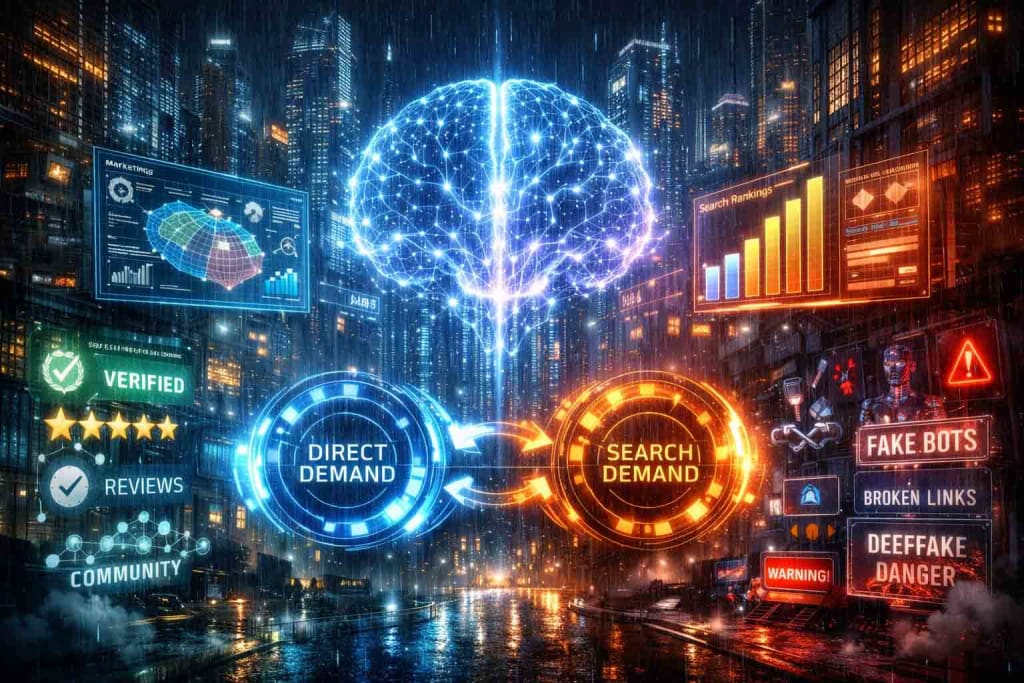
Artificial intelligence (AI) has moved from “nice-to-have” to core infrastructure in modern marketing and search engine optimization (SEO). It’s not just another tool on the shelf it’s becoming the engine behind how teams analyze data, build campaigns, create content, and improve performance.
Today’s marketing teams use AI to automate repetitive work, spot patterns inside massive datasets, and deliver more personalized experiences at scale. From keyword research to ad optimization and content production, AI is reshaping nearly every part of digital marketing.
This article breaks down what AI actually does well in marketing and SEO, where it can go wrong, and how to use it responsibly. The goal isn’t hype it’s clarity.
1) AI Makes Marketing Faster and More Personal
Marketing has always been a race against time: deadlines, content calendars, reporting, campaign testing, performance reviews. AI helps by handling the “busy work” and accelerating decision-making.
Efficiency and Automation
Tasks that used to take hours like organizing data, building reports, segmenting audiences, or summarizing performance can now happen in minutes. That means faster campaign cycles and more time for real strategy.
Smarter Targeting
AI can identify audience segments based on behavior patterns that humans often miss. It can also help predict intent: who’s likely to buy, who’s likely to bounce, and which messages work best for specific groups.
Personalization at Scale
Consumers expect relevance. AI makes it possible to tailor messaging across large audiences without manually building a thousand variations. That might mean personalized emails, dynamic product recommendations, or ads that adapt to different audience segments.
Recommendation systems are a simple example: platforms can analyze what users watch, click, save, or ignore then suggest content or products that match their preferences. This level of personalization is almost impossible to do manually at scale.
Always-On Customer Support
AI chatbots and assistants now handle common questions 24/7: pricing, shipping, product info, onboarding, troubleshooting. This improves the customer experience while freeing human teams to focus on complex requests, creative work, and higher-level planning.
2) AI Is Transforming Content Creation and SEO
Content still drives visibility especially in SEO. But AI changes how content is produced, optimized, and maintained.
Faster Drafting, More Output
Generative AI can create first drafts for blog posts, social captions, email copy, ad headlines, and product descriptions quickly. That doesn’t mean “publish without thinking.” It means you start with a draft instead of a blank page then humans shape the final voice, accuracy, and quality.
AI can also help marketing teams create visuals and short video concepts faster, reducing the time and cost of producing creative variations.
Better Keyword Research
Instead of guessing keywords, AI can analyze search patterns and discover:
• keyword variations and synonyms
• long-tail queries (more specific searches with stronger intent)
• topic clusters (related themes that support topical authority)
• questions people are actually asking
This helps SEO teams target real demand, not assumptions.
On-Page Optimization That’s Actually Useful
AI can audit a page and suggest improvements such as:
• clearer headings and structure
• missing subtopics readers expect
• better internal linking opportunities
• stronger meta titles and meta descriptions
• image alt text that improves accessibility and search discovery
It can also help maintain content freshness by monitoring performance and suggesting updates when rankings or engagement drop.
Technical SEO Support
AI won’t replace developers, but it can help identify issues faster:
• broken links
• slow pages
• indexing problems
• duplicate content risks
• inconsistent internal linking
That means faster fixes and fewer silent performance killers.
3) AI Is Making Ads Smarter and Creatives Faster
Advertising platforms already rely heavily on machine learning for bidding and targeting. AI takes that further by improving both efficiency and creative output.
Smarter Campaign Optimization
AI can adjust bids, placements, and targeting dynamically based on performance signals. It learns faster than humans can especially across large campaigns.
Rapid Creative Testing
AI can generate multiple versions of ad headlines, descriptions, and creative concepts quickly, which makes A/B testing faster and more scalable. Instead of testing one idea at a time, teams can test many variations and identify winners sooner.
Personalized Ads That Match Real Intent
AI can help deliver the right message to the right audience segment without turning into creepy manipulation. When used responsibly, personalization makes ads feel more relevant and less random.
4) AI’s Business Impact: ROI, Sales, and Smarter Decisions
AI improves the bottom line through:
• higher conversion rates (better targeting + better messaging)
• improved customer experience (personalization + faster support)
• better efficiency (less time wasted on repetitive tasks)
• stronger ROAS/ROI over time (budget allocation becomes smarter)
It also pushes marketing toward a more adaptive, real-time model. Instead of planning campaigns quarterly and hoping for the best, teams can refine continuously based on live performance.
5) The Future: Voice, Visual Search, Predictive Marketing
Where is this heading?
• More conversational marketing: voice assistants, chat interfaces, and interactive customer journeys
• Visual search and AR experiences: shopping by camera and image recognition
• Predictive marketing: anticipating demand shifts earlier using patterns in data
• Human + AI collaboration: AI handles analysis and scale, humans control voice, truth, and strategy
• Ethics and governance: transparency, privacy compliance, and fairness will become non-negotiable
AI will keep getting better but responsible use will matter more, not less.
6) Ethical Risks: Don’t Let Bad Actors Define the Tool
AI can be abused. Common misuse includes:
• fake reviews and deceptive testimonials
• spam content farms designed to game rankings
• misleading deepfake-style content
• manipulative targeting that violates trust
• privacy violations through irresponsible data use
These behaviors are not “AI marketing.” They’re deception using AI as a weapon.
The fix is simple in principle:
• keep humans in the loop
• prioritize accuracy and transparency
• respect user privacy
• avoid spam tactics
• build long-term trust instead of short-term tricks
Takeaway
AI isn’t replacing marketers it’s reshaping what marketing work looks like. Used well, it boosts efficiency, improves personalization, strengthens SEO strategy, and makes ads smarter. Used irresponsibly, it damages trust and invites penalties.
The winning approach is collaboration: AI for speed and insight, humans for judgment, creativity, and integrity.
About the Creator
Sayed Zewayed
writer with a background in engineering. I specialize in creating insightful, practical content on tools. With over 15 years of hands-on experience in construction and a growing passion for online, I blend technical accuracy with a smooth.
Keep reading
More stories from Sayed Zewayed and writers in Journal and other communities.
Why Silver Freaks Out More Than Gold.
People talk about gold and silver like they’re the same “precious metals package.” Same category, same vibe, same direction. But that’s like saying a pickup truck and a sports car are the same because they both have wheels. In real markets, gold and silver move for different reasons and that difference gets loud during big rallies and ugly selloffs.
By Sayed Zewayed3 days ago in Journal
~ Fired ~
— Ai Intrusion ~ Are you Next ~ Is Ai Evolution after your job? — Few workplaces haven't been affected. Ai is in supermarkets, at doctors' offices, and even monitoring farms. I just can't think of anything this machine is not getting into, can you? For instance: Education ~ Law and Tech jobs will one day have a major influence or be taken over by these inanimate machines, with accuracy and vigor. From mechanics' diagnoses to a wide variety of everyday jobs, including fast food workers, with this input having the ability to cut their unnecessary work hours. I'm certain all of us have been touched by this with our short stories and colorful headings, have you? Even comments are very questionable 'Non-Robot' insertions.
By Jay Kantor7 days ago in Journal
📢 Raise Your Voice Thread: 02/05/2026
Our “Raise Your Voice Threads” are hosted most alternating Thursdays at 12PM ET to offer creators more avenues to uncover exceptional stories on Vocal. As we are continuously searching for fresh creators and inspiring stories, this thread provides an opportunity to exchange and discuss the stories that have moved and motivated us on Vocal.
By Raise Your Voice by Vocal3 days ago in Resources



Comments
There are no comments for this story
Be the first to respond and start the conversation.