
The Power of the Human Voice Amidst AI
Why the Human Voice Will Outlast the Algorithm

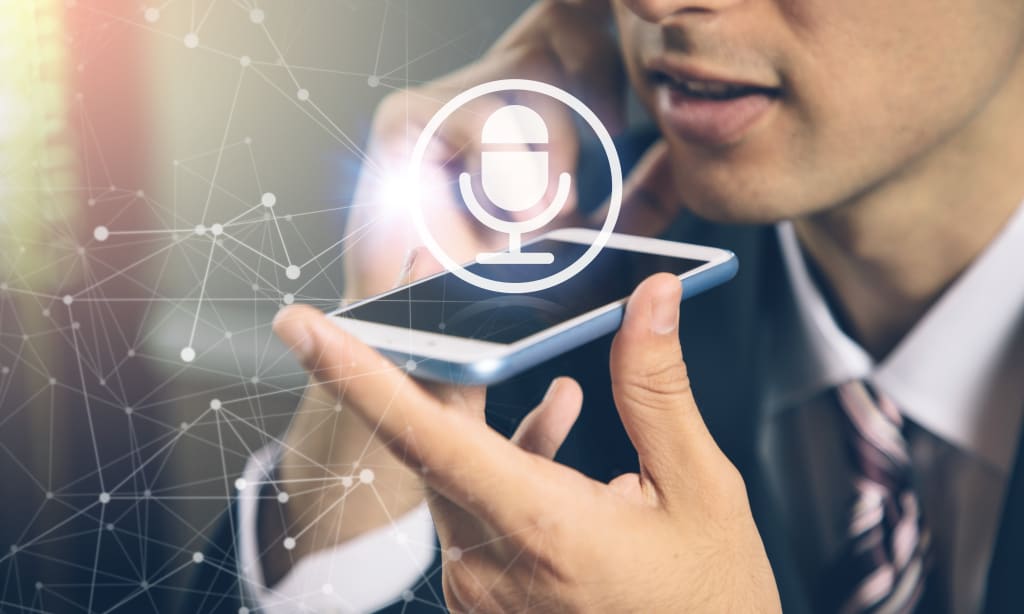
The Rise of Machines, The Echo of Humanity
We live in an era where artificial intelligence speaks, writes, sings, and even argues. Chatbots negotiate customer complaints. AI narrators read audiobooks with chilling accuracy. Digital assistants mimic our tones, and deepfake technology can replicate almost any voice.
Yet, amidst this digital cacophony, there remains something irreplaceable about the human voice. It carries cracks, pauses, laughter, and warmth that no algorithm can truly capture. In the rush to embrace machines, we are reminded daily: the human voice is not just sound—it’s soul.
This blog explores why the human voice still matters in the AI age, how it shapes identity, communication, and trust, and what happens when machines try to take its place.
Chapter 1: The History of the Human Voice — Our First Technology
Long before keyboards, microphones, or chatbots, the human voice was humanity’s first tool of communication. Firelight flickered in caves as stories were passed orally from generation to generation. The voice was a bridge—carrying not only facts but feelings, values, and culture.
Think about it: civilizations rose and fell, yet it was through spoken stories that knowledge endured. The griots of West Africa, the poets of Ancient Greece, the shamans of the Americas—all relied on the voice to preserve memory.
Today, AI can store terabytes of data. But can it carry the weight of a grandmother’s lullaby, a lover’s whispered secret, or a leader’s trembling speech in the face of crisis? That is the unmatched power of the human voice.
Chapter 2: Why We Trust Voices More Than Text
Humans are wired to respond to voices. Neuroscience tells us that infants recognize their mother’s voice even in the womb. The cadence of a voice communicates safety, trust, or danger long before words do.
When a friend texts, “I’m fine,” it can mean a dozen different things. But when they say it, we hear the cracks, the hesitations, the irony, or the relief. The voice fills the gap that text alone cannot bridge.
AI-generated voices have grown impressively realistic. Yet, studies show that most people can still detect the flatness—a missing spark of humanity. Authenticity is not just about the accuracy of sound, but about the emotional resonance beneath it.
Chapter 3: AI and the Replication of Voices
Here’s where it gets complicated. AI can now clone voices with just a few seconds of audio. Entire speeches can be generated in your tone, inflections, and quirks. Celebrities, podcasters, and even ordinary citizens have found their voices stolen and used for scams, impersonations, and propaganda.
This raises ethical questions:
Who owns the human voice?
Can authenticity be licensed?
What happens when AI-generated voices flood our ears, making it harder to tell what’s real?
The darker side of this technology is obvious, but the hopeful side is equally powerful. AI voice synthesis is giving stroke survivors, ALS patients, and people who lost speech the ability to “speak” again—in voices that sound like their own. Here, technology becomes not a thief but a liberator.
Chapter 4: The Voice as Identity in a Machine Age
Your voice is as unique as your fingerprint. Pitch, tone, rhythm, and accent combine to create a vocal identity. When you speak, you declare not just what you think but who you are.
The gentle accent of the Caribbean.
The rolling cadence of Irish storytelling.
The clipped precision of an Oxford lecturer.
Each voice is cultural, personal, and irreplaceable. Yet, AI threatens to flatten these identities into standardized, commercialized tones. Will future generations value unique imperfections, or will they prefer the polished neutrality of synthetic voices?
The stakes are high. To lose the voice is to lose a part of ourselves.
Chapter 5: Storytelling — Why Humans Still Win
If AI can summarize, script, and narrate, why do people still flock to hear authors, poets, orators, and podcasters? The answer: storytelling is not just words—it’s a performance of the soul.
Consider Martin Luther King Jr.’s “I Have a Dream.” AI could replicate the words, even mimic the cadence. But the trembling urgency, the prophetic fire—that cannot be faked.
Or think of your favorite comedian. AI could write the jokes. It could copy the timing. But could it deliver the awkward pause, the raised eyebrow, the sudden break into laughter that makes humor truly land? Probably not.
This is where the human voice reigns supreme. It conveys vulnerability, unpredictability, and authenticity. It tells us: a real person is here, sharing their truth with you.
Chapter 6: Work, Voice, and the Future of Creativity
In the workplace, AI is already answering customer calls, narrating training videos, and assisting in healthcare. But surveys show people still prefer speaking to a human in critical moments:
When reporting fraud.
When seeking medical reassurance.
When negotiating sensitive issues like debt or mental health.
Why? Because the human voice communicates empathy. Machines may get the facts right, but humans get the feelings right. In a world increasingly mediated by AI, empathy is becoming the new competitive advantage.
The future of creativity will belong not to those who sound perfect, but to those who sound real.
Chapter 7: The Human Voice Online
Let’s pivot briefly into SEO. Why does voice matter in the age of Google searches and AI-driven content? Because the internet is moving toward voice-first technology.
By 2030, estimates suggest that over 60% of searches will be voice-driven.
Podcasts are exploding precisely because people crave real voices in an overly text-saturated online world.
Brands with authentic voiceovers (not robotic tones) see higher trust and conversion rates.
In other words, the human voice isn’t disappearing—it’s becoming the premium signal in a noisy, AI-filled marketplace.
Chapter 8: The Ethics of Voice in AI
We cannot ignore the ethical storm brewing. Voice deepfakes have been used in political manipulation, financial scams, and misinformation campaigns. The very trust we place in voices can be exploited.
But ethics also extend to representation. AI voices often default to American, male, and “neutral,” raising concerns about diversity and inclusivity. Which voices are amplified? Which are erased?
The power of the human voice, then, is also about responsibility. Each voice carries not just sound but social weight.
Chapter 9: The Emotional Future — Humans + AI Together
It’s tempting to frame this as humans versus AI. But the real power may come from humans and AI working together. Imagine:
A teacher using AI to translate their voice into dozens of languages—while retaining the warmth of their own tone.
A musician layering AI-enhanced harmonies onto their raw vocals, creating soundscapes that were impossible before.
A therapist using AI transcription to free their focus—so their voice can fully be present with the patient.
In these futures, the human voice is not replaced but augmented. AI becomes the amplifier, not the author, of human authenticity.
Why the Human Voice Will Outlast the Algorithm
The age of AI is loud. It hums, clicks, and echoes with synthetic voices competing for our attention. But beneath all the noise, the human voice remains the oldest, most trusted technology we have.
It tells stories. It heals. It persuades. It comforts. It resists. It cannot be fully faked because what makes it powerful is not the sound waves—it’s the soul behind them.
As AI grows louder, the quiet imperfections of human voices will only grow more valuable. Cracks, pauses, laughter, even tears—these are not weaknesses. They are proof of life.
And in the end, amidst algorithms and automation, it is proof of life we all crave most.
About the Creator
Omasanjuwa Ogharandukun
I'm a passionate writer & blogger crafting inspiring stories from everyday life. Through vivid words and thoughtful insights, I spark conversations and ignite change—one post at a time.
Keep reading
More stories from Omasanjuwa Ogharandukun and writers in Journal and other communities.
When is the Finale of The Summer I Turned Pretty? All About the TSITP Ending, Release Dates, and What to Expect
If you’ve been binge-watching The Summer I Turned Pretty on Amazon Prime Video, you know the stakes are sky-high. Belly’s love story has been a rollercoaster of sun-drenched romance, heartbreak, and second chances. And now, it all comes down to the series finale. Fans everywhere are asking: When is the finale of The Summer I Turned Pretty? When does TSITP finale come out? Let’s dive into all the juicy details, episode release dates, finale speculation, and what the ending means for Belly, Conrad, Jeremiah, and fans of Jenny Han’s beloved trilogy.
By Omasanjuwa Ogharandukun4 months ago in Journal
Smart phones, Humans and Aliens.
WARNING. I will be tapping into one of your favorite creative tensions: The absurdity of humans worshipping their glowing rectangles as if they were tiny oracles. There’s something deliciously poetic about that contradiction, and it lends itself beautifully to an instructive proviso.
By Novel Allen4 days ago in Poets



Comments
There are no comments for this story
Be the first to respond and start the conversation.