
The Power of Presidential Appointments: Balancing Loyalty and Expertise in Financial Posts
How Strategic Appointments Shape Economic Policy and Public Trust.
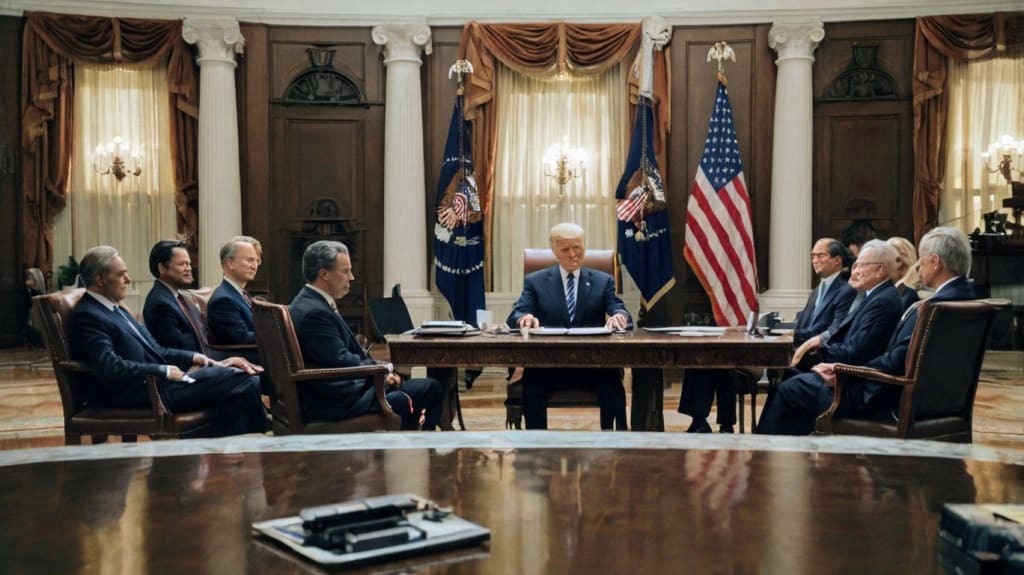
Start Successive administrations in politics require key financial post appointments as a crucial tool for enforcing their economic agenda. This plays an essential role in making it possible for a president, by placing trusted allies and loyalists in influencing positions, to ensure that his or her vision regarding the national economy is left undisturbed. This strategy underlines control over economic policy but simply places a clear declaration of what the administration wishes to focus on.
This article examines the way presidential appointments finally shape the economic policy, merits and criticisms of choosing sycophants for monetary portfolios, and wider implications in governance and public trust.
Strategic Appointments: A Road to Economic Objectives
Many presidential administrations streamline the process through strategic placements of loyalists in key policy-making positions. Such loyalist positions in financial policy-making entail the Treasury Secretary, members of the Federal Reserve Board, as well as the heads of regulatory bodies such as the SEC.
Loyalists bring coherence and predictability to the economic policy. They tend to further and actualize the agenda of the president without challenges, which aids in matters of consistency in decision-making. A consistent team, for instance, can react promptly in times of economic uncertainty or crisis rather than get bogged down by bureaucratic bureaucratic red tape that would stall necessary reforms.
Case Studies in Strategic Financial Appointments
Ideally, a president uses financial appointments as a tool to guarantee his legacy and face tough economic issues. A close examination of the past administrations reveals how such decisions impacted them:
The Reagan Administration
President Ronald Reagan staffed his administration with confidants, like James Baker, who became Secretary of the Treasury. He led a twin agenda for tax reforms and deregulation. These appointments formed a nucleus for the now infamous Reaganomics, which characterize much of Reagan's legacy.
The Trump Administration
Selection of Loyalists: His choice of people, for instance, Steven Mnuchin as Treasury Secretary, pointed to his preference for those who shared his priorities on the economy. Another case in point is the role played by Steven Mnuchin in passing the Tax Cuts and Jobs Act of 2017.T
The Biden Administration
A display of loyalty and expertise is evident in Pres. Joe Biden's appointments, particularly the one Janet Yellen got in terms of Treasury Secretary. Though the experience of Yellen is hailed, her appointment also gives outlines about alignment with Pres. Biden's focus on economic recovery and income inequality.
Advantages of Loyal Appointments
Policy Consistency
Loyalists are likely to subscribe to the economic philosophy of the president. Hence, there will be minimal infighting in the administration, and such an administration would have a cohesive voice in most issues. It is particularly true in financial policymaking for mixed signals can shake up markets and stakeholders.
Rapid Decision-Making
Economic crises typically require quick and decisive actions. Economic loyalists can expedite the implementation of policies with less infighting and opposition from within.
Establishing Political Power Sycophantic appointments generally enhance the political muscle of a president. Important friends in key slots can provide legislative initiatives greater publicity, bargain with the lobby groups, and possibly offset opposition power.
Critics about Sycophantic Nominations
While there are strategic advantages through loyalists' appointment, such an action has not been devoid of criticism. Critics view favoritism that is likely to be marked by the following problems:
Meritocracy Erosion
Loyalists undermine merit-based appointments in that loyalty takes precedence over qualifications, meaning that people with no experience or expertise that is required for overseeing critical economic decisions.
Intensification of Political Rivalries
The loyalists may promote political competition because the alternatives could be seen as promoting particularistic instead of collective interests.
Risk of Groupthink
An obedient team of loyal employees could stifle dissent, thereby risking groupthink. The likely consequence of such inflexibility might be the delay of proper innovation and the risk of policy failures.
Public Perception and Credibility
The perception that appointments are made through loyalty rather than competence leads to losses in public confidence in the ability of the administration to effectively run the economy.
Maintaining Loyalty and Competence
The problem any president faces is always finding the right equilibrium between loyalty and expertise-loyalists ensuring conformity to the goals of the administration, and experts bringing technical knowledge and independent judgment for effective governance.
Presidents can at times solve this balance by appointing individuals who have both attributes in them. For instance, President Biden's appointment of Janet Yellen was a mix of trust and proven economic skills. For instance, the Obama administration appointed Timothy Geithner as Treasury Secretary, balancing loyalty and technical proficiency .
The Role of Oversight and Accountability
In order to minimize the risks associated with loyalty appointments, there is a need for robust oversight and accountability. To this end, Congress has a significant role in vetting and confirming appointees based on qualification and merit. Independent agencies like the Government Accountability Office (GAO) monitor the performance of financial institutions and appointees and provide security to the public interest.
Transparency of the process in the decision-making delivers further credence to the accountability aspect. The reporting, public hearing, and communication with stakeholders assure that appointees stay ahead of achievement on behalf of the economic interests of the nation.
Wider Implications for Governance
Strategic implementation of appointments to financial positions offers wider implications on governance:
Economic Stability
A proper appointee will see the economy ride out the turbulence while ensuring stability and growth. Appointments gone wrong make economic issues worse and dampen confidence.
Institutional Integrity
The strength of financial institutions is confirmed by the strength of their leadership. While loyal followers can propel the agenda of the president, they must do so within an understanding of the institutions they are leading, in order that their autonomy and integrity remain intact.
Legacy and Public Perception
A president's legacy is also molded by how he would have managed specific economic issues. Such strategic appointments can dramatically influence how future generations perceive the impact of the administration on the economy.
Conclusion
An administration's appointment of the most loyalists to financial posts certainly grants the president all one needs to pursue his or her economic vision with little resistance but presents great risks in terms of erosion of trust, loss of expertise, and increased partisanship.
A balance between loyalty and merit needs to be achieved to ensure effective governance. It will go a long way to assure openness and accountability while airing merit-based considerations to help administrations exploit the strengths of loyalists while protecting the economic interests of the nation.
Choices made in such appointments, within an ever-changing landscape of financial policymaking, come to have impacts far beyond the reach of the administration itself, shaping the economy and public trust for years to come.
About the Creator
Keep reading
More stories from J Pavan Kumar and writers in Journal and other communities.
Balancing Wellness
Balancing Wellness: Journey to wholeness. Let's try to remind ourselves that in a world racing towards more-than-more work, more-than-more accomplishments and more-than-more distraction, real wellness lies far from all of this. Professional heights or schedules bursting with events are not the crux of it all. Just by coincidence, really, true wellness is that delicate balance within the depths of physical, emotional, mental, and spiritual health. That journey toward holistic well-being is what we call Balanced Wellness.
By J Pavan Kumarabout a year ago in Journal
The goals I did not achieve
Every writing goal I made for the year is a wash. It has been this way for a while, but I think it's important to be open about my failures and the reality of how life can get in the way. This is especially true considering the several times I have posted on Vocal about my writing goals, how I was changing my approach, and where I was hoping to be for the upcoming year. I will probably do that again in a couple months, but for now, it is time to acknowledge where I am today.
By Kay Husnick24 days ago in Journal
The Invisible Hand That Rules
In the heart of the city, there’s a building that no one notices. Its glass walls reflect the sun, its elevators glide silently, and its corridors smell of polished ambition. Decisions are made here that shape millions of lives, yet outside, the city breathes, unaware. The air hums with traffic, the chatter of cafes, the distant wail of sirens, and life moves on as though the building’s influence is nothing more than an echo.
By Jhon smith5 days ago in Journal




Comments
There are no comments for this story
Be the first to respond and start the conversation.