
The Pixel Unfolds: Why Google's Quiet Peek at the Pixel 10 Pro Fold Feels Like a Turning Point
When you’re scrolling through your usual tech haunts, maybe half-watching a video, half-thinking about dinner

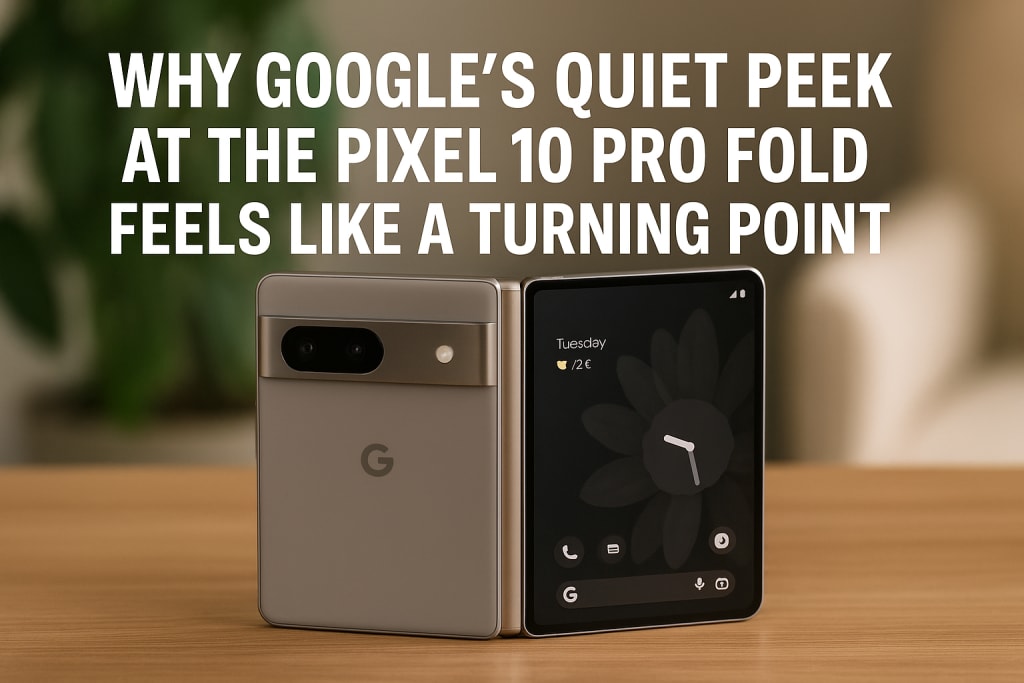
You know that feeling? When you’re scrolling through your usual tech haunts, maybe half-watching a video, half-thinking about dinner, and then – BAM – something stops you cold. Your thumb freezes mid-swipe. That happened to me yesterday. Right there, nestled between the usual rumors and reviews, Google posts an official look at the Pixel 10 Pro Fold.
It wasn’t a flashy event. No dramatic CEO reveal. Just… a short video. A sleek, folded rectangle, unmistakably Pixel in its design language, held casually in someone’s hand. The screen briefly flickered to life, folded shut. Simple. Almost… understated. And yet, it felt seismic.
Why This Glimpse Hit Different
Remember the early days of foldables? Clunky. Expensive. Novelty gadgets whispering promises we weren't sure they could keep. I remember handling a friend's first-gen foldable; it felt fragile, the crease was a canyon, and the software? Let's just say it hadn't gotten the memo about the whole "folding" thing. It was a phone awkwardly stretched onto a new shape.
Seeing Google’s official peek at the Pixel 10 Pro Fold felt like a deliberate step beyond that awkward adolescence. It wasn’t just showing *a* foldable; it was showing their vision for it. The folded form factor looked refined. Compact. Like something you wouldn’t think twice about slipping into a pocket or a small bag. That matters. It signals confidence that this isn’t just a tech demo; it’s designed for life.
Beyond the Hinge: The Software Story We Need
The video was brief, but the subtext screamed volumes. The biggest hurdle foldables face isn’t the physical hinge anymore (though that’s crucial); it’s the software. How does Android think when the screen changes shape?
Google posting this look feels like a declaration: "We own Android, and we’re building the Pixel 10 Pro Fold from the silicon up to make folding make sense." Imagine flipping open your phone to check a map, then unfolding it fully to see the bigger picture without the app freaking out. Or seamlessly dragging your messaging thread to the top half and your browser to the bottom for true multi-tasking while researching that weekend getaway – and it just works because Google baked it in.
Think about your own frustrations. That recipe video you keep minimizing accidentally. The spreadsheet you can’t quite see enough of on your phone. The awkward split-screen that feels more like a compromise than a feature. The Pixel 10 Pro Fold’s potential lies in Google tackling these exact pain points. That brief glimpse wasn’t just about hardware; it was a promise of a smoother, more intuitive way to interact with our digital worlds.
Real-World Whispers: Where the Fold Could Shine
Let’s step out of the tech bubble for a second. Where could this actually make a difference?
The Commute Conundrum Solved: Picture Sarah, juggling her coffee, her bag, and her phone while trying to scan her transit pass. A traditional phone requires two hands. A folded Pixel 10 Pro Fold? Compact enough to hold securely in one palm, screen active and ready. Unfold it later on the train to comfortably read the news or catch up on emails.
The Kitchen Commander: Mark loves trying new recipes, but his phone screen is always just slightly too small. Propping it up risks spills. Unfolding the Pixel 10 Pro Fold on his counter gives him a mini-tablet view of the recipe, hands-free, readable from across the kitchen island. No more frantic wiping of flour-covered fingers to scroll.
The Travel Light Advocate: Lisa hates lugging a tablet and a phone on short trips. But her phone screen feels cramped for planning, browsing, or even watching a movie on the plane. The Pixel Fold offers her a single device that transforms: compact phone for navigating a new city, expansive screen for relaxing in the hotel.
The Multitasking Parent: David is trying to help his kid with homework via video call while simultaneously looking up an answer online. Constantly switching apps is driving everyone nuts. Unfold the Pixel. Homework on top half, research browser below. Sanity (partially) restored.
These aren’t sci-fi scenarios. They’re the daily friction points the Pixel 10 Pro Fold, backed by Google's software muscle, could genuinely smooth out.
The "Official Look" Factor: Why It Builds Trust
Google choosing to post an official look at the Pixel 10 Pro Fold themselves, even briefly, is strategic. It cuts through the noise of leaks and speculation. It says, "This is real. This is ours. And we believe in it enough to show you directly." In a market flooded with vaporware and endless rumors, that directness is refreshing. It builds anticipation on their terms.
It also feels like a statement of maturity. They aren’t rushing to match competitors feature-for-feature. They’re methodically building their interpretation of what a foldable Pixel should be. That inspires more confidence than a dozen anonymous leaks.
The Questions That Linger (And Why They're Exciting)
Of course, the short video leaves us hungry for more:
The Crease: The eternal foldable question. How visible is it in daily use? Google's choice of materials and hinge design will be critical.
The Camera: Can a folding design house the legendary Pixel camera magic without compromise? That unfolded screen could be an incredible viewfinder.
The Price: Foldables are premium. Will Google find a way to make the Pixel 10 Pro Fold feel like a compelling value proposition beyond just "it folds"?
Battery Life: Powering two screens (effectively) is demanding. How will Google optimize Tensor inside the Fold for all-day endurance?
These aren’t drawbacks; they’re the chapters yet to be written. The fact that Google posts an official look at the Pixel 10 Pro Fold means they're ready to start answering them, in time.
A Glimpse of a Different Relationship with Our Screens?
More than just a new phone shape, this feels like a potential shift in how we interact with our most personal devices. We’ve spent years adapting to increasingly larger, more immersive slabs. The foldable flips that script (pun intended). It suggests a device that adapts to us and our immediate needs.
Do you need just a quick notification check? Keep it folded. Need to dive deep into a document or lose yourself in a show? Unfold it. It’s about choice and context. It’s technology bending to fit the moment, rather than us constantly bending around our technology.
The Takeaway: More Than Just Hype
Seeing Google post an official look at the Pixel 10 Pro Fold wasn't just about the next shiny gadget. It felt like a marker. A sign that foldables are moving beyond the experimental fringe and into the realm of genuinely considered, thoughtfully executed mainstream devices. Google, the steward of Android, putting its full weight behind the form factor is a massive validation.
It whispers of a future where our pocket computers aren't just one-size-fits-all rectangles, but dynamic tools that morph to fit the task at hand. Where the frustration of a cramped screen or awkward multitasking might finally ease. Where the hardware and software are conceived as one, seamless experience.
That short video clip wasn’t just a product teaser. It was a quiet, confident nod towards a more flexible way of interacting with our digital lives. And honestly? I find that far more exciting than any over-the-top launch event. The real story starts when we get it in our hands, but for now, knowing it’s coming, and seeing Google believe in it enough to show us directly? That’s a pretty compelling first chapter.
What about you? Did seeing Google post an official look at the Pixel 10 Pro Fold change your perception of foldables? What's the one daily hassle you dream a device like this could solve for you? The conversation is just beginning to unfold.
About the Creator
John Arthor
seasoned researcher and AI specialist with a proven track record of success in natural language processing & machine learning. With a deep understanding of cutting-edge AI technologies.
Keep reading
More stories from John Arthor and writers in Journal and other communities.
The Amazon KDP AI Policy Decoded: How I Format, Design, and Publish My Books with Confidence (Not Fear).
From Blank Page to Bestseller: My Messy, Profitable Journey with AI, KDP, and One Big Fear Let’s not start with a lie. My first “book” was a 15-page PDF I sold for $2.99 in 2018. It looked like a school project, written in Comic Sans (I’m cringing just typing that). I made three sales. To my mom, my dad, and a very confused stranger who probably wanted a refund.
By John Arthor2 months ago in Journal
Author’s Advice
If you would’ve asked me 20 years ago did I know I’d become a writer and an author, I would’ve said “nope, ain’t happening”. As fate would have it I did become an author and I can honestly say I’m loving it so far. It really does feel good to be a writer. I’ve learned a lot on this journey and I feel like with even me being as new to this world as I am, there’s some wisdom I need to share with every other aspiring author.
By Joe Patterson4 days ago in Journal
Focus and Overwhelm in Digital Product Creation
Digital product creation demands deep focus, steady decision making, and sustained mental energy. Many creators struggle not because they lack ideas or skill, but because their attention fractures under the weight of constant choices. Overwhelm creeps in quietly and erodes progress.
By Edina Jackson-Yussif a day ago in Journal
A Transparent Look at Vocal Challenges and Top Stories
Almost three years ago, we shared a resource article that served as a place for people to suggest new challenge prompts. We thought it would be a good idea to refresh that thread, and take the opportunity to answer a few common questions about top stories, how challenges are judged and how submissions are reviewed.
By Vocal Curation Team3 days ago in Resources



Comments
There are no comments for this story
Be the first to respond and start the conversation.