
The Next OLED Leap Is Quiet—but Powerful
Why LG Display’s Tandem WOLED could redefine how your TV looks, lasts, and feels
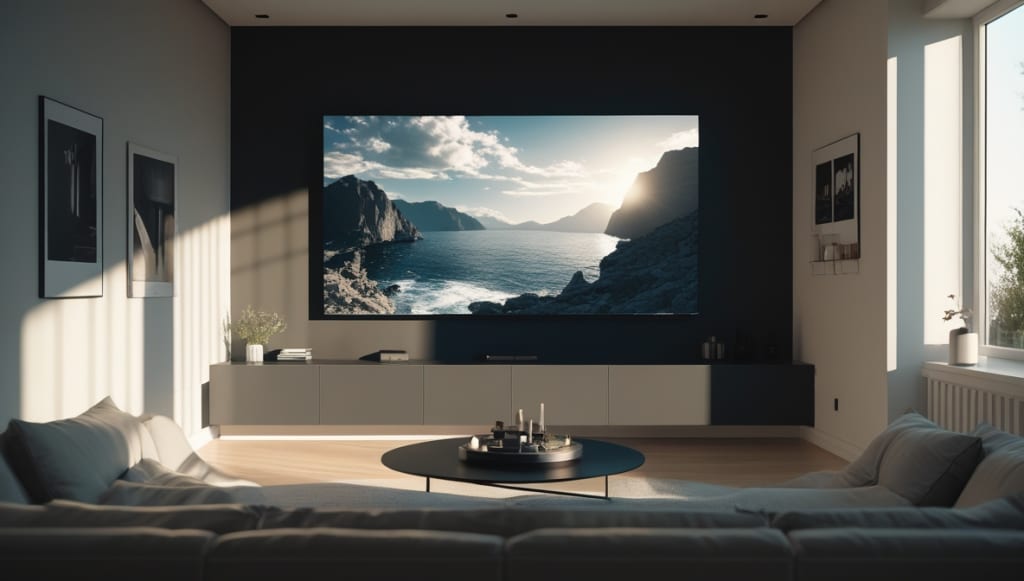
Most of us don’t think about how our TV actually works—until something feels off. The screen struggles in daylight. HDR doesn’t pop the way it should. Or a quiet worry creeps in about how well that beautiful OLED panel will age over time.
LG Display’s latest tease, Tandem WOLED, isn’t designed to dazzle with flashy buzzwords. It doesn’t shout about revolution. Instead, it aims to quietly solve the everyday frustrations OLED technology has carried for years—by changing how these panels are built at their core.
And that subtle shift may end up mattering more than any headline-grabbing feature.
Understanding Tandem WOLED—Without the Tech Overload
Traditional WOLED panels rely on a single light-emitting stack. That stack produces white light, which is then filtered into red, green, and blue subpixels. It’s an elegant solution, but it comes with limitations. Pushing brightness harder also pushes the organic materials closer to their limits.
Tandem WOLED changes that structure.
Instead of one emission layer doing all the work, LG Display stacks two light-emitting layers, allowing them to share the load.
Think of it like a bridge reinforced with an extra support beam. It doesn’t look dramatically different from the outside, but it handles stress far better over time.
This layered approach allows panels to reach higher brightness levels with less strain, improving efficiency and stability in the process.
Why Brightness Still Matters—Even Now
Some people ask whether TVs really need to get brighter anymore. After all, OLED already looks stunning in controlled lighting. But most TVs don’t live in perfectly dark rooms.
They live in sunlit apartments, open living rooms, and spaces filled with reflections and glare. This is where OLED has traditionally struggled, especially against Mini-LED TVs that can brute-force brightness.
Tandem WOLED helps OLED close that gap without sacrificing what makes it special. Higher brightness headroom means HDR highlights look more natural, daytime viewing improves, and the panel doesn’t need aggressive tone-mapping tricks that dull real content.
It’s not about eye-searing brightness. It’s about flexibility in real-world conditions.
The Burn-In Fear—Quietly Rebalanced
Burn-in has followed OLED like a shadow. While modern OLED TVs are far more resilient than early models, the concern still lingers—especially for gamers, sports fans, and anyone who watches channels with static logos.
Tandem WOLED doesn’t magically eliminate burn-in, but it changes the equation.
Because brightness is achieved with less stress per layer, the panel doesn’t need to push individual materials as hard. Over time, that can mean slower degradation, more consistent brightness, and reduced risk for static elements.
This isn’t the kind of improvement you notice on day one. It’s the kind you appreciate years later, when your TV still feels premium instead of tired.
Why This Actually Matters for Your Next TV
Most people don’t replace their TV every year. They buy one expecting it to last five, maybe seven years. That’s where Tandem WOLED becomes genuinely meaningful.
A panel that maintains brightness and color accuracy over time feels better to live with. Sports broadcasts stay vibrant. Games remain sharp. Movies don’t lose their emotional punch as the screen ages.
This isn’t about chasing specs. It’s about buying a TV that ages gracefully in a real home—not just under showroom lighting.
Efficiency: The Unsung Hero of Display Tech
Efficiency doesn’t generate excitement, but it quietly influences everything. More efficient panels generate less heat, maintain performance during long viewing sessions, and allow for slimmer designs without thermal compromises.
For manufacturers, this flexibility matters. Tandem WOLED panels can be tuned differently depending on the model—prioritizing peak brightness for flagships or longevity for mainstream TVs.
For viewers, it means consistency. The TV you enjoy today won’t slowly drift away from what you paid for.
OLED vs Mini-LED: The Gap Narrows
The industry loves framing TV technology as a battle: OLED versus Mini-LED, contrast versus brightness. Tandem WOLED doesn’t end that debate—but it softens the edges.
OLED keeps its strengths: perfect blacks, pixel-level lighting control, and wide viewing angles. But now it pushes closer to Mini-LED in areas where it used to lag, like sustained brightness and long-term durability.
It doesn’t make Mini-LED irrelevant. It simply makes OLED harder to argue against—especially at the premium end.
Why LG Display’s Role Is Bigger Than One Brand
LG Display isn’t just building panels for LG-branded TVs. It supplies OLED panels to Sony, Panasonic, Philips, and others. When LG Display improves its core technology, the entire high-end TV market feels the impact.
Tandem WOLED isn’t a single-brand advantage. It’s an ecosystem shift—one that could shape how OLED TVs evolve across multiple manufacturers.
OLED Is Growing Up
OLED began as a beautiful but temperamental technology. Stunning picture quality, paired with lingering concerns about brightness and longevity.
Tandem WOLED feels like a sign of maturity.
Not louder.
Not thinner for the sake of thinness.
Just better where it matters.
Better at lasting.
Better at handling real environments.
Better at earning its premium price over time.
Final Thought
Tandem WOLED won’t dominate marketing slogans or showroom demos. But years from now, when OLED TVs feel brighter, tougher, and more reliable by default, this may be the moment that foundation quietly changes.
Not a revolution you notice instantly—
but one you’ll feel every time you turn on the screen.
#OLED #TVTechnology #DisplayInnovation #HomeEntertainment #LGDisplay #FutureTech
About the Creator
Keep reading
More stories from Shahjahan Kabir Khan and writers in Journal and other communities.
Forget the Galaxy Z TriFold: Samsung’s “Wide Fold” Could Be Its Smartest Move Yet
For months, rumors regarding Samsung's upcoming foldable device have been spreading among tech circles. Galaxy Z TriFold is precisely the kind of eye-catching innovation Samsung consumers expect; the name evokes cutting-edge technology and excitement. It offers a more amazing experience thanks to three screens and additional hinges.
By Shahjahan Kabir Khan3 months ago in Journal


Comments
There are no comments for this story
Be the first to respond and start the conversation.