
🥶 The Next Great Freeze: How Humanity Might Evolve to Survive a New Ice Age
Analyzing the biological and cultural adaptations: From changes in body morphology and metabolic rates to the necessity of subterranean and technological sanctuaries in a frozen world.

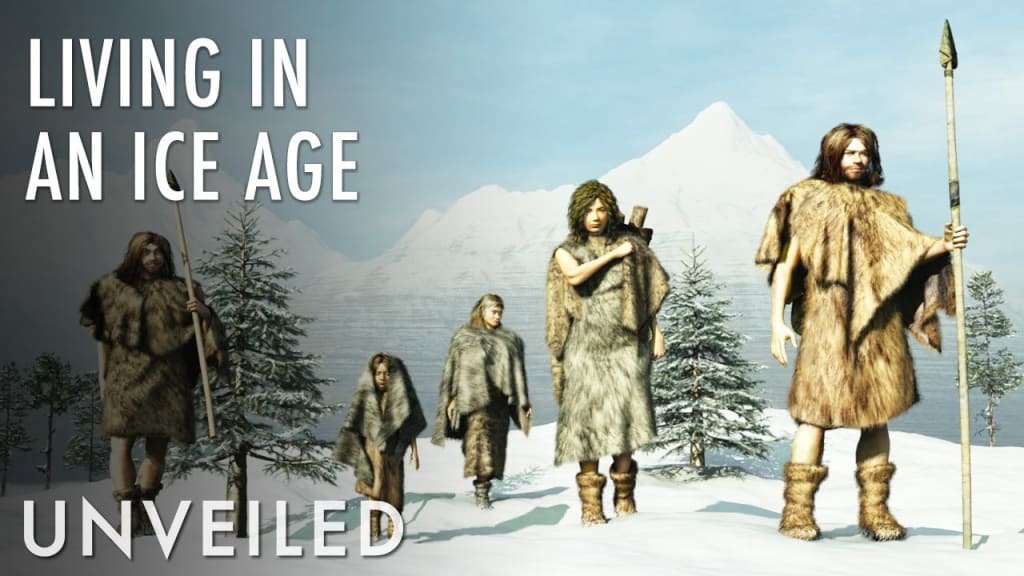
The concept of a new Ice Age—a prolonged period of global cooling leading to vast, continental ice sheets—is a potent speculative scenario that challenges the resilience of modern civilization. While human activity has significantly altered the climate trajectory, imagining a sudden, drastic return to glacial conditions (perhaps triggered by a massive volcanic eruption or a prolonged solar minimum) forces us to consider the ultimate test of human adaptability.
How would Homo sapiens, a species optimized for tropical and temperate zones, evolve biologically and culturally to survive a world defined by relentless cold, resource scarcity, and radically reduced solar energy? The answer lies in a rapid convergence of selective pressure, genetic drift, and technological ingenuity.
I. Biological Adaptations: The Morphology of Cold
Should an Ice Age persist for thousands of years, the selective pressures would favor individuals exhibiting certain physiological traits, leading to distinct human evolution:
Bergmann’s and Allen’s Rules: These established biological principles predict immediate morphological changes. Individuals in colder climates tend to evolve larger, stockier body masses (Bergmann’s Rule) to minimize the surface area-to-volume ratio, thereby retaining internal heat more efficiently. Simultaneously, limbs, noses, and extremities would become shorter (Allen’s Rule) to reduce heat loss through peripheral areas. The long, slender forms common in current tropical populations would be highly maladaptive.
Metabolic Shift and Brown Fat: Survival in extreme cold demands a higher basal metabolic rate to produce endogenous heat. Humans might evolve greater stores of Brown Adipose Tissue (BAT), or "brown fat." BAT is highly specialized tissue that burns energy to generate heat rather than store it. This adaptation would be critical for sustained thermogenesis.
Hair and Pigmentation: While human body hair is often vestigial, the selection pressure might favor individuals with thicker, denser body hair for insulation, potentially reversing thousands of years of evolutionary change. Furthermore, the lack of intense sunlight in northern latitudes (due to long winters and atmospheric particulates) would make Vitamin D synthesis difficult. This would strongly favor the evolution of lighter skin pigmentation, maximizing the limited UV radiation absorption, a trend already observed in populations historically inhabiting high latitudes.
II. Cultural and Technological Sanctuaries
Biological evolution is a slow process; the immediate survival of modern humans would depend entirely on cultural and technological innovation—a form of cultural evolution outpacing genetic change.
Subterranean and Protected Habitats: The most viable survival strategy would be moving underground or constructing massive, technologically controlled habitats. Subterranean living offers geothermal stability, protecting against the extreme swings of surface temperatures and lethal wind chill factors. These habitats would rely on geothermal energy or highly efficient nuclear microreactors for heat and power.
Closed-Loop Food Systems: Traditional agriculture would collapse under glacial conditions. Survival would necessitate Controlled Environment Agriculture (CEA), relying on vertical farms and sophisticated hydroponic or aeroponic systems housed entirely within climate-controlled domes or underground bunkers. Light would be provided by high-efficiency LED grow lights, using minimal energy while maximizing crop yield.
The Loss of Leisure: The entire societal structure would shift to an absolute focus on energy procurement, food production, and defense against the harsh environment. Resource allocation would be dictated by survival, potentially leading to a highly centralized, technocratic governance structure to ensure collective survival.
III. The Cognitive Imperative: AI and Knowledge Preservation
Perhaps the most significant evolutionary trait would be cognitive and digital. Humanity would need to leverage its highest achievement—Artificial Intelligence—to manage survival.
AI-Managed Infrastructure: The complexity of managing thousands of interlocking, closed-loop life support systems (air filtration, water recycling, energy distribution) would require highly sophisticated, autonomous AI systems. The human role would shift to oversight and maintenance, rather than direct management.
Knowledge Compression: Faced with limited computing and physical storage resources, humanity would prioritize the digitization and compression of all essential knowledge—science, history, and engineering—creating a secure digital archive for the surviving generations.
Conclusion: The Survivor Species
The return of an Ice Age would initiate a brutal phase of rapid evolution. While biological changes like stockier bodies and increased brown fat would occur over millennia, the immediate survival of Homo sapiens would hinge on our unique ability to use technology to create artificial niches.
Humans would evolve not just biologically, but techno-culturally, retreating into climate-controlled mega-structures managed by sophisticated AI. We would emerge as a tougher, pale-skinned, and significantly more technology-dependent species—a true testament to the power of our minds to defy even the most crushing forces of nature.
About the Creator
Author’s Advice
If you would’ve asked me 20 years ago did I know I’d become a writer and an author, I would’ve said “nope, ain’t happening”. As fate would have it I did become an author and I can honestly say I’m loving it so far. It really does feel good to be a writer. I’ve learned a lot on this journey and I feel like with even me being as new to this world as I am, there’s some wisdom I need to share with every other aspiring author.
By Joe Patterson3 days ago in Journal




Comments (1)
tks