
"The New Meaning of Travel in a Changing World"
From mindful journeys to sustainable choices—how tourism is evolving beyond sightseeing.
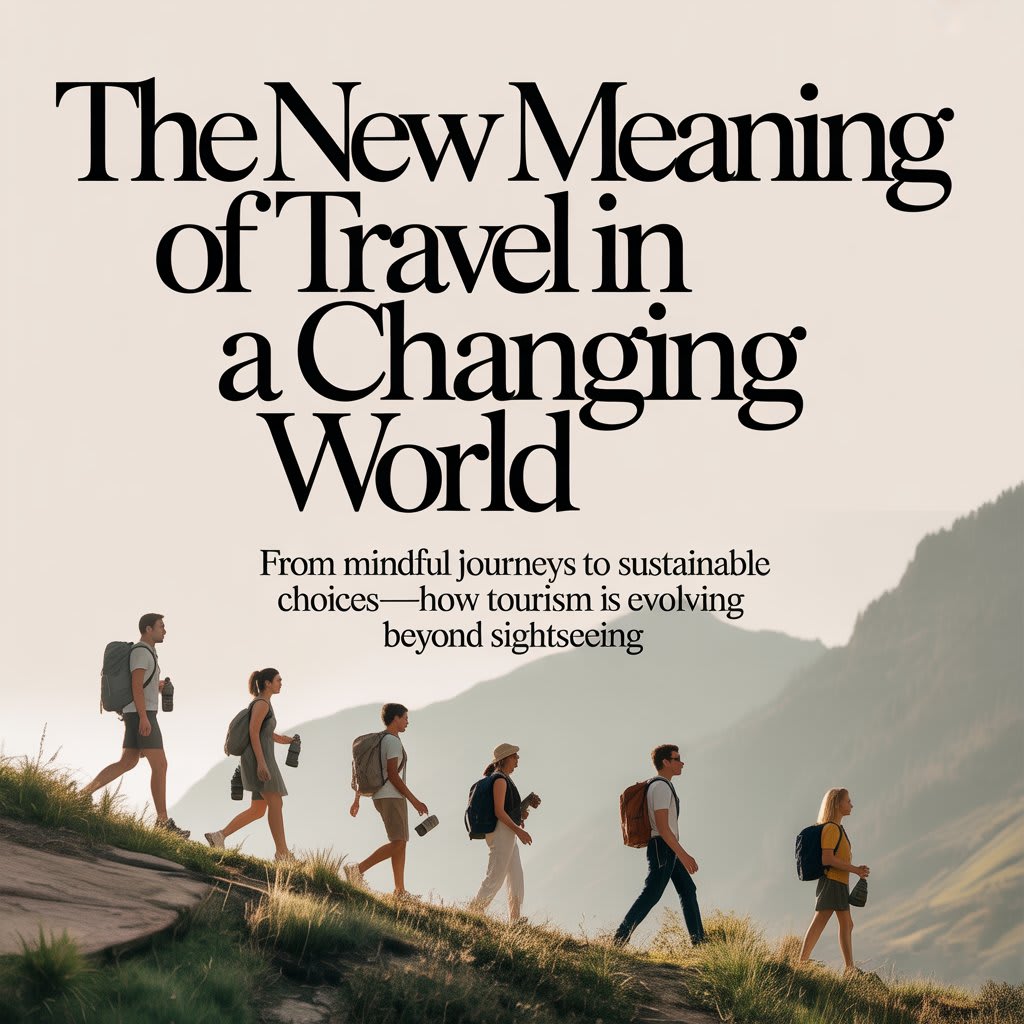
Travel has always been one of humanity’s greatest teachers. For centuries, people have journeyed across borders seeking adventure, knowledge, and connection. Yet, in today’s rapidly changing world—marked by climate crises, digital revolutions, and shifting cultural dynamics—the very meaning of travel is being redefined. Tourism is no longer just about collecting passport stamps or checking off bucket lists. It’s about awareness, purpose, and a renewed understanding of our role as global citizens.
From Escapism to Mindfulness
Not long ago, travel was often an escape—a temporary departure from the routines of daily life. Tourists flocked to crowded landmarks, eager to “see it all” in as little time as possible. But this fast-paced approach is losing its appeal. The modern traveler is seeking something deeper: mindfulness.
Mindful travel means being present in the moment—savoring a cup of local tea, listening to the stories of a street vendor, or walking through a forest without the pressure of capturing it all for social media. It’s about quality over quantity, connection over consumption. As people become more conscious of the impact of their choices, travel has shifted from being a way to escape life to a way of experiencing it more fully.
Sustainability as the New Luxury
The conversation about sustainable tourism has moved from niche to necessity. Rising awareness about environmental degradation, over-tourism, and carbon emissions has made travelers rethink how they move through the world. Today, the most meaningful luxury isn’t five-star comfort—it’s sustainability.
Eco-lodges that run on solar power, community-based tourism that supports local economies, and destinations that prioritize conservation are becoming more sought after. Travelers are realizing that their spending power can either harm or heal. A simple choice—like taking a train instead of a flight, carrying a reusable bottle, or choosing locally owned accommodations—can make a significant difference.
The shift is clear: true explorers now aim to leave a positive footprint, not a carbon one.
Cultural Immersion Over Consumption
The new generation of travelers values authenticity over attraction. Instead of ticking off monuments, they want to learn traditional crafts, share meals with locals, and understand the rhythm of a place. This cultural curiosity bridges gaps between nations and fosters empathy.
In countries like Japan, visitors are taking part in tea ceremonies to understand centuries of artistry and patience. In Morocco, travelers are learning how to cook tagine with local families. These experiences transform tourists into storytellers—people who don’t just see a place but feel it.
This form of tourism helps preserve heritage and promotes cultural exchange. It reminds us that travel isn’t just about the places we go, but about the people who shape those places.
The Digital Age and Conscious Connection
Technology has revolutionized travel—making the world more accessible than ever. Yet, it has also created a paradox: we’re more connected, but often less present. The rise of digital detox retreats and slow travel movements reflects a growing desire to disconnect from screens and reconnect with the world around us.
Travelers are choosing longer stays in fewer destinations, allowing them to form real relationships and understand local rhythms. Instead of rushing to upload the perfect photo, they’re focusing on meaningful moments—watching the sunrise, talking to a fisherman, or volunteering for a community project. These choices redefine connection in the digital age.
A Journey Toward Global Responsibility
As the world faces climate uncertainty and social inequality, travel carries moral weight. Every decision—from where we go to how we spend—affects the world’s ecosystems and communities. The new meaning of travel is rooted in responsibility: to tread lightly, to give back, and to inspire others to do the same.
Tourism can no longer exist in isolation from ethics or environment. It’s an evolving dialogue between humanity and the planet—a reminder that we are all stewards of the Earth’s beauty.
Conclusion: Traveling With Purpose
In this changing world, the most profound journeys aren’t measured by miles but by meaning. The traveler of tomorrow seeks not just to see the world but to understand it—to engage with it thoughtfully and compassionately.
Mindful, sustainable, and responsible travel isn’t a passing trend; it’s the future of exploration. As we redefine what it means to move through this planet, one truth remains: the journey will always shape us—but now, more than ever, we have the power to shape the journey in return.
About the Creator
Author’s Advice
If you would’ve asked me 20 years ago did I know I’d become a writer and an author, I would’ve said “nope, ain’t happening”. As fate would have it I did become an author and I can honestly say I’m loving it so far. It really does feel good to be a writer. I’ve learned a lot on this journey and I feel like with even me being as new to this world as I am, there’s some wisdom I need to share with every other aspiring author.
By Joe Patterson4 days ago in Journal
Seedream 4.5 vs. Nano Banana: AI Image Faceoff
Picking an AI image model feels like a gamble. You might love the art style of one tool but find its understanding of human anatomy terrible. I decided to run a head-to-head test between Seedream 4.5 and Google’s Nano Banana.
By Alex Tuckerabout 17 hours ago in Journal
My First Time Skiing and I Got Lost, Alone, in the French Alps
Looking back, I can trace some of my life’s biggest adventures to a simple action from my sister. She’d introduced me to Tommy (a very long time ago), a colleague of hers, who had overshared his penchant for Italian-looking women, and I ticked that box.
By Chantal Christie Weiss3 days ago in Humans




Comments
There are no comments for this story
Be the first to respond and start the conversation.