
The New Great Game: How Data, Debt, and Influence Replaced Empires
Once it was land. Then oil. Now nations compete for the invisible — the power to control what people think and owe.
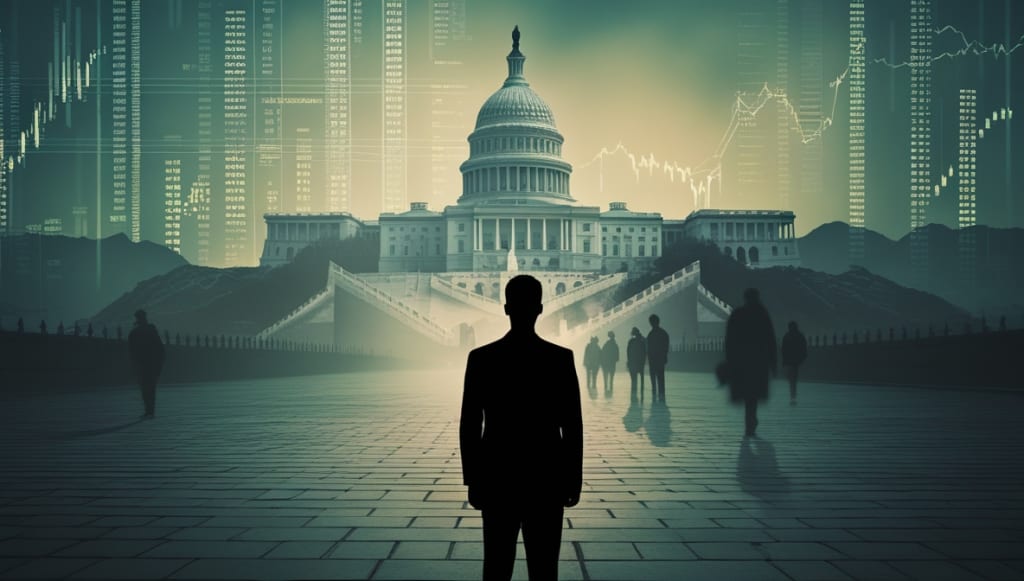
Previously, battlefields determined the destiny of countries. Clear victory enabled empires to grow, flags to be raised, and the military fought territorial battles. In the twenty-first century, though, conventional battle lines have faded. Modern empire builders dress professionally, not militarily. Data, algorithms, and financial pledges are their invisible means of control.
The planet is now involved in a new Great Game where the stakes are no more about holding the most land or oil deposits. It's about who controls the flow of financial and information resources, therefore influencing millions of people's attitudes.
From Gunpowder to Google
The British and Russian empires engaged in a covert war in Central Asia throughout the 19th century, a strategic chess game later known as The Great Game by historians. Rather than territory, one aimed to get power. The power balance for the years ahead would be determined by who controlled political ties, intelligence collection, and trade routes.
Two centuries later, despite geographic variations, the basic principles remain the same. Data centers, fiber optic networks, and cloud computing are among today's superpowers vying for digital domination.
Empires are this time around interested not just with your geographical location. They want to know your values, identity, and propensity for influence.
Conflicts in Data
The most effective means of retaining control has shown to be data. A country can use information to exert power; hence, military raids are not anymore necessary. Artificial intelligence systems, search engines, and social media channels now take over the role that conventional militaries used to serve as means of soft power.
Every interaction—whether it's a like, a click, or a scroll—signifies a bit of psychological money that companies whose business strategy comprises extracting, processing, and trading it The national interest is quietly linked to the government's influence.
The ideals of the United States are dispersed via Silicon Valley algorithms. China therefore supports digital sovereignty and offers allied nations monitoring devices. Europe is struggling to create order using privacy legislation that are already being surpassed by technical advancements.
The battlefield is psychological, not physical. In this literary game, the victors will be those who capture interest rather than those who dominate land.
Debt as the New Colonizer
Borrowing is seen as a modern shackles if knowledge is viewed as the new currency. Modern powers offer credit instead of sending troops to seize foreign capitals.
Many colonies achieved political independence in the last century, but several countries became economically oppressed. The techniques have changed: financial institutions replace military vessels; economic strategists replace military leaders.
Dominant countries have been able to shape the destinies of emerging countries thanks to large infrastructural funding, imbalances in foreign trade, and stipulation-loaded aid programs—all without the sound of bullets.
Consider China's Belt and Road Initiative as an example; it goes beyond the creation of harbors and transportation systems to emphasize influence— access to markets, logistics management, and political influence that lasts for years. The West follows this approach yet frames it as "development aid" and "investment."
Debt works invisibly. It increases interest rates rather than raising alarms. Still, it comes at the same end.
The Sphere of Influence
In past empires, kings used terror to govern. By contrast, contemporary empires wield power through consensus.
Custom-built experience now is propaganda's metamorphosis. The articles you read, the ads you come across, even the indignation engulfing your social media—it's painstakingly designed to guarantee your involvement, encourage division, and inspire predictability.
Its seeming voluntary participation makes this kind of empire especially dangerous. We welcome surveillance methods, gladly share our personal information, and accept company technologies. We participate in our own management actively.
Influence replaces invasion. Today ideas are advertised rather than broadcast. And we have consumers rather than colonial subjects, their identities shaped by algorithms that depend on division.
The Undercover Diplomats in the Digital Era
The most powerful diplomats in the modern world are platforms, not heads of state.
A little change in an algorithm might start a social rebellion, destabilize a company, or affect an election outcome. Still, these decisions are set in corporate headquarters rather than in parliamentary chambers.
More global power than many countries have accumulated is held by private businesses. Their leaders guide communication, information distribution, and even ethical norms. They represent a fresh kind of East India Company: privately run companies with public consequences.
The preceding colonial powers took control of actual territory. The present ones overcome reality's judgments.
A World Without Borders — and Without Balance
For the first time ever, physical territory no longer governs worldwide influence. A country's might can now be assessed in terabytes instead of army trucks. This freedom, though, generates vulnerability.
Though it is fragile, the interconnected planet we have made has tremendous power. Cyber wars, data breaches, and digital surveillance have made conflict everlasting, though invisible.
There are no agreements on data rights, no global authority for the age of algorithms, and no international legislation to handle misinformation. Every nation is trying to acquire dominion over a region that is still mostly enigmatic.
The Human Toll
Underneath all this political wrangling is a basic truth: the average person rarely wins out. The same systems that promote innovation also use sensitivity. The same information providing customized experiences also backs up monitoring.
We are more than just users; we are the foundation on which this fresh Great Game plays out. We are trading our time, trust, and judgments as though they were products.
Still, becoming knowledgeable is the first line of resistance. Once we grasp the game, we can choose not to follow its rules.
The following empire
History shows a repeating pattern: every empire assumes it will go on indefinitely until it does not. The rise of nationalism brought the British Empire down. The world order led by America could fold beneath its own technical burden.
The following great power may not even be a nation; it might be a network. It will be information rather than by geographic borders. Programming will rule it, not monarchs.
The most self-aware rather than the most strong will come out victorious in that instant. True power in this age of invisible empires resides in understanding rather than control.
About the Creator
Keep reading
More stories from Shahjahan Kabir Khan and writers in Journal and other communities.
The Bismuth Awakening: How China’s New Chip Could End Silicon Valley’s 50-Year Reign
For the last five decades, silicon—not precious metals or fossil fuels—has been the sole, barely visible engine behind our existence. From data centers to spacecraft, from the car you drive to the mobile gadget you use, everything depends on little pieces of silicon. It has acted as the foundation of a technological civilization and the invisible drive of human development.
By Shahjahan Kabir Khan3 months ago in Journal
The goals I did not achieve
Every writing goal I made for the year is a wash. It has been this way for a while, but I think it's important to be open about my failures and the reality of how life can get in the way. This is especially true considering the several times I have posted on Vocal about my writing goals, how I was changing my approach, and where I was hoping to be for the upcoming year. I will probably do that again in a couple months, but for now, it is time to acknowledge where I am today.
By Kay Husnick21 days ago in Journal
Why are insurance operations ready for AI and what smart teams are doing differently?
Insurance operations are ready for AI because the work has outgrown the systems meant to support it. Agencies, MGAs, and carriers are handling higher policy volumes, complex documentation, and rising regulatory demands, while clients expect speed and accuracy as standard. This pressure is structural, not temporary.
By Fusion Business Solution P Limiteda day ago in Journal



Comments
There are no comments for this story
Be the first to respond and start the conversation.