
The Moon Is Slowly Escaping Earth: A Celestial Drift That’s Reshaping Our Future
Our closest celestial companion is drifting away at a steady pace—and this cosmic separation could have profound consequences for life on Earth

Introduction
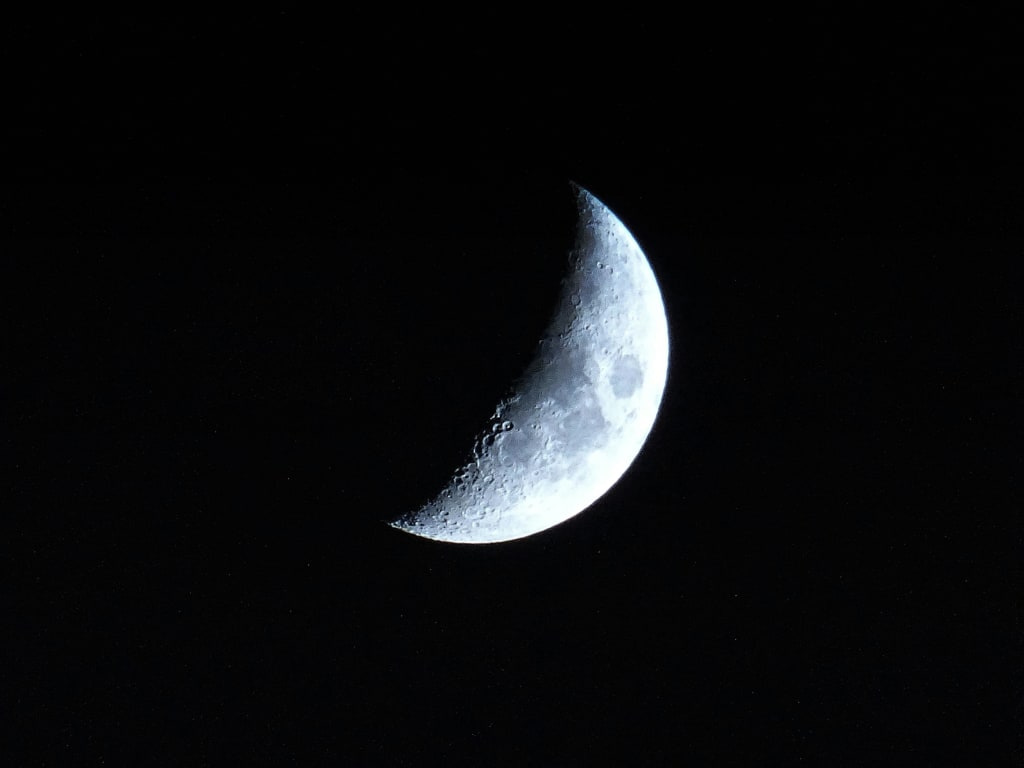
The Moon, Earth’s only natural satellite, has long captured our imaginations and influenced our lives—from guiding ancient calendars to shaping the tides. But behind its calm, glowing presence in the night sky lies a subtle, almost imperceptible movement: the Moon is slowly drifting away from Earth. At a rate of about 3.8 centimeters (1.5 inches) per year, this cosmic separation is not just a curious fact; it has significant implications for Earth’s rotation, tides, and the long-term stability of our planetary system. This ongoing drift is a remnant of powerful forces set in motion billions of years ago and tells a fascinating story about our planet’s deep history and distant future.
The Science Behind the Drift
The Moon’s slow escape is primarily driven by tidal forces—the same gravitational phenomena that cause ocean tides on Earth. As the Moon’s gravity pulls on Earth’s oceans, it creates a tidal bulge on the side facing the Moon. However, because Earth rotates faster than the Moon orbits, this bulge is slightly ahead of the Moon in its orbit. This misalignment creates a gravitational interaction that transfers energy from Earth to the Moon. In essence:
- Earth’s rotation slows down slightly due to the drag of the tidal bulge.
- The Moon gains orbital energy and moves farther away.
This energy exchange is a fundamental example of angular momentum conservation and has been gradually changing Earth-Moon dynamics for billions of years.
Measuring the Moon’s Movement
The rate of the Moon’s drift—3.8 cm per year—might sound too small to be meaningful. But over geological timescales, this movement is profound. We’ve been able to measure this shift with astonishing precision thanks to the Lunar Laser Ranging Experiment, conducted since the Apollo 11 mission. Astronauts placed retroreflectors (special mirrors) on the Moon’s surface, and scientists on Earth bounce laser beams off them to measure the distance to the Moon with millimeter-level accuracy. This technology has confirmed that the Moon is gradually spiraling away—and that the process is still ongoing.
Ancient Evidence: A Shorter Day on Earth
The consequences of this drift are not just theoretical; they’re etched into the fossil and geological record of Earth itself. By studying the growth patterns in ancient coral fossils and tidal sediment layers, scientists have discovered that:
- 400 million years ago, there were more than 400 days in a year.
- Earth’s day was only about 21.9 hours long.
- The Moon was significantly closer to Earth.
These findings are consistent with the theory that as the Moon moves away, Earth’s rotation slows down, lengthening the day. Over billions of years, this process will continue, making our days even longer.
What Does This Mean for the Future?
While 3.8 centimeters per year doesn’t sound alarming, over millions and billions of years, the effects accumulate:
1. Longer Days
Eventually, Earth's rotation will slow so much that one day might last over 40 hours. This process is called tidal braking.
2. Weaker Tides
As the Moon moves farther away, its gravitational pull on Earth weakens. This will lead to smaller tidal ranges, affecting marine ecosystems that rely on tidal rhythms.
3. Tidal Locking
In the very distant future, Earth and the Moon could become tidally locked to each other. This means:
Just as the Moon already shows only one face to Earth, Earth could end up always presenting the same face to the Moon.
Days and months would become synchronized.
This state of equilibrium might take billions of years, but it represents a fascinating endpoint in the Earth-Moon relationship.
4. Orbital Destabilization
If the Moon moves too far (estimates say around 550,000 km, compared to today’s ~384,400 km), it could enter a region of orbital instability—affected by the gravitational influence of the Sun. However, this is a scenario billions of years in the future and unlikely to cause catastrophic outcomes.
Would Life Exist Without the Moon?
The Moon plays a more vital role in life on Earth than most people realize:
It stabilizes Earth’s axial tilt, helping to maintain a relatively stable climate.
It regulates ocean tides, which impact weather systems and marine life.
It affects circadian rhythms, plant behaviors, and even animal migrations.
If the Moon were to drift too far—or disappear entirely—Earth’s climate could become chaotic, seasons could shift unpredictably, and life as we know it might struggle to adapt.
Philosophical and Cultural Impacts
Beyond science, the Moon has been a central figure in human culture, mythology, and spirituality. Ancient civilizations saw it as a deity, a guide for timekeeping, and a symbol of rebirth. Modern humans gaze at it through telescopes and dream of colonizing its surface.
Knowing that the Moon is slowly drifting away adds a poetic, almost melancholic perspective—it reminds us that even the most seemingly constant things in the sky are in motion, subject to the same cosmic forces that shape galaxies and stars.
Conclusion
The Moon is slowly escaping Earth’s grasp, pulled away by the invisible strings of gravity and time. This quiet drift—measurable, unstoppable, and profound—is a reminder of our place in the cosmos and the dynamic nature of our solar system. While the effects won’t be felt in our lifetimes, the long-term consequences are deeply woven into the future of our planet and perhaps even the fate of life itself.
So the next time you look up at the Moon, remember: it’s not just floating in the sky—it’s on a slow, cosmic journey, inching away from us one centimeter at a time.
About the Creator
Orbit Scope
Unveiling the unseen, revealing the unknown. Welcome to Orbit Scope where truth meets wonder. From the depths of history to the frontiers of science, we uncover facts that surprise, inspire,Challenges the way you see the world.
Reader insights
Outstanding
Excellent work. Looking forward to reading more!
Top insight
Heartfelt and relatable
The story invoked strong personal emotions
Keep reading
More stories from Orbit Scope and writers in Journal and other communities.
The Superpower You Never Knew You Had: The Human Nose Can Detect Over 1 Trillion Scents
Introduction For decades, scientists believed that the human nose was relatively unimpressive compared to the noses of other animals. It was commonly taught that we could detect around 10,000 different smells—just a fraction of what dogs or rodents could perceive. However, recent scientific breakthroughs have turned this assumption on its head. Researchers now estimate that the human nose can distinguish more than 1 trillion different scents, revealing a hidden superpower we all carry, quite literally, under our noses. This revelation not only reshapes our understanding of human biology but also has profound implications for industries ranging from medicine to technology.
By Orbit Scope9 months ago in Journal
The Moment I Realized Air Quality Was Affecting My Mood
For a long time, I thought my mood changes were personal. If I felt impatient, distracted, or oddly tense, I assumed it was stress. Too much work. Not enough rest. A bad night of sleep. I tried to fix it the usual ways. More coffee. Short walks. Mental resets. Deep breaths.
By illumipure3 days ago in Journal




Comments (2)
Thanks
This Story Is Also Very Good All Time