
The India-Pakistan War of 1971
The Birth of Bangladesh

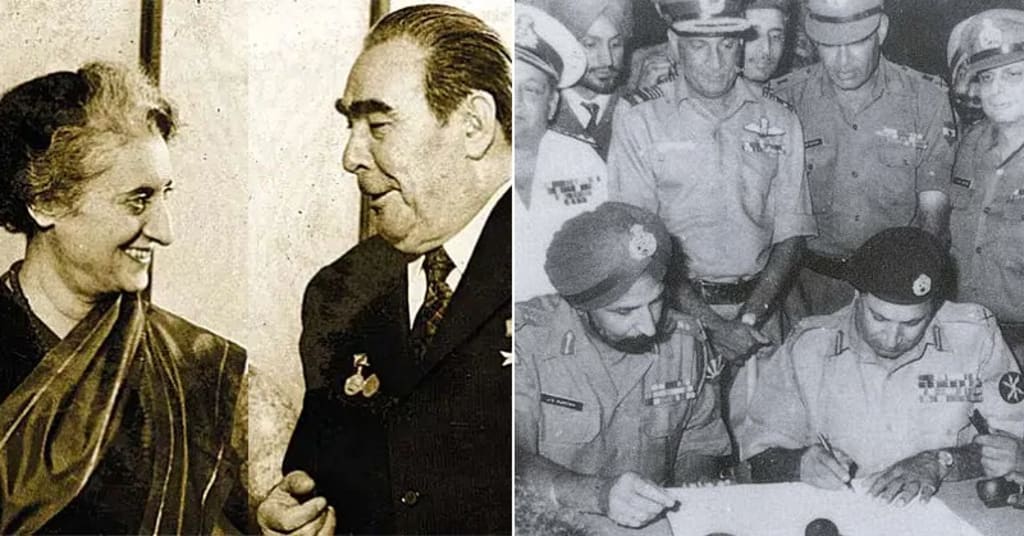
The year 1971 marked a defining moment in South Asian history, resulting in the birth of Bangladesh. This war was not only about the liberation of East Pakistan but also reflected the geopolitical tensions of the Cold War era, as global powers like the United States and the Soviet Union played critical roles in shaping its outcome.
Background: The Roots of the Conflict
After the partition of British India in 1947, Pakistan was formed as two geographically and culturally distinct regions: West Pakistan and East Pakistan. Despite East Pakistan's larger population, political and economic power remained concentrated in West Pakistan.
Language Movement (1948-1952): The imposition of Urdu as the sole national language led to protests in East Pakistan, culminating in the recognition of Bengali as one of the state languages.
Economic Disparities: East Pakistan felt neglected, with resources disproportionately allocated to West Pakistan.
Election of 1970: The Awami League, led by Sheikh Mujibur Rahman, won a landslide victory in Pakistan’s general elections. However, West Pakistan’s ruling elite refused to transfer power, escalating tensions.
The Spark: Operation Searchlight
On March 25, 1971, the Pakistani military launched Operation Searchlight, a brutal crackdown on Dhaka and other cities in East Pakistan. This military campaign aimed to suppress the Bengali nationalist movement but led to widespread atrocities, including mass killings, rapes, and displacement. The violence drove millions of refugees into India, creating a humanitarian crisis.
India's Involvement
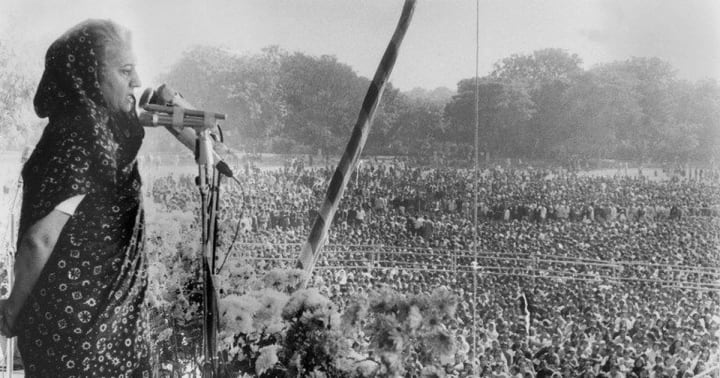
India, led by Prime Minister Indira Gandhi, was directly affected by the refugee influx. Recognizing the gravity of the situation, India provided support to the Mukti Bahini (Bengali guerrilla fighters) and began advocating for international intervention.
Strategic Military Planning: By December 1971, after Pakistan launched preemptive airstrikes on Indian airbases, India officially entered the war.
Bilateral and International Diplomacy: India navigated complex Cold War dynamics while preparing for a military confrontation with Pakistan.
The Role of the United States
The United States, under President Richard Nixon and his National Security Advisor Henry Kissinger, supported Pakistan during the conflict.
Alliance with Pakistan: Pakistan was a key ally for the U.S. in its Cold War strategy against the Soviet Union and China. It also acted as a crucial intermediary in opening diplomatic channels between the U.S. and China.
Reluctance to Intervene: Despite reports of atrocities in East Pakistan, the U.S. refrained from condemning Pakistan’s actions. This decision drew criticism from U.S. officials like Archer Blood, the American Consul General in Dhaka, who sent the famous "Blood Telegram" denouncing U.S. policy as morally bankrupt.
Deployment of the USS Enterprise: In a show of support for Pakistan, the U.S. sent its Seventh Fleet, including the aircraft carrier USS Enterprise, to the Bay of Bengal. This move was intended to intimidate India but had limited impact, as India received strong backing from the Soviet Union.
The Role of the Soviet Union
The Soviet Union, under Leonid Brezhnev, supported India during the conflict, marking a significant moment in Cold War geopolitics.
India-Soviet Friendship Treaty (August 1971): This treaty ensured Soviet support for India in case of international escalation. The USSR pledged to provide military and political backing, deterring interventions from the U.S. and China.
Military and Diplomatic Support: The Soviet Union supplied India with arms and equipment and used its veto power at the United Nations to block resolutions unfavorable to India.
Countering the U.S.: The Soviet Navy deployed its own fleet to the Indian Ocean, effectively neutralizing the threat posed by the U.S. Seventh Fleet.
The War: December 1971
The war officially began on December 3, 1971, and lasted only 13 days, making it one of the shortest wars in modern history.
Eastern Front: The Indian military, along with the Mukti Bahini, launched a coordinated offensive, quickly advancing toward Dhaka.
Western Front: Though there was fighting on the India-Pakistan border in the west, India’s primary focus remained on East Pakistan.
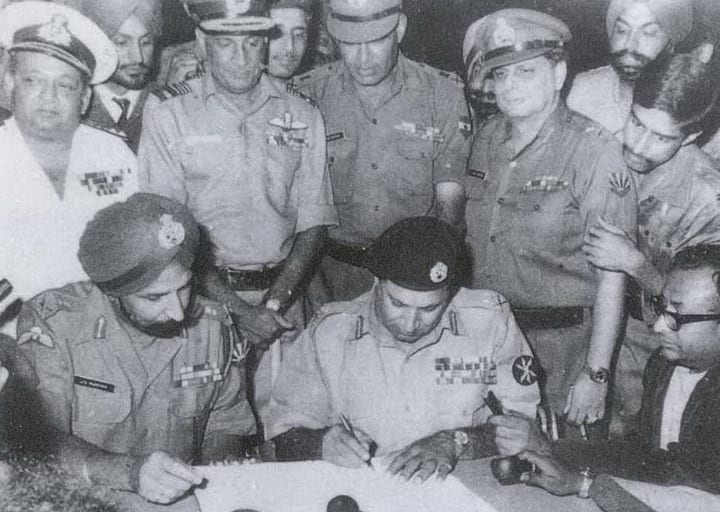
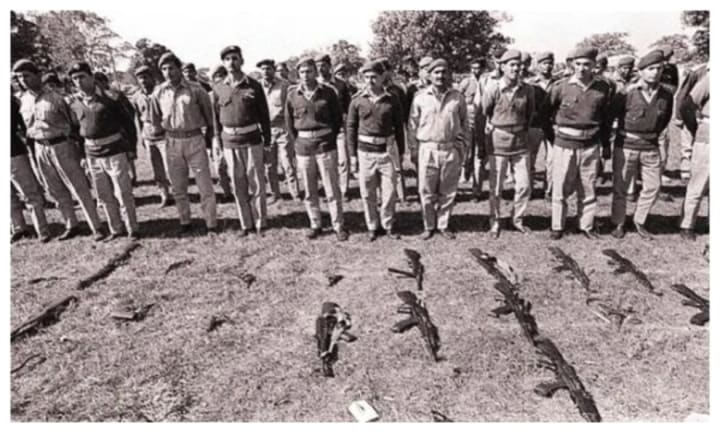
Victory: On December 16, 1971, Pakistani forces, led by General A.A.K. Niazi, surrendered in Dhaka. Over 93,000 Pakistani troops were taken as prisoners of war, and Bangladesh emerged as an independent nation.
The Aftermath
Birth of Bangladesh: The new nation, led by Sheikh Mujibur Rahman, faced significant challenges, including rebuilding its economy and addressing the trauma of war.
Impact on Global Politics: The war underscored the complexities of Cold War alliances, with the U.S. facing criticism for backing Pakistan, while the Soviet Union's support for India solidified their strategic partnership.
India-Pakistan Relations: The conflict deepened the hostility between India and Pakistan, leading to recurring tensions and conflicts in the region.
Conclusion
The India-Pakistan War of 1971 was a multi-faceted conflict involving not only the liberation of Bangladesh but also the strategic maneuvering of Cold War superpowers. The roles of the United States and the Soviet Union highlighted the global stakes of a regional war, shaping South Asia's geopolitical landscape for decades to come. This chapter in history remains a testament to the resilience of the Bengali people and the enduring complexities of international relations.
About the Creator
thangaprakash kalaiyarasan
a content writer by profession, has a passion for writing and an ability to craft engaging and informative content. With a keen eye for detail and a commitment to accuracy, articles highly readable.
Keep reading
More stories from thangaprakash kalaiyarasan and writers in Journal and other communities.
Mastering the Art of Content Writing on Vocal Media: Tips and Tricks
f you're looking to become a successful content writer on Vocal Media, then there are a few key things that you should keep in mind. In this article, we'll provide you with some tips and best practices to help you achieve your goals and create engaging and effective content.
By thangaprakash kalaiyarasan3 years ago in Journal
Author’s Advice
If you would’ve asked me 20 years ago did I know I’d become a writer and an author, I would’ve said “nope, ain’t happening”. As fate would have it I did become an author and I can honestly say I’m loving it so far. It really does feel good to be a writer. I’ve learned a lot on this journey and I feel like with even me being as new to this world as I am, there’s some wisdom I need to share with every other aspiring author.
By Joe Pattersona day ago in Journal
The Growing Problem of Digital Advertising Fraud in Online Marketing
Digital advertising has become one of the most powerful tools for businesses to reach their target audiences. Companies invest billions of dollars every year in online ads through search engines, social media platforms, and websites, including digital media platforms like Stories Today, which connect brands with online readers through content and advertising opportunities.
By Stories Today2 days ago in Journal




Comments
There are no comments for this story
Be the first to respond and start the conversation.