
The Hidden Cost of Convenience: What We Trade Every Time We Click “Agree”
We think we’re getting free services — but we might be paying with something far more valuable.
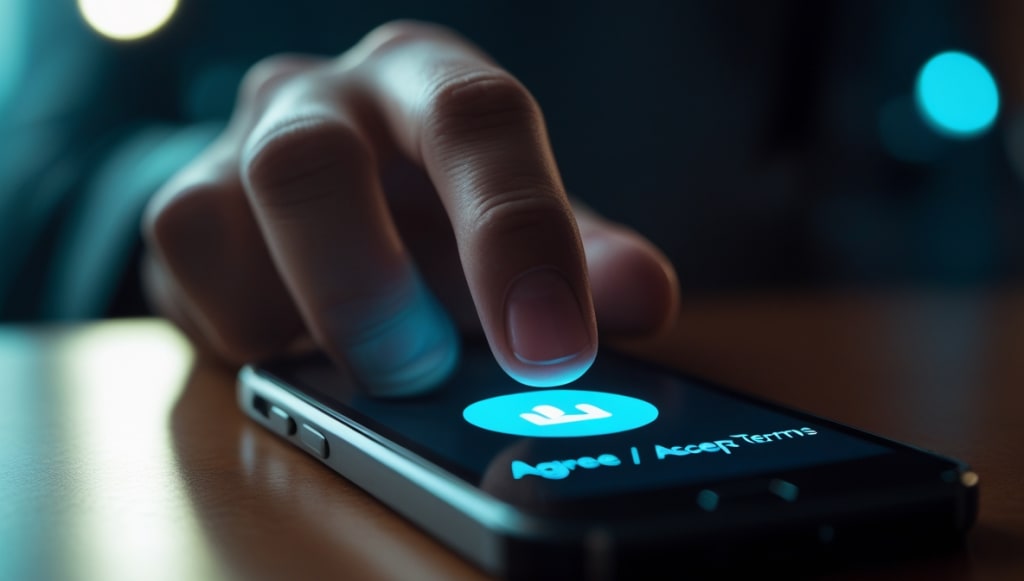
Few of us really go through the Terms and Conditions; let's face it.
We skim, we glide, we swipe—and in fact, we click "Agree."
It seems quick, harmless, and absolutely necessary.
Every time we press that button, though, we might inadvertently be giving away something very personal: our online profile, our activity logs, our conduct, our inclinations, even our emotional patterns.
And usually, we are completely unaware of it.
We Are the Product — Not the Customer
A simple rule of technology applies more than ever:
If a service is free, you are the product.
Social media platforms don't charge us money — they charge us privacy.
Search engines don’t bill us dollars — they bill us behavior.
Every click, every scroll, every hesitation is recorded.
Our data is turned into patterns.
Patterns become predictions.
Predictions become profit.
We trade intimacy for efficiency — and we barely notice.
Convenience Is the Bait
Think about it:
- “Sign in with Google”
- “Use Face ID to continue”
- “Allow access to contacts?”
- “Enable location for better suggestions?”
These choices are presented as time-saving and even helpful.
And to be fair — they are.
With one login, you can connect everything.
With location access, you get faster maps.
With stored preferences, platforms “personalize” your experience.
But behind that convenience is a quiet exchange:
You surrender control over your data to gain ease in the moment.
The New Currency: Digital Identity
We are entering a world where:
Your purchasing habits expose more about your character than any diary you might keep.
By means of your browsing history, your ambitions and worries become evident.
Your scrolling habit exposes your tendencies even before you become aware of them.
Businesses know that:
- When you feel isolated
- While you're bored
- Should you have anxiety
- When you act on impulse
- In thinking about a purchase
- When you tend to click
- As your self-control deteriorates
- When you're ready to be persuaded
Moreover, they are not obligated to view your pictures or messages.
What you do communicates everything to them.
The Illusion of Choice
We believe we’re making independent decisions.
But are we?
Sometimes, what appears as personal preference is algorithmic suggestion.
You didn’t discover that product.
You were guided to it.
You didn’t choose that video.
It was served to you.
You didn’t notice a trend.
It was placed in your feed.
Modern technology doesn’t simply react to your desires — it shapes them.
We Trade Privacy for Speed
We give apps:
- Location
- Contacts
- Camera access
- Microphone access
- Calendar access
- Health data
- Movement tracking
- Search history
- App usage
- Sleep and activity logs
- And sometimes even biometric identifiers
Everything feeds the machine.
And here’s the strange part:
We voluntarily hand it over — not to survive, not to work, but to save five seconds.
We Say “I Have Nothing to Hide” — But That’s Not the Point
The privacy debate often collapses into that one sentence:
“I’m not doing anything wrong — I have nothing to hide.”
But privacy isn’t about wrongdoing.
It’s about freedom.
Freedom to think.
Freedom to explore.
Freedom to experiment.
Freedom to grow.
When we’re being watched — or even just believe we’re being watched — we become more cautious, more filtered, more controlled.
Surveillance, even subtle, reshapes behavior.
The Price of Targeted Persuasion
When a platform knows you deeply, it can do more than sell products.
It can influence:
- Opinions
- Beliefs
- Voting
- Cultural trends
- Ideologies
- Emotional states
If a company can manipulate what you see, it can manipulate what you think.
Information becomes curated, not organic.
Reality becomes algorithmically sculpted.
We don’t all live on the same internet anymore — we live in personalized realities.
The Silent Normalization
Perhaps the most concerning part:
We don’t resist.
We adapt.
Once, giving a company your fingerprint would’ve felt absurd.
Now — it’s called convenience.
Once, tracking your location everywhere would’ve felt invasive.
Now — it’s called service improvement.
Once, reading your behavioral patterns would’ve felt dystopian.
Now — it’s called personalization.
Gradually, we stop questioning — and start accepting.
What Real Control Might Look Like
To reclaim agency, we might need to start doing things differently:
- Asking what data an app collects
- Asking why it needs it
- Turning off permissions that aren’t necessary
- Choosing manual sign-ups instead of auto-logins
- Using privacy-protecting browsers or settings
- Being intentional instead of automatic Maybe convenience should not be the default. Maybe awareness should be. The Trade We Never Signed
The Trade We Never Signed
The reality is:
We didn't deliberately decide to forgo our privacy in favor of quicker meetings.
Our acts were not voted on to be transformed into benefit.
Our objective was never for businesses to grasp us better than our closest friends.
This, however, is where we are today.
a society of which we are the product.
When personal data acts like oil in the present day.
Where our identities are repackaged for use following deconstruction.
It starts with a straightforward button marked Agree.
The Final Thoughts
Ease is appealing.
Small details provide security.
Technology enhances our everyday living.
With every easy click, quick login, and customised feed, however, it's crucial to bear in mind:
Has our technology taken us over or are we the ones in charge?
Since the real price of convenience is perhaps to be seen in our liberty rather than in cash.
#Privacy #Technology #DataEthics #Society #DigitalLife
About the Creator
Keep reading
More stories from Shahjahan Kabir Khan and writers in Journal and other communities.
The Age of Hyper-Performance: Why We Feel Guilty Doing Nothing
We live in an era where slowing down feels almost like a crime. We check email while brushing our teeth. We listen to speed-increased podcasts to “consume more knowledge in less time.” We feel anxious when we’re not doing something “useful.” Even leisure has been rebranded — reading becomes self-improvement, gym becomes optimization, and hobbies become potential income streams.
By Shahjahan Kabir Khanabout a month ago in Journal
The goals I did not achieve
Every writing goal I made for the year is a wash. It has been this way for a while, but I think it's important to be open about my failures and the reality of how life can get in the way. This is especially true considering the several times I have posted on Vocal about my writing goals, how I was changing my approach, and where I was hoping to be for the upcoming year. I will probably do that again in a couple months, but for now, it is time to acknowledge where I am today.
By Kay Husnick23 days ago in Journal
AI-Powered Website Design and Development: The Future of Smart Business Websites
In the rapidly changing digital world today, a website serves not just as a face of business on the internet but also as a business facilitator. Customers want quick, personalized, safe, and smooth experiences across all their devices. Older ways of website design and development, though still valid, generally have a hard time meeting the increased customer demand. This is exactly what AI-powered website design and development is introducing to the market - a game-changing approach in how business websites are smart, built, optimized, and used.
By Swati Lalwani3 days ago in Journal
Ludacris and Nelly draw backlash over bookings at MAGA-coded music festival
Ludacris and Nelly headlining a mostly right-wing event is good for them. It’s also great for the genre of hip hop. The two rap veterans have showcased their talents on other stages. Why can’t they perform for mostly MAGA folks and grab that bag?
By Skyler Saunders3 days ago in Beat


Comments
There are no comments for this story
Be the first to respond and start the conversation.