
The Future of Excavator Engines: Trends and Technological Innovations
Driving Innovation and Efficiency in Excavator Engine Technology

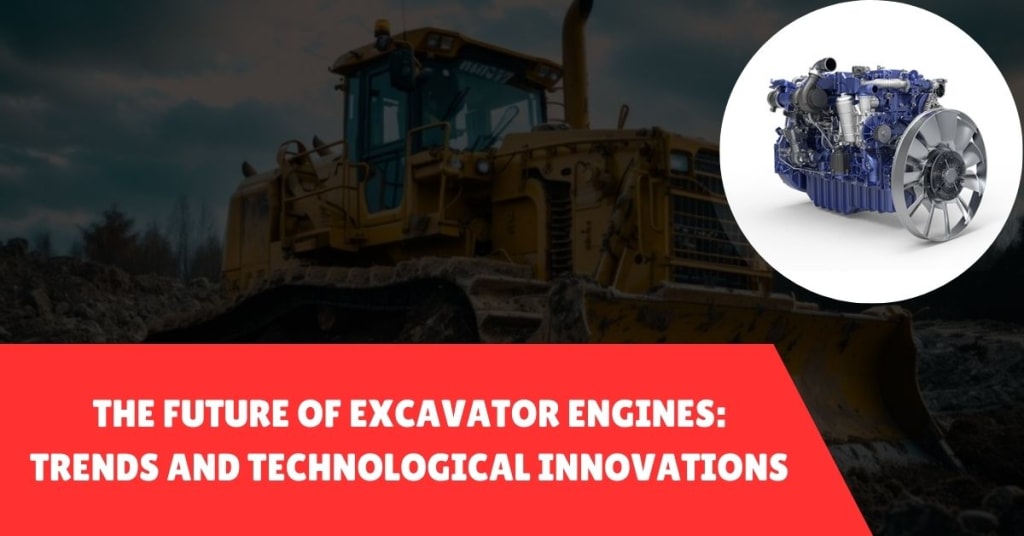
For years now, excavators have been digging, lifting, and moving heavy materials in the construction and mining industry reliably. After all, these excavators contain robust engines which makes them such incredible workhorses. But the industry does not stop there as it is an ever-evolving space and excavator engines are no exception. These engines that power many other heavy-duty industries also need to upgrade themselves. With newer technologies hitting the mainstream, excavator engines are adapting to them and offering even more value to the market. Therefore, in this blog, we are going to take a look at the latest trends and technologies that are shaping the future of both excavator engines as well as the industry as a whole.
What are the Latest Innovations in Excavator Engines?
The future of excavator engines looks promising thanks to the advancement in traditional internal combustion engine (ICE) technology. Moreover, there are a plethora of innovations in engines that are shaping efficiency and productivity, let’s take a look at them:
Electric Excavators: The engines that run these machines are powered by Lithuim-Ion batteries. This reduces the dependency on diesel which also reduces carbon footprint overall. Furthermore, due to being electric, it is ideal for urban construction sites with strict noise and emissions regulations.
Hybrid Excavators: For more heavy-duty load, this type of engine combines both diesel engines and electric motors. Thus, they improve fuel efficiency and reduce emission levels. Higher performance is attained when the electric motor assists the diesel engines during peak workload.
Turbocharging and Downsizing: This latest technology allows smaller engines to produce more power by forcing more air into the combustion chamber. Therefore, even with a smaller size, engines powered by turbocharging can be more powerful while being better at fuel efficiency and lowering emissions.
Variable Valve Timing (VVT): By adjusting the timing of intake and exhaust valves, VVT optimises engine performance. This optimisation leads to better fuel efficiency, reduced emissions, and enhanced power delivery.
Selective Catalytic Reduction (SCR): It is an advanced technology that controls emission levels from machines efficiently. SCR reduces nitrogen oxide (NOx) emissions from diesel excavator engines. Moreover, it converts NOx into harmless nitrogen and water vapour. Making this technology extremely eco-friendly.
How Alternative Fuels are Changing the Future!
Today governments in most countries are restricting the usage of fuels that cause high emissions. Therefore, the industry is opting for alternative fuels that offer more horsepower and lower levels of pollution. Such notions for alternative fuels are picking up traction by powering excavator engines. Let us have a look at how these alternative fuels are benefiting the environment and reducing dependency on fossil fuels:
Biodiesel: We have all heard about biogas that use various biodegradable materials as fuel. Biodiesel is also a renewable fuel that is made from vegetable oils, animal fats, or recycled cooking oil. What makes this fuel so enticing is that it is compatible with diesel engines without any need for modification. Of course, emitting barely any greenhouse gas into the atmosphere.
Hydrogen: Even the Indian government to pushing hard for hydrogen-powered engines recently. Hydrogen-powered excavator engines generate electricity by using fuel cells. In doing so, it only produces water vapour as a byproduct. Even though this technology is still in its infancy, out of every other technology this one holds the most potential to shape our future!
Natural Gas: Out of all alternative fuels, CNG and LNG are the most popular fuels. Also known as Compressed Natural Gas and Liquified Natural Gas, these fuels produce fewer emission particles. They can also be used on diesel excavator engines with modification. Currently, these fuels are the most sustainable options for the construction industry.
Integration of Telematics and IoT in Excavator Engines
Making tools smart is not only limited to phones or PCs, in excavator engines too, rapid integration of telematics and the Internet of Things or IoT is taking place. These cutting-edge technologies are providing operators with real-time data on machine performance, location, and usage. Such advancements help fleet managers and operators to make informed decisions on the fly with precision and efficiency. Let’s take a look at the advancements below:
Predictive Maintenance: Telematics systems are used to monitor engine health and predict any potential issues that may be critical to the engine. Furthermore, this system also allows for proactive maintenance, reducing downtime and extending the life of the equipment.
Remote Monitoring: Today many excavators are installed with IoT monitors that give real-time data on fuel consumption, engine performance, and other key metrics remotely. Such real-time information helps operators to optimise the usage of their machines and reduce operating costs.
Fleet Management: Such advancements are also helping fleet managers track the location and the status of their multiple machines. These features improve fleet efficiency and also reduce operational costs.
You May Also Like: Signs Your Excavator Engine Needs a Replacement
What are Autonomous and Semi-Autonomous Excavators?
Automation is the future now and with the development of autonomous and semi-autonomous excavator machines, the industry is rapidly involved towards smart and efficient operations. For example, autonomous excavators will be able to perform all kinds of tasks without relying on humans. Such machines will use advanced sensors, cameras, and artificial intelligence (AI) to navigate and operate. This way, the construction industry will see improvement in safety, efficiency and productivity.
On the other hand, for the sceptics of full automation, semi-autonomous excavator machines combine manual control with the benefits of autonomous machines. In this system, the operator will be able to control the machine while taking advantage of the various AI systems such as assistance with tasks like digging, grading, and loading. This reduces any chances of error from the AI as well as reducing the burden on the operator.
What to Expect from the Future?
Before we wrap up, let us summarise everything we have learnt in this blog about the future of excavator engines in the wider industry. We are seeing advancement and upgradation of such engines with the rise of Electric Excavators that are proving to be more efficient as well as lowering emission levels. Next, we have engines powered by Turbocharging that can deliver a lot more performance while keeping its size compact. Hybrid Excavators are another interesting innovation that combines the best features of electric and diesel.
But innovations are not limited to the type of engines, alternative fuel sources are also changing the game! Biodiesel is turning everyday items like vegetable oils, animal fats, or recycled cooking oil into renewable fuels. On the other hand, hydrogen fuel is promising to be a viable source that is known to produce water vapour as a byproduct. Next on the list are CNG and LNG fuels which are more popular in the market. They are being used in modified diesel engines, making them more appealing.
Conclusion
Apart from all these advances, we are seeing even more innovative features making their way to excavator engines. Technologies like telematics, IoT integration, and autonomous machines are all contributing to the evolution of these engines. As the industry in general shifts towards greener tomorrow, the demand for machines that produce less toxic emissions, and are more efficient with fuel usage will increase. Therefore, we are bound to see more innovation in this space. The future of excavator engines is not just about improving performance and efficiency but about creating a more sustainable and innovative construction landscape for generations to come.
About the Creator
Keep reading
More stories from Raktim das and writers in Journal and other communities.
Signs Your Excavator Engine Needs a Replacement
All excavators are designed to have a power plant – the engine – which provides the power for moving, digging and lifting throughout the construction site. However, the time comes when even the most efficient engines give out several signals that indicate they have become rather old. Think of how you schedule a whole day’s work only to be met by halts, blackouts, or strange noises that bring work to a crawl. We must understand when excavator engines are in poor shape as this means avoiding discrete breakdowns and keeping our projects on the right path.
By Raktim dasabout a year ago in Journal
The goals I did not achieve
Every writing goal I made for the year is a wash. It has been this way for a while, but I think it's important to be open about my failures and the reality of how life can get in the way. This is especially true considering the several times I have posted on Vocal about my writing goals, how I was changing my approach, and where I was hoping to be for the upcoming year. I will probably do that again in a couple months, but for now, it is time to acknowledge where I am today.
By Kay Husnick23 days ago in Journal
A Comprehensive Guide to Starting a Mental Health Business and Building Client Trust
Introduction: The Rising Demand for Mental Health Services The modern era has witnessed an escalating recognition of psychological well-being as a central pillar of human flourishing. Increasing stressors, social isolation, and rapid technological change have heightened the need for accessible mental health services. Starting a mental health business responds not merely to economic opportunity but to a profound societal imperative. With thoughtful planning and unwavering ethical grounding, such a venture can become both sustainable and transformative, supporting individuals in reclaiming equilibrium and emotional resilience.
By Fida Hassain6 days ago in Journal
Ludacris and Nelly draw backlash over bookings at MAGA-coded music festival
Ludacris and Nelly headlining a mostly right-wing event is good for them. It’s also great for the genre of hip hop. The two rap veterans have showcased their talents on other stages. Why can’t they perform for mostly MAGA folks and grab that bag?
By Skyler Saunders4 days ago in Beat


Comments
There are no comments for this story
Be the first to respond and start the conversation.