
The Evolution of Industrial Carts: From Simple Wheels to Smart Solutions
From Wheels to Smart Solutions: The Journey of Industrial Carts


The industrial environment has changed significantly over the years as a result of technological advancements and growing industry requirements. Among these advancements, the development of industrial carts is a turning point. These carts have helped improve material handling, logistics, and general efficiency in various industries. Industrial carts have evolved from basic wheeled platforms to the advanced smart systems we see today.
The Early Days: Simple Wheels and Basic Carts
Carts have been used for material handling since the beginning when humans tried to move large goods more effectively. Early carts were basic, with wooden platforms fixed on simple wheels. These basic industrial carts were primarily used in agricultural settings to move crops, equipment, and other supplies. Their simple design made them easy to manufacture and repair, which helped to their broad popularity.
With the onset of the Industrial Revolution in the 18th and 19th centuries, the demand for more efficient material handling systems increased. Factories and warehouses needed systems to move raw materials, finished goods, and tools quickly and efficiently. This demand resulted in the development of more durable and specialized industrial carts. These early industrial carts, made mostly of metal, were more durable and had a greater load-carrying capacity. They had larger, more robust wheels that allowed them to run over rough surfaces and carry heavier loads.
The arrival of specialized industrial carts
As industries became more complicated, the demand for specialized industrial carts increased. The twentieth century saw the development of many types of industrial carts designed to fulfill the specialized needs of different industries. For example, the automotive sector needs carts to transport huge and heavy components like engines and chassis. In response, manufacturers created heavy-duty industrial carts with reinforced frames and hydraulic wheels to meet these specifications.
Similarly, the electronics industry required carts that could safely transport vulnerable and sensitive equipment. This encouraged the development of industrial carts with padded surfaces, anti-static materials, and adjustable shelving to protect electronic components from harm during transportation. Other industries, such as food and beverage, healthcare, and logistics, have seen the development of customized industrial carts suited to their specific requirements.
The Rise of Ergonomics and Safety
As the use of industrial carts grew, the importance of ergonomics and safety became apparent. Workers who spent long hours pushing, pulling, and driving carts were at risk of muscle injuries and other problems. To respond to these issues, manufacturers began integrating ergonomic features into industrial carts.
Ergonomically constructed industrial carts included adjustable handles, lightweight materials, and improved wheel designs to reduce worker strain. Rotating casters increased maneuverability, making it simpler to handle tight places and corners. These innovations improved worker safety while also increasing production by lowering the time and effort necessary to move items.
In addition to ergonomic enhancements, manufacturers concentrated on improving safety measures. To prevent accidents and injuries, brake systems, anti-tipping mechanisms, and load-securing devices were all integrated. These safety measures became standard on many industrial carts, allowing workers to handle them with confidence.
The Digital Age: Smart Industrial Carts
The twenty-first century has seen a new era of industrial cart innovation. With the advancement of digital technology and automation, traditional industrial carts have evolved into smart solutions that are revolutionizing material handling processes. These smart industrial carts are equipped with sensors, GPS tracking, and other advanced technologies that allow real-time monitoring and data collection.
One of the most significant developments in smart industrial carts has been the incorporation of independent navigation systems. These carts can navigate complicated areas autonomously, utilizing sensors and algorithms to avoid obstacles and optimize paths. This technology is especially useful in large warehouses and distribution centers, where it can significantly reduce the time and labor required for material handling operations.
In addition to autonomous navigation, smart industrial carts include load monitoring, weight sensors, and automatic braking systems. These skills ensure that loads are moved securely and effectively, reducing the possibility of accidents and damage to goods. Some smart industrial carts can even communicate with other equipment and systems in a facility, resulting in a seamless and integrated material handling process.
The Future of Industrial Carts
The evolution of industrial carts is far from complete. As technology develops, we can expect more advancements in the form and functionality of these vital tools. Industrial carts of the future may use artificial intelligence, machine learning, and robots to expand their capabilities and increase productivity.
For example, AI-powered industrial carts can learn and adapt to specific workflows, optimizing routes and activities based on real-time data. Robotics can also help design modular industrial carts that can be quickly modified to adapt to different tasks and environments.
As industries evolve, industrial carts will remain critical to guaranteeing the efficient and safe transfer of materials. The transition from simple wheels to smart solutions has already changed material handling, and the future holds even more exciting innovations in this area.
Conclusion
The evolution of industrial carts from simple wheeled platforms to advanced smart systems shows the need for innovation to satisfy the needs of modern industries. These flexible tools have greatly enhanced productivity, safety, and efficiency in a variety of industries. As we move forward, industrial carts will continue to play an important role in the success of manufacturing, logistics, and other industries, adjusting to new difficulties and technological improvements as they go.
Read More: 2024's Top 5 Best-Selling Material Handling Carts (and Why You Need One)
About the Creator
Jtec Industries
J-TEC Industries is a manufacturing company specializing in material handling equipment solutions.
Keep reading
More stories from Jtec Industries and writers in Journal and other communities.
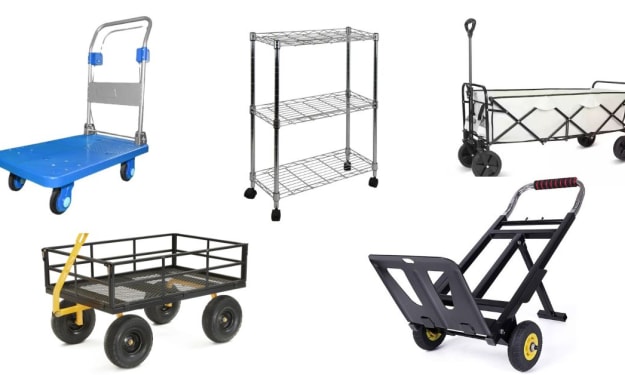
2024's Top 5 Best-Selling Material Handling Carts (and Why You Need One)
As industry and commerce dance relentlessly, unsung heroes often emerge: those tireless tools that keep productivity humming. One such hero, often overlooked yet ever-present, is the humble material handling carts. Forget sleek robots and whizzing automation – these sturdy chariots silently navigate warehouses, factories, and corridors, carrying the lifeblood of businesses big and small.
By Jtec Industriesabout a year ago in Journal



Comments
There are no comments for this story
Be the first to respond and start the conversation.