
The Economy as Presented by Waffles
Drawing parallels between the world of economic principles in the context of a family breakfast...


Something about preparing breakfast for my children this morning got me thinking about some economic concepts, and if you too are a parent, you'll quickly be able to relate why. There are many ways in which parenting can offer great examples of basic economic principles, in more ways than financially.
Obviously, microeconomics (i.e. household budgets, providing for a family of 6+ on a single income, etc) are implied in the domestic duties which accompany parenthood. Specifically, I am speaking of the principles of equity and equality (two often confused principles, whether speaking in economic or social terms) and scarcity.
I love to make sourdough waffles (a great way to use up sourdough discard...*cough cough* stretching and allocating resources is an example of elasticity) and freeze them for a quick breakfast option when we're short on time...or the chickens have been slacking on their end of the breakfast production. But we've had to use these more often as of late, due to busy schedules, appointments, and some sickiness going around the house.

So this morning I found myself in the predicament of no eggs, only a few waffles in the freezer stash, limited time, and some hungry man-cubs.
We cooked some sausage and potatoes to pair with our waffles, but I still needed to split the waffles. To divide them equally or not: that is the question.
To divide them evenly, practicing equality, each of the two older children would have been served one and a half waffles with their crispy potatoes and a piece of sausage, leaving one waffle and sides for the smaller ones. Easy, right?
However, the resource-allocation-based-on-personal-preferences (or the superiority of equity, in this case) kicks in at this point. Our three-year-old is currently in a "no meat" phase, often saying "I don't like protein" in the most serious and matter-of-fact voice a three-year-old can muster...very serious business. Knowing this, and deciding to, for the time being, forfeit the hope she will change her mind during this meal, I wanted to make sure her plate was as full and calorically dense as her siblings, if not nutritionally equal. I also know that my oldest, the almost 6-year-old, is jokingly referred to as "the carnivore", never passing on meat of any kind (their favorite meal being steak and steamed broccoli, because kids are weird).
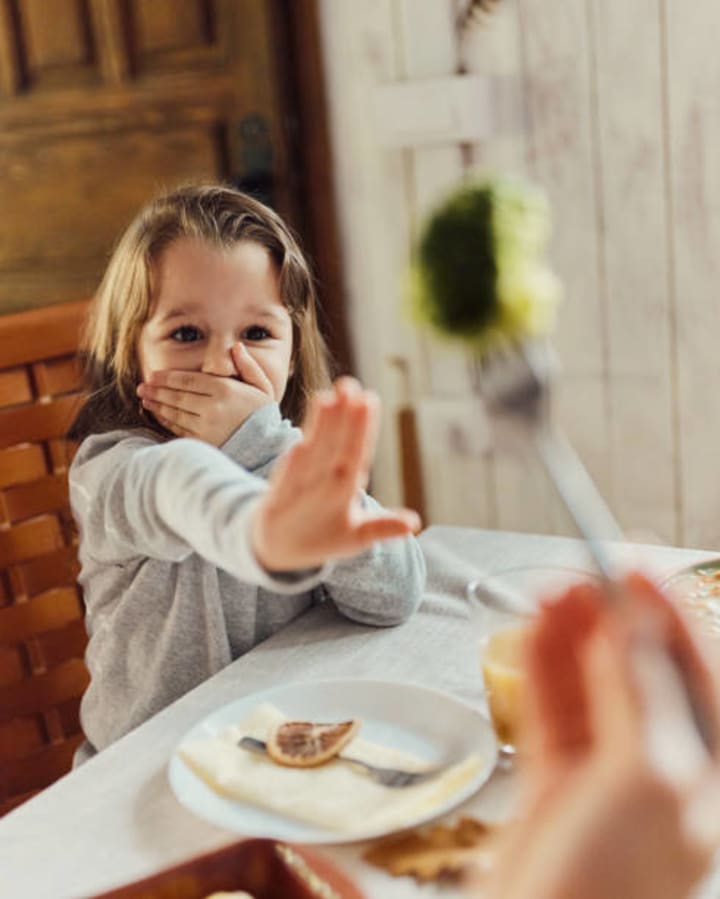
With all of these personal preferences and tastes (along with preferred plate color) our brains as parents make quick decisions in a matter of moments. On Three's plate (the red one, of course), she had extra potatoes, no sausage, and one and three-quarters of a waffle. Five's (blue) plate had potatoes, one and a half sausages, and one and a quarter waffles. Luckily the Smallers are too young to complain much about any of this...yet.
So basic principles like equity v. equality at breakfast can make or break our day. If equality had been practiced, Five would have been happy and full, but Three would have been hungry and less prepared or energetic for the day (and nobody wants a hangry and crabby three-year-old). However, by practicing equity, all children were fed to their content, leaving the table with full and happy bellies....ready to take on the day of arguing over who looked at who the wrong way or touched the wrong toy.
Earlier I mentioned scarcity, as well As a stay-at-home mom, trying to homeschool multiple kids, at a table full of minds hungry for learning, play, attention, and chaos, there are examples of scarcity abound: my time and attention, their attention spans, and patience. The scarcity of these resources affects how it is all allocated throughout the day and within each task.
Balancing our time, staying on task, and not stretching ourselves too thin is a constant exercise in supply in demand. Sometimes one or more children will demand more time and attention from us, whether due to illness, struggles with school, or just by nature of their respective age...however, our supply of time in the day is unchanging, and our patience does have a limit...somewhere.
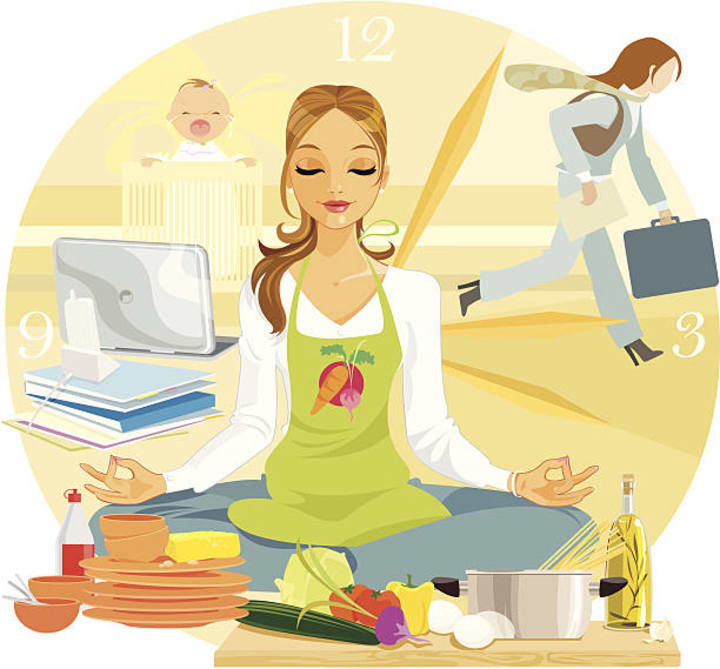
All of this is to say that when we think about these economic or social concepts in terms of our daily lives, almost seeing our homes as tiny, independent nations complete with a GDP, where we produce well-adjusted and fully functional adults with (hopefully) happy childhood memories, we can start to see the "economic" patterns in our parenting. We could even discuss how the inflation rate of a reward system increases with our children's ages: the same reward of sweet treats or spare change allowances don't have as much "buying power" as your children grow, no longer being swayed by a quarter or a piece of candy, or my favorite, a marble in the jar. Perhaps though, that is for a different article.
When put into the context of what we already do, the seemingly menial barrage of endless decisions we make daily, we can see the balance we are trying to maintain...one as natural, time-tested, and universal as foundational economic principles. None of this is to offer some grand revelation on better parenting, or some genius new school of thought on economic theory, merely just a musing about the parallels of two seemingly unconnected worlds.
Or perhaps I am way over thinking breakfast, and should just serve the food, forego writing this and its potential earnings, and go on to the next task that demands my attention...much like, opportunity cost.
About the Creator
Kyli Gray
Three-time published children's book author, writer, wife, and homemaking-homeschooling-mom-to-many, with a background in nursing and ophthalmology.
Author’s Advice
If you would’ve asked me 20 years ago did I know I’d become a writer and an author, I would’ve said “nope, ain’t happening”. As fate would have it I did become an author and I can honestly say I’m loving it so far. It really does feel good to be a writer. I’ve learned a lot on this journey and I feel like with even me being as new to this world as I am, there’s some wisdom I need to share with every other aspiring author.
By Joe Patterson4 days ago in Journal
Strengthening Clinical Governance and Accountability in Nursing Practice Through CPD
Clinical governance is central to quality and safe healthcare delivery. It reflects the system through which organisations remain accountable for continuously improving service quality and maintaining high standards of care. As the largest professional workforce in the health system, nurses play a critical role in ensuring these systems function effectively every day. Continuing Professional Development supports nurses to meet this responsibility with confidence and capability.
By Angelo Ean4 days ago in Journal
The Forsyth House Fire
Since 1851, Forsyth House has stood on the corner of Union Street and Gordon Street in the heart of Glasgow. Its iconic, or was... because on Sunday 8th of March, 2026, a fire broke out in a small, seemingly un-named shop in the building and tore all that history down. As I write, the rubble is still unsettled and the street is still blocked off. Central Station is quiet on the upper level, and around 30 small businesses have quite literally gone up in smoke.
By S. A. Crawford3 days ago in The Swamp




Comments
There are no comments for this story
Be the first to respond and start the conversation.