
The Downfall of Forever 21
A store that started with no money and will soon end with no money. Where did it go wrong?

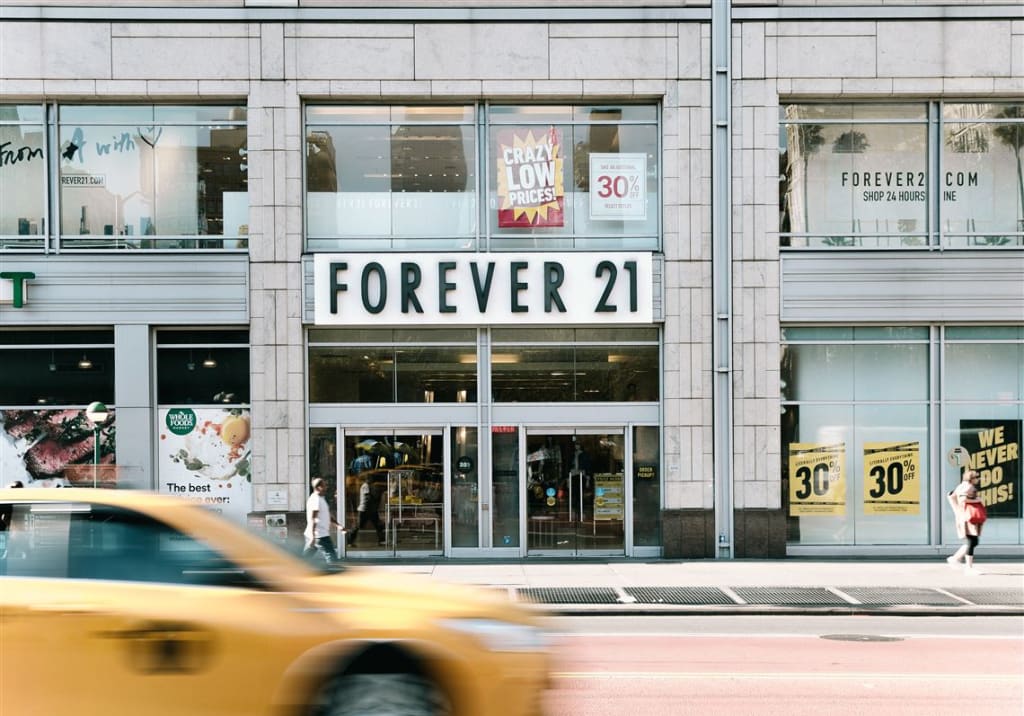
We all know and love Forever 21, don't we? or at least we did. It makes us all wonder if we're actually talking about the same Forever 21. Forever 21 was once a fashion retail brand that resided in the closets of people across the world. Originating from nowhere, the store gained popularity rapidly and the story behind its debut is unforgettable. The founders Do Won Chang and Jin Sook Chang made $4.4 billion dollars at the brand's peak in 2015. Like any story, theirs has a climax, obstacles coming from all sides and a slow and steady downfall. But then again, how is Forever 21 the most infamous retail brand today?
The store came to life with the name 'Fashion 21', the culmination of Do Won Chang and Jin Sook Chang's idea to appease the Korean American community of Los Angeles. However, they had only around $11,000 in savings and could barely speak English fluently. But their intuition was strong. What started off as a 900 square foot store expanded into a brand with 600 outlets and spaces around 38,000 square foot by 2015. They were the first to bring cheap yet fashionable clothes to the market and came out with huge numbers of fresh clothing regularly. Conversely, they had to overcome many lawsuits and controversies regarding copyright, labor practices, employee relations and much much more. Still, everyone knew Forever 21 as the trendy one. After all this time, it remained a family owned business; in fact, Do Won Chang and Jin Sook Chang's daughters got involved in the marketing and visual design departments. At this point in time, they represented the American Dream. All they did was grow and grow and grow...
Since they expanded with so much vigour, it is not so surprising that they are facing bankruptcy and other conflicts at the moment. Just because they are the first, doesn't mean that others can't improve on their innovative idea. Other brands like Zara and H&M have risen due to their constant eye on the market and its demands, for example, H&M introducing their sustainable line of clothing right when talks about climate change had begun. E-commerce websites have added another perk: convenience, we'd all rather sit at home and choose what looks best on celebrities right? Still, Forever 21 chose to ignore this. Instead, they expanded their stores into other countries, increased the number of outlets and continued to produce cheap quality clothing. Moreover, an already reduced audience of people came to a reputed store, just to find clothes that seem tacky and unoriginal. Forever 21 was becoming the hand-me-down store. People were growing out of their shirts with puns on them, and Forever 21 stopped growing with them.
Now, Forever 21 is $500 million dollars in debt. On September 29, 2019, Forever 21 filed for Chapter 11 bankruptcy. Linda Chang, executive vice president for the company, said in a news release that filing for Chapter 11 is "an important and necessary step to secure the future of our Company, which will enable us to reorganize our business and reposition Forever 21."There's no looking back. They have already begun downsizing and are going to reduce their number of outlets. In fact, all Canadian stores, most Asian and European stores, and 178 of its 506 US stores will shut down soon.
Today, with the rise of entrepreneurs and technology, every business is at risk, not only Forever 21. The pressure to be unique is at its highest right now. Forever 21 completely relied on their initial success and didn’t realize that the market was changing. Who knows what the future holds! With a company founded by innovators and its once beloved reputation… does Forever 21 have a chance of bouncing back? Or will they crash and burn?
About the Creator
The goals I did not achieve
Every writing goal I made for the year is a wash. It has been this way for a while, but I think it's important to be open about my failures and the reality of how life can get in the way. This is especially true considering the several times I have posted on Vocal about my writing goals, how I was changing my approach, and where I was hoping to be for the upcoming year. I will probably do that again in a couple months, but for now, it is time to acknowledge where I am today.
By Kay Husnick23 days ago in Journal


Comments
There are no comments for this story
Be the first to respond and start the conversation.