
The Direction Donald Trump Took America
Did his leadership steer the nation forward, backward, or onto a completely new path?

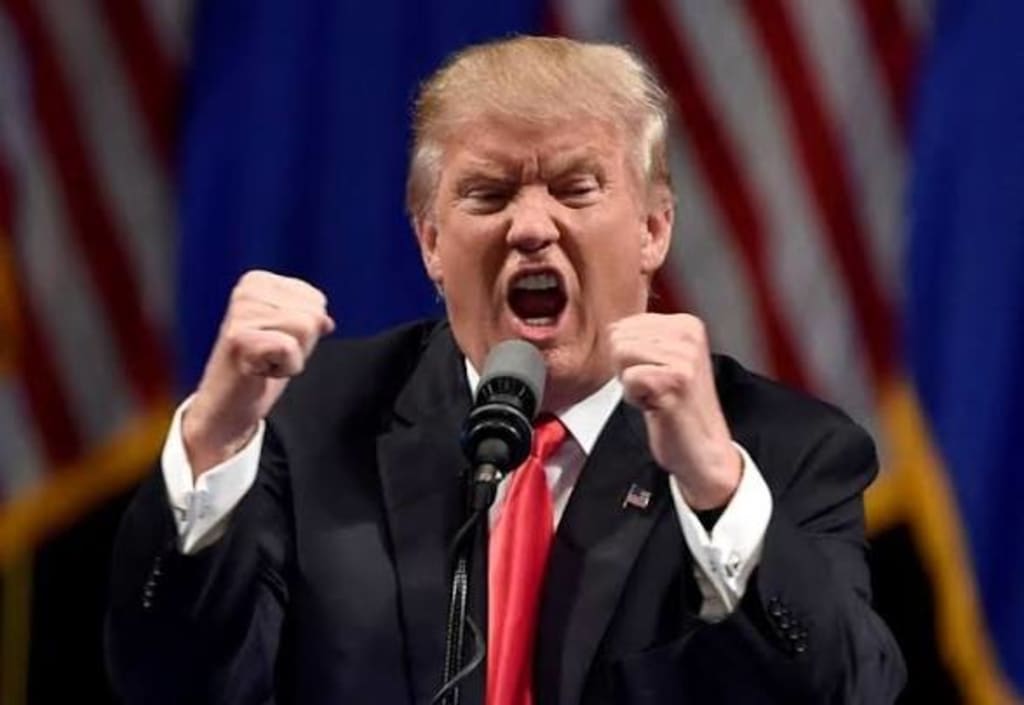
When Donald Trump took office in January 2017, many Americans felt the country was at a turning point. His slogan, “Make America Great Again,” was more than a campaign chant—it signaled a promise to change direction. But the question that still divides people today is: which direction did he actually take the United States? To answer that, we have to explore the major areas his presidency touched—economy, immigration, foreign policy, culture, and national identity.
A Disruptor, Not a Traditional Politician
Before politics, Trump was a businessman and television personality. He entered the White House as an outsider, and that shaped his approach from day one. Unlike previous presidents who typically worked through careful diplomatic language and compromise, Trump leaned into confrontation, rapid decisions, and public messaging through social media. Some Americans saw this as bold leadership; others saw it as reckless improvisation. But everyone can agree: he did not follow the traditional route.
His administration reflected his belief in strength, loyalty, and national advantage above diplomatic subtlety. Whether someone viewed that as patriotic or polarizing depended heavily on their political perspective.
Economic Direction: Growth with a Price
Economically, Trump aimed to position the U.S. as a global competitor unafraid to rewrite the rules. The 2017 Tax Cuts and Jobs Act became one of his biggest legislative achievements. By reducing corporate taxes and lowering some individual tax rates, his administration hoped to attract investment, boost hiring, and energize businesses.
For a while, the numbers seemed to back him up. Unemployment fell to historic lows, the stock market climbed, and small business confidence increased. Manufacturing jobs began to rise again in some states that felt forgotten by previous administrations.
But not all was smooth. The national deficit grew, and critics argued that most long-term benefits favored the wealthy and large corporations. The economy’s momentum faced a major test when the COVID-19 pandemic hit in 2020, and the sudden collapse of industries complicated the bigger picture. Still, many Trump supporters credit him for giving the economy a push before the crisis.
So, economically, did he move America forward or sideways? It depends on whether you believe growth should be measured by stock tickers or by equality and sustainability.
Immigration and Identity: A Hard Turn Inward
If there was one area where the shift in direction was most visible, it was immigration. From the travel bans targeting specific countries to the “Remain in Mexico” policy and attempts to end DACA, Trump sent a message: the U.S. would be more selective about who could enter or stay.
The border wall became a symbol of this approach. Even though only portions were built or reinforced, it represented a philosophical wall as well—one that separated Trump’s worldview from those who favored more openness.
Supporters said he put American workers and security first. Opponents argued he created fear, division, and suffering for families and refugees. Either way, the direction was unmistakably inward, prioritizing national boundaries over humanitarian expectations or past immigration traditions.
Foreign Policy: America First, Allies Second
Trump’s foreign policy added another layer to his directional shift. He challenged alliances like NATO, demanded that partner countries increase defense spending, and withdrew the U.S. from agreements like the Paris Climate Accord and the Iran nuclear deal.
He also took a strong stance on China, engaging in trade wars and tariffs meant to protect American industries. Some businesses and farmers struggled with retaliatory tariffs, but his supporters applauded his willingness to confront what he called unfair practices.
Perhaps the most surprising turn was his direct engagement with North Korean leader Kim Jong-un. No U.S. president had ever done that, and while it didn’t result in a full agreement, it rewrote the diplomatic playbook.
Foreign policy under Trump took the U.S. in a direction that focused on national leverage over global cooperation. To some, that restored strength; to others, it weakened America’s leadership role.
Culture and Division: A Nation Pulled Apart or Woken Up?
Culturally, Trump’s presidency intensified existing divides. Issues such as racial justice, media trust, patriotism, and political correctness were thrust into daily conversation. His style—blunt, combative, and unapologetic—resonated deeply with his base, who believed he spoke truths others avoided. But it also alienated many who felt the tone of leadership should be unifying rather than confrontational.
Social media became a battlefield, and polarization grew sharper. Some argue Trump simply revealed divisions that were already there. Others say he deepened them by fueling anger, mistrust, and tribalism.
So in terms of national culture, did he move America backward or expose tensions that needed addressing? The answer depends on what you think leadership should look and sound like.
COVID-19 and Crisis Direction
The pandemic became a defining test of direction. Trump fast-tracked vaccine development through Operation Warp Speed, which even critics admit was an impressive achievement. But his communication—often dismissing the severity of COVID-19 or clashing with health officials—led to confusion and division over masks, lockdowns, and medical guidelines.
Some Americans saw him as defending personal freedom and economic survival. Others felt his approach cost lives and undermined trust in science.
In crisis mode, his direction was a mix of rapid mobilization and mixed messaging, leaving different communities with drastically different experiences.
Environmental Reversal or Economic Necessity?
Environmental policy under Trump shifted the country away from regulation and toward energy production. He rolled back numerous environmental protections and promoted fossil fuels, arguing these changes would create jobs and reduce dependency on foreign energy.
Supporters believed this direction protected workers and industries. Environmentalists warned it risked long-term damage and made the U.S. less prepared for climate challenges.
When he exited the Paris Climate Agreement, critics saw abandonment of global responsibility, while supporters saw independence from costly obligations.
The Lasting Direction: Redefined Politics
Perhaps the most enduring direction Trump set was not a policy, but a political movement. His presidency reshaped the Republican Party and changed how campaigns are run, how media is used, and how voters engage.
He showed that a nontraditional candidate could win the highest office, that social media could override mainstream press, and that political loyalty could override convention. Millions of Americans felt seen by his style and message. Millions of others felt threatened by it.
Even after leaving office, his influence remains strong, shaping elections, conversations, and ideological divides. His direction didn’t end with his term—it continues to pull American politics into new territory.
So, Which Way Did He Take the United States?
Donald Trump didn’t simply move America to the left or right. He moved it out of its usual lane. For some, he steered the country toward strength, sovereignty, and economic boldness. For others, he drove it into deeper division, isolation, and instability.
The real answer may be this: he didn’t take America forward or backward—he took it off the map and forced the nation to redraw it.
About the Creator
Muhammad Haris khan afridi
Storyteller at heart ✨ I share fiction, reflections, and creative tales that inspire, entertain, and spark connection. Writing to explore imagination, celebrate life, and remind us that every story has the power to touch a soul.
Keep reading
More stories from Muhammad Haris khan afridi and writers in Journal and other communities.
The Relentless Journey of Cristiano Ronaldo: From Madeira to Immortality
The Relentless Journey of Cristiano Ronaldo: From Madeira to Immortality ⸻ 1. Humble Beginnings in Madeira In the small island of Madeira, Portugal, on February 5, 1985, a boy named Cristiano Ronaldo dos Santos Aveiro was born into a poor family. His father worked as a kit man at a local football club, and his mother was a cook. Life wasn’t easy for the Aveiro family. Yet, in their youngest son, they saw a spark — an unshakable passion for football that would soon change everything.
By Muhammad Haris khan afridi5 months ago in History
Strategic Buyers In Behavioral Healthcare
Introduction The behavioral healthcare sector has experienced significant growth over the past decade, attracting strong interest from strategic buyers. Strategic buyers are organizations already operating within healthcare or related industries that acquire behavioral health companies to expand services, strengthen market presence, or improve care integration. These buyers usually focus on long-term operational benefits rather than short-term financial gains. As demand for mental health and addiction treatment services continues to rise, strategic buyers are increasingly involved in acquisitions and partnerships across the behavioral healthcare market.
By Abdul Mueed3 days ago in Journal



Comments
There are no comments for this story
Be the first to respond and start the conversation.