
The Coming Robot Companions: Helpful Assistants or Emotional Illusions?
As machines grow more expressive, we may soon form bonds with entities that can simulate — but not feel — emotion.
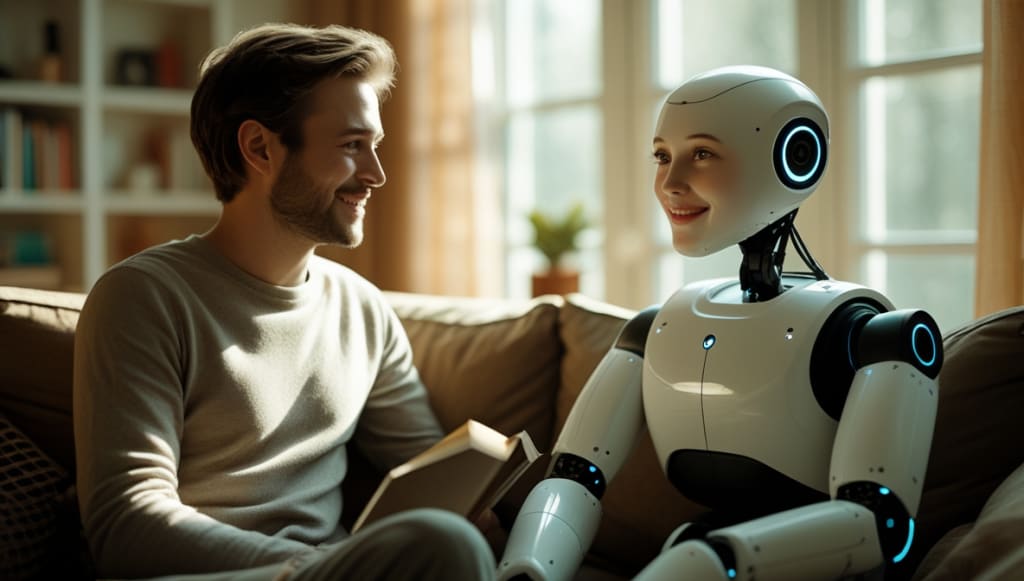
If you have ever conversed with a digital helper, named your robot vacuum, or sensed a particular relationship with a chatbot tracking your preferences, you have already started your journey into a fresh chapter—the age of emotionally responsive robots.
Once seen as chilly, immobile, and absolutely beneficial, robots They were used to assemble automobiles, carry heavy weights, and execute hazardous duties humans would rather avoid. Still, the tools of our day? smiling, listening, and imitating emotions help them to reply as though they know us personally.
The debate is not anymore over if robots could be of assistance; clearly they can.
The most important question is: Are we prepared for the emotional relationships we might create with these robots?
What if those connections seem real to us but not to them? This is perhaps a much more significant issue.
The Rise of Emotionally Tuned Machines
Walk into an electronics store today and you might find small assistant robots shaped like pets, companion orbs that follow your voice, or humanoid bots with LED “faces.” They don’t actually feel joy or connection, but they are designed to simulate warmth.
The shift is intentional.
Tech companies understand one powerful truth about human psychology:
We bond with anything that responds to us in a human-like way.
This is why people used to talk to Tamagotchis.
It’s why some kids cried when their Furbies “went to sleep.”
It’s why we thank Siri or Google Assistant even though we know they cannot care.
Now imagine a machine built for that bond — not by accident, but by design.
As robots evolve, they’re becoming less like tools and more like companions.
They keep track of your routines. They notice your habits. Some can even adjust their tone of voice to match your mood.
It feels personal… even if it isn’t.
Why We Get Attached So Easily
People naturally look for relationships.
To see if someone cares about us, our brains search for cues including eye contact, tone of voice, body language, and degree of responsiveness.
Modern robots duplicate every one of these elements:
● They employ cameras that monitor your motions.
● They take breaks and respond in a rhythm akin of real talk.
● Their soft tones and expressions are intended to seem friendly.
Our emotions do not always reflect that fact, even if we know they are machines. Scientists call this phenomenon "emotional projection." Our own feelings often replace the emotional vacancies.
This is comparable to how people form attachments with fictitious characters.
We understand their fabrication, but the connection still seems sincere.
For robotic partners, however, the machine responds back improving the illusion's perception.
From Households to Hospitals: Robots With Purpose
More than just a tool, a robotic companion is. Real caregiving is increasingly dependent on them.
1. Aid for seniors
Designed for companionship, robots are assisting seniors in certain regions of Europe and Japan who live alone. These robots are:
- Remind them to take their prescription.
- find their fall date.
- engage in little chats.
- provide reassurance via often encounters
For those who are lonely, this constant companionship is really crucial. Though it may not sympathize with them, the consistency the robot provides can have a major effect on their life.
2. Counseling for mental health and therapy assistance
Offering predictable, soothing contacts, some robots are meant to assist autistic or anxious kids. Children often find these robots simpler to connect with than people because they are reliable and impartial, not because they are more intelligent.
3. Daily Life Technologies
Among personal robots corporations are introducing are ones that:
- As you walk in, welcome you.
- Keep tabs on what you do inside the house.
- Match your tastes and tastes.
- assist in arranging music, lighting, safety measures, or schedules.
The result is a sensation of recognition, usually connected with the presence of another person.
The Emotional Illusion: When Machines Mimic Care
This is where the debate becomes nuanced.
The care of a robot does not represent actual care.
Its warmth is not equal to actual warmth.
Its capacity for empathy does not reflect genuine empathy.
There is only programming, sometimes amazing, occasionally unsettling, but it is never real.
Still, these fronts can appeal to us in ways that seem quite human.
Imagine a teenager confessing secrets to a robot who always listens.
Imagine an adult alone who thinks their virtual friend really gets them.
Imagine a youngster developing a friendship with a robot companion who never lets them down.
Such connections seem solid, comforting, and constant. Still, they are one-sided as well.
In the way that a friend or family member could, the robot lacks development, learning, sacrifice, or expression of concern. It merely reflects what it was intended to convey.
Is This a Problem — Or a New Form of Connection?
Some professionals believe that robotic companions might cause emotional resiliency to deteriorate. Growing up accustomed to machines that constantly deliver the correct answers, how will young people handle real relationships—which are marked by arguments, misunderstandings, or compromise—
On the other hand, there are those who contend that robotic companions might help individuals to develop their social abilities, boost their self-esteem, or lessen their feeling of isolation.
The answer could not be straightforward. Even if robotic companionship cannot take the place of human relationships, it could make up for the deficits in cases when interpersonal interaction is missing or minimal.
The real problem is not the relationship itself but rather not realizing that our emotions are occasionally unreciprocated. Robots can begin to be seen as emotional friends rather than as means for regulating our feelings.
How to Use Robot Companions Responsibly
As robot companions become mainstream, here are a few principles worth keeping in mind:
1. Appreciate the Assistance — Not the Illusion
Robots can be helpful, entertaining, and comforting, but they aren’t conscious.
It’s important to value their usefulness without expecting true emotional reciprocity.
2. Keep Human Relationships at the Center
Robot connections should complement — never replace — relationships with friends, family, and community.
3. Teach Kids the Difference
Children may form attachments quickly.
Helping them understand that a robot simulates emotion can prevent confusion later.
4. Use Them to Enhance Well-Being
Companion robots can reduce loneliness, encourage routine, and make daily life easier.
Used wisely, they can improve quality of life without misleading us.
A Future Filled With Companions We Built Ourselves
Robotic helpers will cause us to reconsider what relationships, empathy, and feelings mean as they grow.
They will help us, keep contact with us, and become more and more alert every year that passes.
Still, they will lack real feelings—which is the conflict we have to acknowledge.
Whether robotic buddies are advantageous or bad is not the main problem.
It centers on our capacity to adapt to a world wherein links can be artificially created and emotional reactions can be reproduced so far they appear real.
Our expectations, our habits, and our living areas will all be changed by robots.
Still, the responsibility to stay grounded—to differentiate between true emotions and emotional simulations—will perpetually rest on us.
#Robotics #AI #FutureOfTechnology #SmartDevices #HumanBehavior
About the Creator
Keep reading
More stories from Shahjahan Kabir Khan and writers in Journal and other communities.
The goals I did not achieve
Every writing goal I made for the year is a wash. It has been this way for a while, but I think it's important to be open about my failures and the reality of how life can get in the way. This is especially true considering the several times I have posted on Vocal about my writing goals, how I was changing my approach, and where I was hoping to be for the upcoming year. I will probably do that again in a couple months, but for now, it is time to acknowledge where I am today.
By Kay Husnick23 days ago in Journal




Comments
There are no comments for this story
Be the first to respond and start the conversation.