
The benefits of an EU Korean Green Partnership
Climate Change, Biodiversity Loss and Pollution

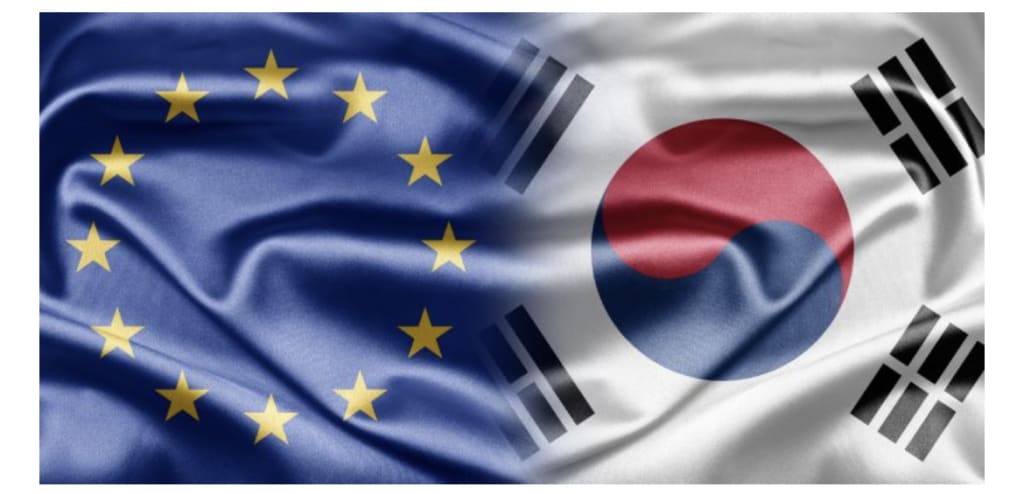
The EU-Korean Green Partnership is a joint project of the European Union (EU) and the Republic of Korea (ROK) to promote sustainable development and address environmental issues. The goals of the partnership are consistent with those of the Paris Agreement and other global environmental agreements
The Green Partnership's primary goal is to improve the implementation of the Paris Agreement and important environmental pledges by encouraging cooperation and cooperative efforts between the EU and Korea. It aims to help with the green transition specified in the European and Korean Green Deals.
The Green Partnership's specific objectives include strengthening EU and Member State green diplomacy and outreach in Korea, assisting Korea's just and clean energy transition, enhancing industry cooperation on circular economy approaches, promoting cooperation on green smart city innovations, and encouraging bilateral collaboration on pollution control, biodiversity protection, and sustainable production, trade, and consumption.
Various activities and outputs are expected to help attain these goals. Coordination and organisation of measures to boost the effect and visibility of EU and Member State climate change and green transition efforts in Korea are among them. The alliance also intends to engage and empower youth through climate action and green transition activities and educational programmes.
Furthermore, the Green Partnership aims to foster collaboration between EU and Korean enterprises, particularly in the renewable energy and circular economy sectors. It seeks to promote environmentally friendly practises and ideas such as offshore wind power, green hydrogen, and circular business models.
The alliance also emphasises EU-Korean city collaboration on green smart city ideas such as urban transportation, energy efficiency, sustainable buildings, and nature-based solutions for climate change mitigation and adaptation. This collaboration relies heavily on the exchange of best practises and the creation of sustainable urban policies.
The Green Partnership also aims to strengthen bilateral collaboration on international initiatives to battle pollution, protect biodiversity, and promote sustainable production, commerce, and consumption habits. This includes cooperation initiatives to decrease air, water, and soil pollution, the Kunming-Montreal Global Biodiversity Framework, addressing plastic pollution, climate change adaptation, sustainable land use, and supporting supply chain sustainability.
The Green Partnership's successful implementation is predicated on several assumptions, including Korea's continued political commitment, the engagement of civil society organisations despite logistical challenges, collaboration between EU and Member State embassies, the availability of key Korean stakeholders, access to relevant government institutions, participation of EU companies and business support organisations, and a shared interest between lead Korean ministries and the EU.
While there are risks involved, such as a deteriorating political environment or unforeseen occurrences, the collaboration tries to address these problems by excellent project management, coordination, and a demand-driven strategy.
Overall, the EU-Korean Green Partnership acts as a platform for collaboration and knowledge exchange between the EU and Korea in order to advance sustainable development, combat climate change, protect the environment, and promote a green and circular economy. The alliance strives to build a more sustainable future for both regions and contribute to global environmental goals through collaborative efforts.
About ER-Marine
ER-Marine is sincerely committed to combatting climate change, protecting marine biodiversity, and reducing pollution in South Korea. The organization is making big efforts by offering a variety of solutions focusing on marine biodiversity observations, offshore wind energy, and smart mooring systems, all while keeping marine plastic waste in mind. Through actively participating in these areas, ER-Marine contributes to the collaborative efforts aimed at conserving our environment and guaranteeing a sustainable future for future generations.
ER-Marine has the in-depth understanding of the South Korean offshore wind industry. We started in 2020 with deploying floating LiDAR buoys offshore, surveying vessels, yards and port infrastructure and developed ER-Marine into “maximising the potential of floating offshore wind energy in South Korea” as our mission.
It is essential to understand the complex Korean Offshore Wind Permitting Process that governs the development of the offshore wind projects. With ER-Marine’s expertise in the field, we are excited to share valuable insights that will help stakeholders navigate the Korean offshore wind permitting process successfully.
ER-Marine has extensive experience in the early-phase offshore wind project development in Korea, and understands the regulatory landscape where we provide insights on the different stages of the permitting process.
Our know-how and deep insights will impact on your project success
About the Creator
Erik Roelans
I am founder and CEO of ER-MARINE and write about the green energy transition, renewable energy challenges, climate change, offshore wind permitting, policy dialogue, marine biodiversity, renewables and floating offshore wind development.
Keep reading
More stories from Erik Roelans and writers in Journal and other communities.
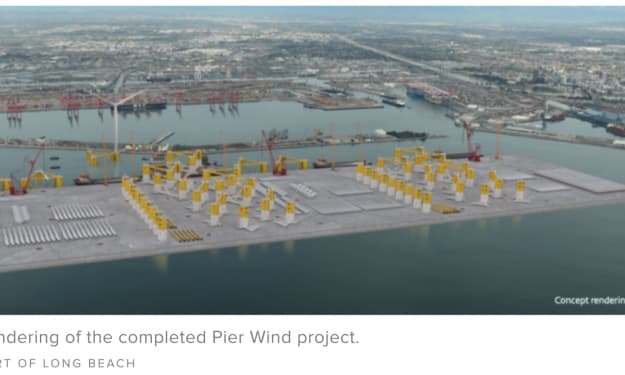
The Port of Long Beach aims to become a hub for offshore wind turbines on the Central Coast.
Floating offshore wind turbines are being planned for the waters near Morro Bay and Humboldt County, but many specifics are still being ironed out. One key concern is whether a new port on the Central Coast would be required for construction, operation, and maintenance
By Erik Roelans3 years ago in Journal
Author’s Advice
If you would’ve asked me 20 years ago did I know I’d become a writer and an author, I would’ve said “nope, ain’t happening”. As fate would have it I did become an author and I can honestly say I’m loving it so far. It really does feel good to be a writer. I’ve learned a lot on this journey and I feel like with even me being as new to this world as I am, there’s some wisdom I need to share with every other aspiring author.
By Joe Patterson5 days ago in Journal



Comments
There are no comments for this story
Be the first to respond and start the conversation.