
THE ADVANCED SPACE COMPOSITES INDUSTRY SEES AN SIGNIFICANT GROWTH OVER THE YEARS
The advanced space composite industry report given by bis research.
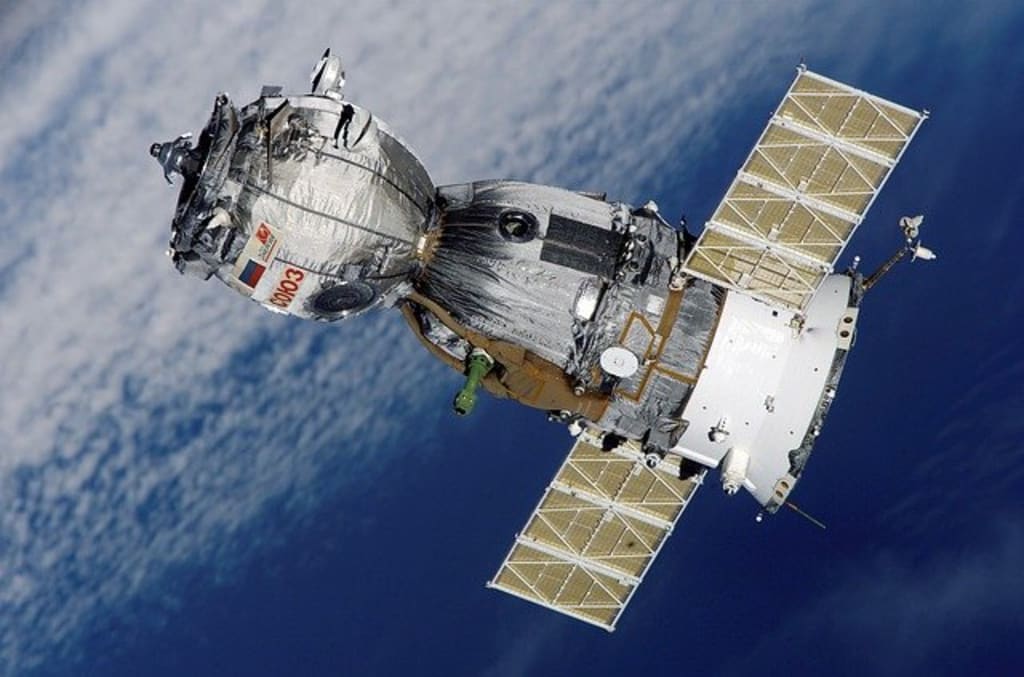
Composites have been employed in space applications for decades, and their application continues to grow. Composite applications can be seen on human spaceflight vehicles, satellites and payloads, and the launch vehicles used for space transportation. Composites in spacecrafts have proven to be successful and valuable when the mission requires the spacecraft to be lightweight and have environmental stability. In addition, advanced composites are majorly used in launch vehicles for a growing number of applications. For instance, solid rocket motors and pressure vessels, which are used for fuel and gas storage, are usually reinforced with advanced composites such as carbon fiber reinforced composite. Composites have become a requirement for ablative and other high-temperature components in rocket motor nozzles and re-entry heat shields.
Additionally, there are several factors that are contributing to the significant growth of the global advanced space composites industry. Some of these factors include increasing deployment of growing satellite launches and deep space activities, rising demand for radiation hardened electronics in the communication satellite segment, advancement in 3D printing technology for the space industry, and adoption of new materials to manufacture space products.
The space industry is continuously innovating and developing advanced technologies with the objective of enhancing space capabilities. Hence, the industry is developing enhanced satellite systems as well as technologically advanced components that will enhance the performance of the satellites.
The advanced space composites market research study offers a broad perspective on the analysis of the industry. The research is based on extensive primary interviews (in-house experts, industry leaders, and market players) and secondary research (a host of paid and unpaid databases), along with the analytical tools that have been used to build the forecast and the predictive models.
The several space programs and advancements in space research have been the primary focus of many developed and developing countries. The space activities provide the country with a broad scope of beneficial applications, which includes citizen development, mass communication, agriculture, economy, defense, scientific and medical research.
When the Apollo capsule was developed, the composites industry was still in its early stages, and the materials were not yet used widely in the space industry. The Apollo capsule used early composite technology in the form of an ablative heat shield made from Avcoat, an epoxy novolac resin with silica fibers in a fiberglass-phenolic honeycomb matrix. A fiberglass honeycomb was bonded to the primary structure, and the paste-like material was injected into each cell individually. Since the development of Apollo, advanced composites have progressed and have played a significant role in space programs with use in launch vehicles, the space shuttle, satellites, space telescopes, and the International Space Station.
Liquid resin infusion has been used in composites manufacturing for decades. It is being used to produce large aerostructures and is a serious contender for the high-rate manufacturing of single-aisle commercial aircraft. Compression molding has also been used in the past and is one of the enabling technologies for high-volume autocomposites manufacturing. The technological advancement in the composites industry for creating the next generation of materials and processes does not depend on developing new materials but adapting proven technologies to serve highly dynamic and demanding applications.
Currently, the space sector has entered into a new phase wherein space exploration and on-orbit capabilities are the major focus.
The primary sources involve the industry experts from the space industry, including satellites, launch vehicle providers. Respondents such as CEOs, vice presidents, marketing directors, and technology and innovation directors have been interviewed to obtain and verify both qualitative and quantitative aspects of this research study.
The key data points taken from primary sources include:
validation and triangulation of all the numbers and graphs
validation of reports segmentation and key qualitative findings
understanding the competitive landscape
current and proposed production values of a particular product by market players
validation of the numbers of various markets for market type
This research study involves the usage of extensive secondary research, directories, company websites, and annual reports. It also makes use of databases, such as NASA’s Programs, Institute of Defense Analysis (IDA), UK Space Agency, UCS Satellite Database, ITU database, Space News, Hoovers, Bloomberg, Businessweek, and Factiva, to collect useful and effective information for an extensive, technical, market-oriented, and commercial study of the global market. In addition to the data sources, the study has been undertaken with the help of other data sources and websites, such as www.weforum.org and www.govt.uk.
Secondary research was done in order to obtain crucial information about the industry’s supply chain, revenue models, market’s monetary chain, total pool of key players, and the current and potential use cases and applications.
The key data points taken from secondary research include:
segmentations and percentage shares
data for market value
key industry trends of the top players of the market
qualitative insights into various aspects of the market, key trends, and emerging areas of innovation
quantitative data for mathematical and statistical calculationsX
percentage split of individual markets for geographical analysis
To view or download the free sample report on the advanced space composites industry, please click on the highlighted text.
About the Creator
Keep reading
More stories from Harsh Singla and writers in Journal and other communities.
All You Need To Know About Interconnect Solution | Technology, Market, Research
An application is mission-critical when it is essential to a specific operation. Unlike other applications, mission-critical applications cannot afford to experience any downtime when end-users are utilizing the systems. Thus, the components used for mission-critical applications have to be reliable with lower failure rates. The mission-critical systems are essential for the survival of businesses and organizations, thus increasing the demand for high-quality components to ensure minimum transmission loss. The connectors, cables, and cable assemblies used in the mission-critical applications undergo various tests to ensure that they are capable of working in adverse environments. For instance, the components used in aerospace application should be lighter in weight but should be able to withstand turbulence and vibrations. The products used for military and defense applications should be ruggedized to ensure optimum performance.
By Harsh Singla4 years ago in Journal
The goals I did not achieve
Every writing goal I made for the year is a wash. It has been this way for a while, but I think it's important to be open about my failures and the reality of how life can get in the way. This is especially true considering the several times I have posted on Vocal about my writing goals, how I was changing my approach, and where I was hoping to be for the upcoming year. I will probably do that again in a couple months, but for now, it is time to acknowledge where I am today.
By Kay Husnick24 days ago in Journal
When You Want to Pray but Do Not Know What to Say
One of the quiet struggles many people experience in their faith is not doubt, but silence. Not God’s silence, but our own. There are moments when we sit down to pray and realize we have no words. No polished thoughts. No clear requests. Just a sense of heaviness, confusion, or fatigue. It can feel like prayer requires language we do not possess.
By Sound and Spirit2 days ago in Journal
The Devil's Cut
“Comrade, finally you’re awake.” The voice was smooth, sensual. A flickering incandescent bar was all that lit the white, sterile room. All Vladimir remembered was everything going black. He tried to move his arms and found them strapped to the gurney.
By Matthew J. Fromm5 days ago in Fiction


Comments
There are no comments for this story
Be the first to respond and start the conversation.