
Texas Independence Day
Celebrating the Birth of the Lone Star Republic

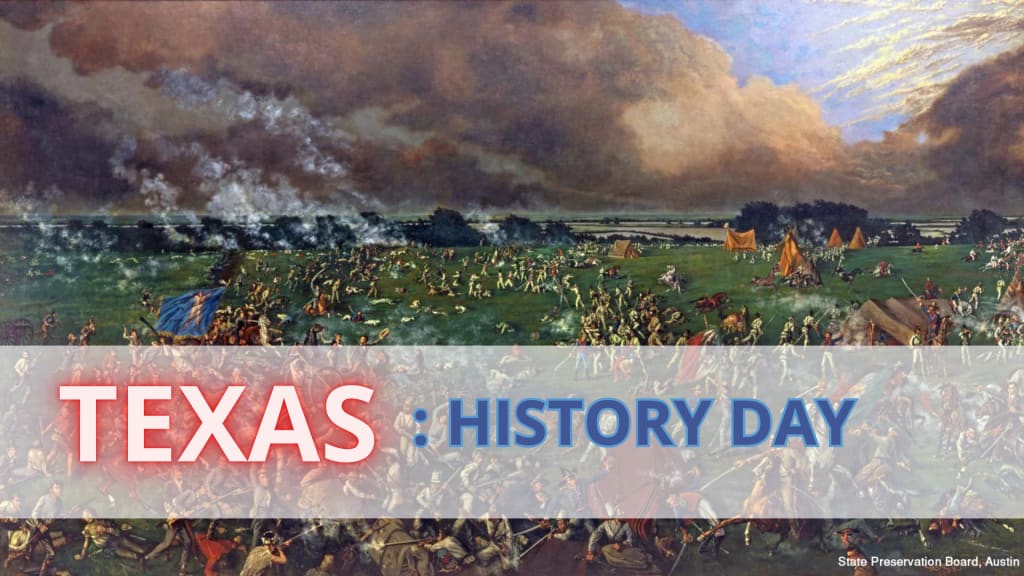
The Story of March 2, 1836, and How Texas Secured Its Place in History
March 2 marks a pivotal day in American history—Texas Independence Day. On this date in 1836, 59 delegates gathered at Washington-on-the-Brazos to sign the Texas Declaration of Independence, officially severing ties with Mexico and establishing the Republic of Texas. This bold act of defiance was the culmination of years of tension between Texian settlers and the Mexican government, setting the stage for a revolution that would forever shape the identity of Texas.
The Road to Independence
The roots of Texas independence trace back to the early 1820s when Mexico invited settlers from the United States to colonize its sparsely populated northern territories. Empresarios like Stephen F. Austin facilitated this migration, establishing settlements such as San Felipe de Austin. However, cultural and political differences soon emerged. The settlers—predominantly Anglo-Americans—were accustomed to self-governance and resisted Mexico's centralized policies under President Antonio López de Santa Anna.
Tensions escalated in 1830 when Mexico passed laws restricting immigration from the U.S. and outlawed slavery—a practice many Texian settlers relied upon. By 1835, open rebellion erupted with the Battle of Gonzales, where Texians famously flew a banner reading "Come and Take It" as they defended a cannon loaned by Mexican authorities. This clash marked the beginning of the Texas Revolution.
The Declaration of Independence
Amid the chaos of war, delegates convened at Washington-on-the-Brazos on March 1, 1836, to draft a declaration of independence. The committee tasked with this responsibility was chaired by George Childress, who is widely credited as the primary author of the document. Drawing inspiration from the American Declaration of Independence and Enlightenment principles, the Texas Declaration outlined grievances against Mexico, including violations of individual rights and Santa Anna's dictatorial rule.
On March 2, 1836, the declaration was unanimously adopted by all 59 delegates. This act officially established the Republic of Texas as a sovereign nation free from Mexican rule. The signing took place just days before one of the revolution's most infamous events—the fall of the Alamo.
The Fight for Freedom
While Texians celebrated their declaration, Mexican forces under Santa Anna were advancing. On March 6, 1836, after a thirteen-day siege, Santa Anna's troops overwhelmed Texian defenders at the Alamo in San Antonio. Though it was a devastating loss for Texas, it became a rallying cry for independence: "Remember the Alamo!"
The struggle continued with setbacks like the Goliad Massacre but culminated in victory at the Battle of San Jacinto on April 21, 1836. Under General Sam Houston's leadership, Texian forces launched a surprise attack on Santa Anna's army, capturing him and forcing him to sign treaties recognizing Texas' independence.
The Republic of Texas
For nearly a decade after achieving independence, Texas existed as its own nation—the Republic of Texas. During this time, it faced numerous challenges, including financial instability and ongoing threats from Mexico. Despite these struggles, Texans maintained their fierce pride and unique identity.
In 1845, Texas joined the United States as its 28th state. However, its brief period as an independent republic left an indelible mark on its culture and history.
Modern-Day Celebrations
Today, Texans commemorate March 2 as Texas Independence Day, honoring those who fought for freedom and self-determination. While not an official state holiday requiring office closures, it is recognized as a "partial staffing holiday," with reduced operations in state offices.
Celebrations often include historical reenactments at Washington-on-the-Brazos State Historic Site—the "birthplace of Texas." Parades, festivals, and educational events across the state pay tribute to this defining moment in history. From schoolchildren learning about Sam Houston and Stephen F. Austin to families visiting historic battle sites like Gonzales and San Jacinto, Texans embrace their heritage with pride.
Legacy of Resilience
Texas Independence Day is more than just a historical milestone; it symbolizes resilience and self-governance. The courage displayed by Texians during their fight for independence continues to inspire generations. Their story reminds us that freedom often comes at great cost but is worth every sacrifice.
As Texans celebrate this iconic day each year, they honor not only their past but also their enduring spirit—a legacy that ensures "the Lone Star State" will always shine brightly in American history.
About the Creator
Jack Brel
At Vocal Media, I am excited to be a part of a platform that values creativity and original content. I am confident that my skills and experience will enable me to create impactful campaigns and bring value to the Vocal Media community
Doctor of Medicine and Surgery (MD) Program with Clinical and Advanced Practice
The landscape of healthcare education is undergoing a fundamental shift. In decades past, the journey of a medical student was largely confined to lecture halls and libraries, with practical experience often coming late in the academic cycle. However, the complexity of modern medicine and the increasing globalization of healthcare systems have demanded a more integrated approach. Today, the most effective educational models are those that fuse rigorous clinical sciences with immediate, practical training, creating a seamless transition from the classroom to the clinic.
By Muhammad Owais SEO4 days ago in Journal




Comments
There are no comments for this story
Be the first to respond and start the conversation.