
Taco Bell Slows Down AI Rollout After '18,000 Water Cups' Prank Crashes System
Taco Bell Slows Down AI Rollout After 18,000 Water Cups Prank: What It Means for Fast Food, AI, and the Future of Drive-Thrus

Artificial intelligence (AI) is transforming industries worldwide, from healthcare and finance to retail and entertainment. The food service industry has been no exception. In recent years, fast food giants like Taco Bell, McDonald’s, and Wendy’s have leaned into AI to automate customer service, reduce labor costs, and streamline operations.
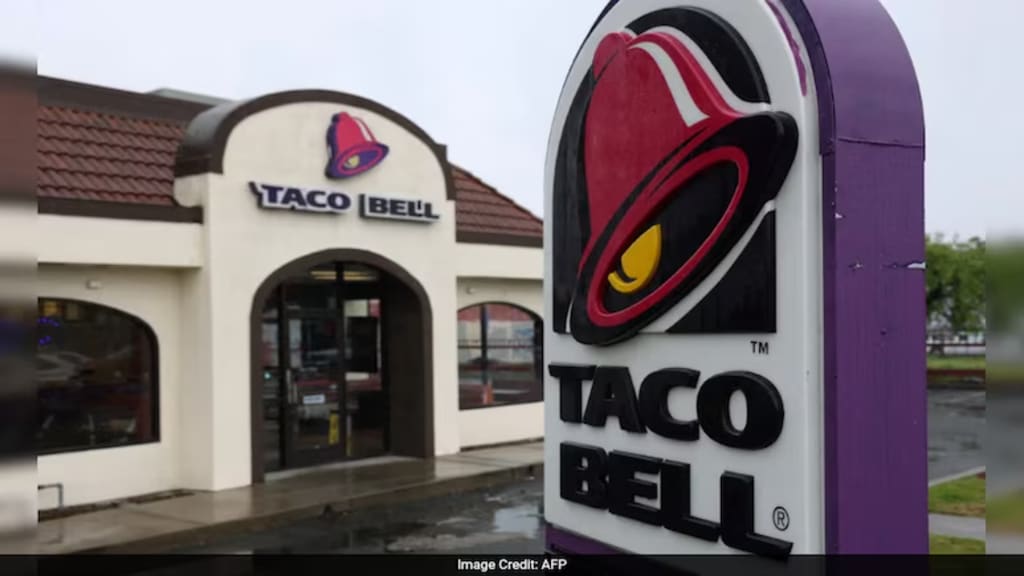
But as with any disruptive technology, not everything goes according to plan. Taco Bell, one of America’s most iconic fast-food chains, recently had to slow down its AI rollout after a series of mishaps—including a now-viral “18,000 water cups” prank that crashed its system.
This incident highlights both the potential and pitfalls of AI in quick-service restaurants. While AI promises efficiency and consistency, it also faces challenges in handling human behavior, complex orders, and the unpredictability of real-world interactions.
In this article, we’ll dive deep into:
- The backstory of Taco Bell’s AI experiment.
- How customer pranks exposed system vulnerabilities.
- Lessons from other fast-food giants experimenting with AI.
- Why many AI rollouts fail to deliver promised profits.
- What the future of AI in restaurants might actually look like.
1. Why Taco Bell Turned to AI in the First Place
Taco Bell has long been an innovator in the fast-food industry. From the introduction of Doritos Locos Tacos to app-based loyalty programs, the brand has consistently sought ways to stay ahead.
In 2024, Taco Bell announced that it would expand its use of AI in drive-thru ordering, describing the move as a way to:
Elevate customer experience by making orders quicker and more accurate.
Support employees by automating repetitive tasks.
Streamline operations in a time of rising labor costs and staffing shortages.
The voice AI technology was designed to interact with customers in the drive-thru, take their orders, and pass them along to kitchen staff—reducing bottlenecks and freeing up human employees for tasks that required more nuance.
It seemed like a win-win: less stress for employees, faster service for customers, and potential cost savings for the company.
2. When Good AI Goes Wrong: The “18,000 Water Cups” Prank
The honeymoon phase didn’t last long. According to The Wall Street Journal, Taco Bell’s AI faced embarrassing failures when confronted with mischievous customers.
One prankster ordered 18,000 water cups—a nonsensical request that overwhelmed the system and caused a crash. Another customer grew increasingly frustrated when the AI repeatedly asked him to “add more drinks” to his order, ignoring his actual selections.
Instead of creating a smoother experience, the AI sometimes made interactions slower, more awkward, and less accurate. And when customers realized they could game the system, the potential for chaos grew.
3. Taco Bell’s Response: Pumping the Brakes
In response to these issues, Taco Bell’s Chief Digital and Technology Officer Dane Mathews admitted that the technology is still a work in progress.
“We’re learning a lot, I’m going to be honest with you. I think, like everybody, sometimes it lets me down but sometimes it really surprises me.” – Dane Mathews
He acknowledged that there are times when humans are better placed to take orders, especially during busy periods when nuance, speed, and judgment matter most.
As a result, Taco Bell is now slowing down its AI rollout and shifting to a more cautious approach. Rather than deploying voice AI everywhere, the company will:
Recommend AI only during certain times of day.
Train employees to monitor AI systems and “jump in as necessary.”
Focus on building implementation strategies that blend automation with human oversight.
This “slower, smarter” approach signals that Taco Bell recognizes both the promise and the pitfalls of AI.
4. Not the First: McDonald’s, Wendy’s, and Others Also Struggle with AI
Taco Bell isn’t alone. Other fast-food chains have faced similar challenges
McDonald’s: In 2024, the company pulled AI from one of its drive-thrus after numerous mishaps. Customers reported bacon added to ice cream and hundreds of dollars’ worth of chicken nuggets mistakenly added to their orders.
Wendy’s: Partnered with Google Cloud on an “AI drive-thru chatbot,” which faced mixed reviews—praised for speed but criticized for struggling with special requests.
Panera Bread: Tested AI voice ordering but had to retool its approach after inconsistencies frustrated customers.
These examples highlight a core issue: AI works well in controlled environments but struggles with the unpredictability of human behavior.
5. The Bigger Picture: Why Most AI Rollouts Fail
The Taco Bell incident also ties into a broader trend. According to an MIT report, only 5% of AI pilot programs achieve rapid revenue acceleration, while the majority stall or fail to deliver measurable results.
Why? Several reasons:
Overpromising and underdelivering: Companies often expect immediate cost savings that don’t materialize.
Customer unpredictability: Unlike spreadsheets, humans don’t follow predictable rules—especially when they’re hungry, rushed, or joking around.
Integration complexity: AI needs to sync with kitchen systems, payment platforms, and employee workflows. One glitch can throw the whole process off.
Training data limits: Many AI systems aren’t trained on the vast variety of real-world orders, accents, slang, or even prank attempts.
Employee resistance: Some workers fear AI will replace their jobs, creating tension in the rollout process.
6. The Human Factor: Why People Still Matter
Despite the hype around automation, human employees remain irreplaceable in many parts of the restaurant experience. Humans can:
Handle special requests (“no sour cream, extra guac”).
Pick up on tone and frustration, adjusting responses accordingly.
Diffuse difficult situations when customers are upset.
Adapt on the fly when systems break down.
As Dane Mathews himself admitted, there are moments when human judgment beats automation—especially in customer-facing roles where empathy matters as much as efficiency.
7. Customer Trust, Brand Image, and the Risk of AI Backlash
For a brand like Taco Bell, customer experience isn’t just about speed—it’s about trust and loyalty.
When AI errors lead to wrong orders or frustrating experiences, customers may associate the brand with incompetence or indifference. In the age of social media, a single viral clip of an AI meltdown can damage brand perception.
The “18,000 water cups” prank is funny to many, but it also signals a warning: customers will test the limits of AI, and companies must be prepared.
8. Balancing Innovation with Reality
Taco Bell’s decision to slow down its AI rollout is not a retreat—it’s a recalibration. The brand is still committed to digital innovation, but it is recognizing that blindly pushing AI everywhere is not the answer.
Instead, the future may look like a hybrid model, where:
AI handles routine tasks (standard orders, upsells, payment processing).
Humans oversee and step in for complex or unusual cases.
Data from AI interactions is used to improve training and reduce errors.
9. Lessons for the Entire Fast-Food Industry
What can other brands learn from Taco Bell’s experiment?
Test AI gradually instead of going all-in.
Build safeguards against pranks and intentional misuse.
Train staff to intervene quickly when AI fails.
Set realistic expectations—AI is a tool, not a silver bullet.
Focus on customer experience first—because efficiency means nothing if it drives customers away.
10. What Customers Really Want: Speed, Accuracy, and Connection
Surveys show that fast-food customers care most about:
Speed: Get food quickly
Accuracy: Orders should be correct.
Friendliness: Even a brief smile or warm tone matters.
If AI can enhance these elements, customers will embrace it. But if it creates delays, errors, or awkward exchanges, they’ll prefer human interaction every time.
11. Key Phrases to Watch
To ensure this story resonates online, we’ve highlighted high-value SEO keywords:
- “Taco Bell AI drive-thru”
- “Taco Bell 18,000 water cups prank”
- “fast food AI automation”
- “McDonald’s AI fails”
- “future of AI in restaurants”
- “voice AI order mistakes”
- “AI in quick service industry”
Conclusion: The Future of Taco Bell and AI
The story of Taco Bell’s AI slowdown is not about failure—it’s about growing pains. Like many companies experimenting with artificial intelligence, Taco Bell has discovered that innovation must meet reality.
AI will continue to play a role in the future of fast food. But for now, human employees remain the backbone of the customer experience. Taco Bell’s willingness to adapt, pause, and learn may actually position it as a leader in thoughtful, customer-centric AI adoption.
As we look ahead, one thing is clear: the future of fast food isn’t about replacing people with robots. It’s about finding the right balance between automation and the human touch.
About the Creator
Omasanjuwa Ogharandukun
I'm a passionate writer & blogger crafting inspiring stories from everyday life. Through vivid words and thoughtful insights, I spark conversations and ignite change—one post at a time.
Keep reading
More stories from Omasanjuwa Ogharandukun and writers in Journal and other communities.
Rihanna pens heartfelt note as she celebrates 20 years in music
In August 2025, global superstar Rihanna marked a significant career milestone—20 years in the music industry. To commemorate this, the Barbadian icon shared an emotional and deeply personal message on social media. In it, she reflected on her courageous leap from Barbados to international stardom, her unwavering gratitude to fans and collaborators, and her spiritual faith. This milestone, rooted in the release of her debut album Music of the Sun in 2005, offers a powerful lens into a two-decade journey that transformed a young teenager into one of the most influential artists—and entrepreneurs—of her generation.
By Omasanjuwa Ogharandukun5 months ago in Journal
The goals I did not achieve
Every writing goal I made for the year is a wash. It has been this way for a while, but I think it's important to be open about my failures and the reality of how life can get in the way. This is especially true considering the several times I have posted on Vocal about my writing goals, how I was changing my approach, and where I was hoping to be for the upcoming year. I will probably do that again in a couple months, but for now, it is time to acknowledge where I am today.
By Kay Husnick24 days ago in Journal
The Catholic Church
The Catholic Church is often called the original Church founded by Jesus Christ. This claim is not just tradition; it is rooted in scripture, history, and the understanding of the early Christian community. Jesus did not leave instructions for a new denomination or a collection of independent groups. Instead, He established a single Church with authority, teaching, and sacraments meant to guide His followers through the centuries.
By Sound and Spirit6 days ago in Journal



Comments
There are no comments for this story
Be the first to respond and start the conversation.