
Swedish Authorities Board Sanctioned Russian Ship in National Waters
A rare maritime intervention highlights Europe’s tougher stance on sanctions, security, and enforcement in the Baltic Sea

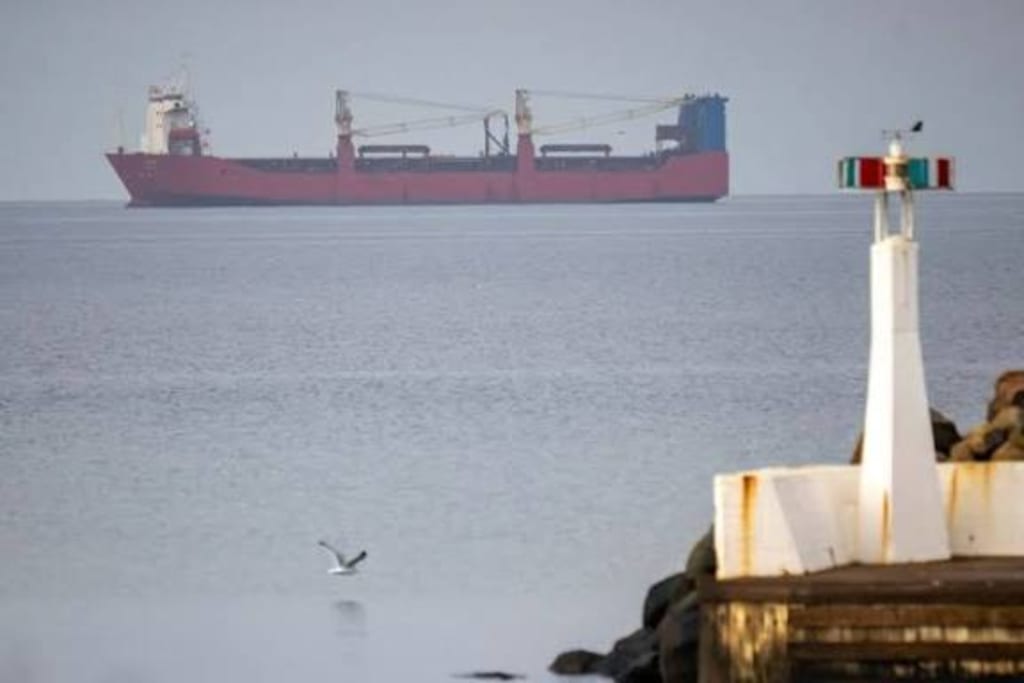
Swedish authorities have taken a decisive step in enforcing international sanctions by boarding a sanctioned Russian-linked vessel while it was sailing through Sweden’s national waters. The move marks a significant escalation in Europe’s efforts to uphold sanctions imposed on Russia since the outbreak of the Ukraine war, and it underscores the growing importance of maritime security in the Baltic Sea region.
The boarding operation, carried out by Sweden’s coast guard in coordination with other national agencies, was described as lawful, precautionary, and compliant with international maritime regulations. While officials have been careful not to disclose sensitive operational details, the incident has drawn widespread attention because it represents one of the clearest examples yet of a European country actively enforcing sanctions at sea rather than merely monitoring compliance.
Why the Boarding Matters
Since Russia’s full-scale invasion of Ukraine, Western nations have imposed sweeping sanctions targeting energy exports, shipping companies, and financial networks. However, enforcement has often proven challenging, particularly at sea. Sanctioned vessels frequently operate under complex ownership structures, reflag ships, or use indirect routes to bypass restrictions.
By boarding the vessel in its own territorial waters, Sweden demonstrated that sanctions are not just symbolic measures but enforceable legal tools. Under international law, coastal states have the authority to inspect ships passing through their national waters if there is a reasonable suspicion of sanctions violations, safety concerns, or illicit activity.
Swedish officials emphasized that the action was not an act of provocation but a standard enforcement measure. Still, the symbolism is hard to ignore at a time when tensions between Russia and NATO-aligned countries remain high.
The Baltic Sea: A Strategic Hotspot
The Baltic Sea has become one of Europe’s most sensitive geopolitical zones. It serves as a critical route for energy transport, commercial shipping, and military movement. Since Sweden joined NATO, its role in maintaining regional security has expanded significantly, placing it on the frontline of European defense and sanctions enforcement.
Experts note that Russian-linked vessels operating in the Baltic have increasingly come under scrutiny, not only for sanctions evasion but also for potential intelligence-gathering activities. While there is no public evidence that the boarded ship was involved in espionage, recent incidents involving damaged undersea cables and suspicious ship movements have heightened concerns across the region.
In this context, Sweden’s decision to board the vessel sends a broader message: the Baltic Sea is no longer a permissive environment for sanctioned entities.
Russia’s Reaction and Diplomatic Implications
Moscow has reacted cautiously to the incident, avoiding direct confrontation while expressing concern over what it described as “hostile monitoring” of Russian-linked shipping. Russian state media framed the boarding as part of a wider campaign of pressure by Western nations, though no formal protest has yet been announced.
Diplomats suggest that Russia is unlikely to escalate the situation immediately, particularly given its current military and economic pressures. However, the incident adds another layer of strain to already fragile relations between Russia and Nordic countries.
For Sweden, the move reinforces its alignment with European Union policy and NATO objectives. It also demonstrates a willingness to translate political commitments into concrete action, even when such actions carry diplomatic risks.
A Signal to Sanctions Evaders
Perhaps the most important impact of the boarding lies in its deterrent effect. Shipping companies and intermediaries that have relied on legal grey zones may now think twice before transiting European waters with sanctioned cargo or ownership links.
Sanctions experts argue that enforcement, not legislation, is the weakest link in most sanctions regimes. High-profile actions like this one help close that gap by signaling that authorities are prepared to act decisively.
If similar boardings become more frequent across Europe, the cost and risk of sanctions evasion could rise sharply, making it harder for Russia to sustain alternative trade routes.
What Comes Next
While Swedish authorities have not indicated whether further inspections are planned, analysts believe this may be the beginning of a more assertive maritime enforcement phase across Northern Europe. Enhanced cooperation between coast guards, customs agencies, and intelligence services is already underway.
As the war in Ukraine continues, the maritime domain is likely to play an increasingly central role in the enforcement of sanctions and the maintenance of regional security. Sweden’s actions suggest that European states are prepared to defend not just their borders, but the credibility of international law itself.
In a conflict where much of the fighting occurs on land, this quiet but firm intervention at sea may prove to be one of the most consequential moves yet.
About the Creator
Fiaz Ahmed Brohi
I am a passionate writer with a love for exploring and creating content on trending topics. Always curious, always sharing stories that engage and inspire.
Keep reading
More stories from Fiaz Ahmed Brohi and writers in Journal and other communities.
Colombian Mercenaries in Sudan ‘Recruited by UK-Registered Firms’
The conflict in Sudan has taken yet another unsettling turn as reports emerge of Colombian mercenaries being recruited by UK-registered firms to participate in the country’s ongoing hostilities. According to multiple sources, these private security contractors were contracted to support military operations amid the escalating humanitarian crisis, raising serious legal and ethical questions about international involvement in Sudan’s complex civil war.
By Fiaz Ahmed Brohi3 months ago in Journal
How Receipt Printers Improve Checkout Speed in Retail Stores
Introduction Retail stores in New Zealand often face long queues during busy hours. Customers expect quick service, especially in supermarkets, convenience stores, and small retail outlets. When checkout lines move slowly, shoppers may feel frustrated and leave the store with a negative experience.
By POS Central NZ4 days ago in Journal
Becca
"Everything is so... flat." Denille said stupidly as she looked around her new neighborhood. She looked around at the muted desert where even the smallest sign of life seemed to have given up. The plant life was shrubs that were half cooked by the heat and where there should have been a lawn, a mess of white rocks laid glistening in the sun. Even the sky looked stretched thin, like the sun had ironed it smooth. She’d moved from Riverside, where at least there were hills, but here in Barstow, everything felt baked and brittle.
By Sara Wilson7 days ago in Fiction




Comments
There are no comments for this story
Be the first to respond and start the conversation.