
SuperQuilt Insulation: Benefits & How It Works
Explore the core features, advantages, and installation process of SuperQuilt Insulation.


SuperQuilt YBS Insulation is a high-performance, versatile solution for insulating roofs, walls, and floors in a variety of applications. This guide will walk you through the benefits, features, and installation process of SuperQuilt Insulation, providing you with all the information you need to make an informed decision for your insulation needs.
What is SuperQuilt Insulation?
SuperQuilt Insulation is a leading reflective multifoil insulation product, designed and manufactured in the UK. It is a flexible, easy-to-install insulation option that offers exceptional thermal and vapour resistance benefits, making it an ideal choice for both new build and retrofit projects.
Features of SuperQuilt Insulation
19 layers of high-quality, flexible materials
Only 40mm thick at a relaxed thickness, compressing to just 7mm when installed.
Reflects 98% of radiant energy.
True aluminium foil outer layers
UK manufactured.
High thermal performance (R-Value up to 3.00 m²K/W)
BDA Certified and LABC Approved
Suitable for a wide range of applications, including walls, roofs, floors, and more.
Benefits of SuperQuilt Insulation
There are several key benefits to using SuperQuilt Insulation in your home or building project, including:
Improved Energy Efficiency - SuperQuilt Insulation helps to keep your property warm in the winter and cool in the summer by reflecting heat back into the building in colder months and preventing excess heat from entering during warmer months. This results in reduced energy consumption and lower energy bills.
Space-Saving - With its thin profile, SuperQuilt Insulation is an excellent solution for projects where space is at a premium. It offers thermal performance equivalent to up to 130mm of mineral fibre insulation, making it a more efficient and space-saving choice.
Ease of Installation - SuperQuilt Insulation is lightweight and easy to install, saving you time and effort on your project. Furthermore, it can be easily cut to size with a sharp blade or scissors, allowing for a precise fit in any application.
Versatility - SuperQuilt Insulation is suitable for use in a wide range of applications, including internal and external walls, timber frame walls, dwarf walls, roofs, and floors. It is also popular for insulating conservatories, motorhomes, caravans, garden buildings, and hot tubs.
Vapour Control - When taped and sealed correctly, SuperQuilt Insulation acts as a vapour control layer, preventing moisture from passing through and reducing the risk of condensation-related issues.
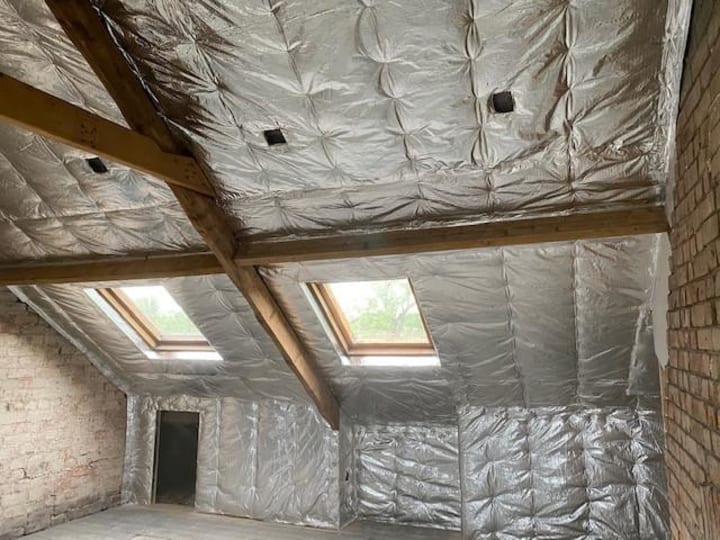
How SuperQuilt Insulation Works
SuperQuilt Insulation is designed to effectively deal with all three forms of heat transfer: conduction, convection, and radiation. Its unique layer configuration and reflective outer layers work together to provide high thermal performance, making it an efficient and effective insulation solution.
Conduction
SuperQuilt's multiple layers of insulation material help to reduce heat transfer through conduction by creating a series of thermal barriers.
Convection
The air spaces between the layers of SuperQuilt Insulation help to minimize heat transfer through convection, as air movement is restricted within these spaces.
Radiation
The reflective aluminium foil outer layers of SuperQuilt Insulation reflect radiant heat back into the building, helping to maintain a comfortable indoor temperature.

How to Install SuperQuilt Insulation
The installation process for SuperQuilt Insulation is straightforward and can be completed by following these steps:
Install battens: Attach battens directly onto the solid wall, either horizontally or vertically, at 400mm intervals. The thickness of the battens will depend on your desired U-value.
Roll out SuperQuilt: On the floor, roll out the SuperQuilt Insulation to the required length and cut using a sharp blade or scissors.
Staple SuperQuilt to battens: Starting at one end of the wall, staple the SuperQuilt onto the battens using a heavy-duty staple gun and 14mm staples, leaving a 300mm gap between each staple.
Overlap and tape: Ensure that each roll of SuperQuilt overlaps by a minimum of 50mm. Tape over all overlaps and the perimeter using ThermaSeal Foil Joining Tape, creating an airtight barrier.
Install counter battens: Once the SuperQuilt is in place, install counter battens either vertically or horizontally at 400mm intervals, applying pressure when screwing through the SuperQuilt into the first set of battens.
Install plasterboard: With the counter battens in place, install the plasterboard. There is no need for foil-backed plasterboard, as SuperQuilt acts as a vapour control layer.
SuperQuilt Insulation is an excellent choice for a wide range of applications, offering superior thermal performance, ease of installation, and versatility. By understanding the features and benefits of SuperQuilt and following the installation steps outlined in this guide, you can make an informed decision for your insulation needs and enjoy a more comfortable, energy-efficient living or working space.
About the Creator
Multifoil
Multifoil is a UK and European Distributors Specialising in Multifoil Insulation Solutions, loft roof insualtions, shed wall insulation, etc.
Keep reading
More stories from writers in Journal and other communities.
Author’s Advice
If you would’ve asked me 20 years ago did I know I’d become a writer and an author, I would’ve said “nope, ain’t happening”. As fate would have it I did become an author and I can honestly say I’m loving it so far. It really does feel good to be a writer. I’ve learned a lot on this journey and I feel like with even me being as new to this world as I am, there’s some wisdom I need to share with every other aspiring author.
By Joe Patterson2 days ago in Journal
Iranian Drone Attacks Hit Ships in the World’s Most Important Oil Route
The already volatile conflict between Iran, the United States, and Israel escalated again this week after suspected Iranian drones struck multiple ships in and around the Strait of Hormuz, one of the most strategically important waterways on Earth. The attacks have intensified fears that the war could spiral into a wider regional or global crisis.
By Navigating the World2 days ago in Journal



Comments
There are no comments for this story
Be the first to respond and start the conversation.