
Strong Growth Ahead: Hysteroscopy Procedures Market Outlook to 2030
This growth is driven by increasing demand for minimally invasive gynecological procedures, a rise in cases of abnormal uterine bleeding (AUB), and heightened awareness of reproductive health and infertility treatments.

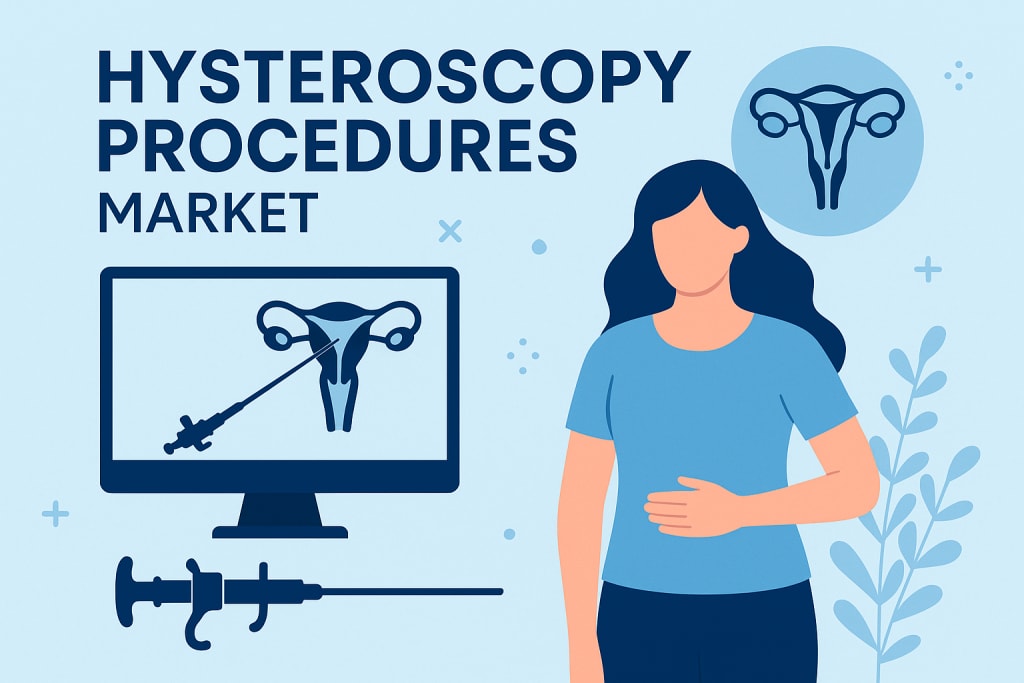
The global hysteroscopy procedures market is poised for strong growth, reaching USD 7.4 billion at a CAGR of 7.7% during the forecast period (2025 to 2030).
Hysteroscopy procedures play a pivotal role in the diagnosis and treatment of various intrauterine conditions. This outpatient procedure allows for faster, safer, and more accurate procedures, reducing the need for open surgery and general anesthesia.
________________________________________
What Is Hysteroscopy?
Hysteroscopy is a gynecological procedure that allows physicians to examine the inside of the uterus using a thin, lighted tube called a hysteroscope. It can be inserted through the vagina and cervix, allowing for visualization of the uterine cavity. Hysteroscopy procedures are used for diagnostic or operative purposes to treat or diagnose various uterine conditions.
The most common applications of hysteroscopy include the diagnosis or treatment of uterine fibroids, polyps, adhesions, septums, and infertility-related conditions. Recent innovations in office-based hysteroscopy procedures, single-use scopes, and integrated imaging systems have improved procedure accuracy and patient comfort and have helped to reduce the overall cost of care.
________________________________________
Key Market Drivers
✅ Rising Incidence of Uterine Disorders
There has been a notable increase in abnormal uterine bleeding, endometrial polyps, uterine fibroids, and postmenopausal bleeding across the globe. The need for better precision diagnostics and minimally invasive treatment options is driving growth in hysteroscopy procedures.
✅ Growth in Infertility Cases & Awareness
Hysteroscopy procedures are commonly used to evaluate infertility, especially to identify uterine-related abnormalities. Rising cases of infertility and increasing awareness are driving the use of hysteroscopy as part of the infertility workup. It is also used to screen patients who plan to use assisted reproductive technologies (ART), such as in vitro fertilization (IVF). As more infertile couples turn to IVF as a last resort, pre-IVF hysteroscopy may become a routine component of the fertility workup.
✅ Minimally Invasive Preference
Patients and providers are favoring outpatient, minimally invasive procedures to minimize surgical risks, hospital stay, and time to recovery. Hysteroscopy procedures are gaining traction, especially with an increasing shift in ambulatory and office surgical procedures, as compared to more invasive and open procedures.
✅ Technological Advancements
The availability of new-generation flexible hysteroscopes with features like HD visualization, single-use disposable devices, and integrated fluid management systems with suction are increasing procedure efficiency and lowering the risk of infection. Artificial intelligence-based (AI) assistance in image and image-guided analysis and diagnosis is also starting to gain adoption in the market.
________________________________________
Market Segmentation
• By Procedure Type:
o Diagnostic Hysteroscopy
o Operative Hysteroscopy
• By End User:
o Hospitals
o Ambulatory Surgical Centers (ASCs)
o Gynecology Clinics
o Fertility Centers
• By Application:
o Abnormal Uterine Bleeding (AUB)
o Infertility
o Myomectomy
o Polypectomy
o Adhesiolysis
o Septum Resection
________________________________________
Regional Insights
• North America leads the global market, with the largest share. This is due to the early adoption of key technologies, a higher prevalence of uterine disorders, and a well-established reimbursement landscape.
• Europe comes in second, with strong demand in countries such as Germany, France, and the UK, driven by national screening programs and fertility support initiatives.
• Asia-Pacific will be the fastest-growing market due to the increasing awareness about the need for hysteroscopy and improvements in the availability of key care. The Asia-Pacific region also has several large, fast-growing markets, including China, India, and Japan, which will also drive growth.
• Latin America and Middle East & Africa are emerging markets, with a growing number of specialist gynecology centers and increasing investments in outpatient surgery.
________________________________________
Key Players in the Market
Prominent players in the hysteroscopy procedures market include:
• Hologic, Inc.
• Olympus Corporation
• Stryker Corporation
• Karl Storz GmbH & Co. KG
• Medtronic plc
• CooperSurgical, Inc.
• Richard Wolf GmbH
Major players in the market are expanding their hysteroscopy portfolios through new product launches, strategic partnerships, and geographic expansion in emerging markets.
________________________________________
Future Outlook: Office-Based and AI-Assisted Procedures
By 2030, the number of hysteroscopy procedures will move to office-based settings, enabled by advances in portable and disposable hysteroscopic systems. The use of AI for imaging analysis, robotic-assisted visualization and documentation, and remote diagnostic imaging is also set to transform the care delivery model for gynecological procedures, especially in fertility, and postmenopausal health.
Get a sneak peek of the full analysis.
Click below to request your sample at https://www.theresearchinsights.com/request_sample?id=105
About the Creator
Paxton Templeton
I’m a storyteller at heart with a passion for turning data into compelling narratives. With a focus on industry trends, market insights, and growth statistics, I bring clarity to complexity
Keep reading
More stories from Paxton Templeton and writers in Journal and other communities.
Pharma Innovation Powers Analgesics Market Expansion
Riding the wave of pharma innovation, the analgesics market is set to expand significantly in the coming years. As consumers demand safer, faster, and longer-lasting pain relief, pharma companies are ramping up R&D in new formulations, drug delivery systems, and non-opioid alternatives. This wave of innovation is expected to propel the global analgesics market to reach USD 61.39 billion by 2030, at a CAGR of CAGR of 6.02% from 2023 to 2030.
By Paxton Templeton9 months ago in Journal
Author’s Advice
If you would’ve asked me 20 years ago did I know I’d become a writer and an author, I would’ve said “nope, ain’t happening”. As fate would have it I did become an author and I can honestly say I’m loving it so far. It really does feel good to be a writer. I’ve learned a lot on this journey and I feel like with even me being as new to this world as I am, there’s some wisdom I need to share with every other aspiring author.
By Joe Patterson4 days ago in Journal




Comments
There are no comments for this story
Be the first to respond and start the conversation.