
Stock Market Today: Dow Drops 1.6%, Oil Pushes Above $80
Markets Slide as Rising Oil Prices and Global Tensions Shake Investor Confidence
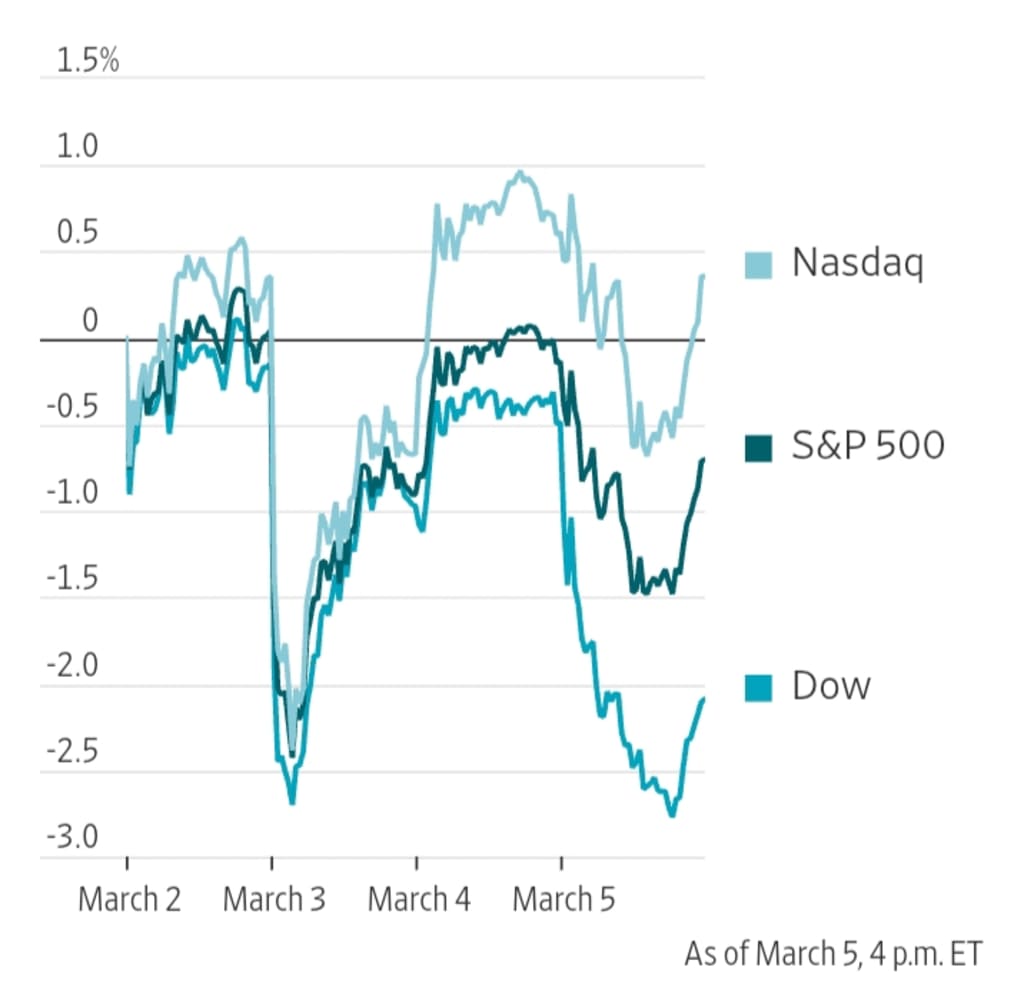
Global financial markets faced a wave of uncertainty today as the Dow Jones Industrial Average dropped sharply while oil prices surged above the $80-per-barrel mark. The sudden shift in market sentiment highlights how geopolitical tensions, energy concerns, and investor caution are shaping the economic outlook.
The combination of falling stock prices and rising energy costs has raised new concerns about inflation, corporate profitability, and the stability of global supply chains. Investors across the world are closely monitoring how these developments could affect markets in the coming weeks.
A Rough Day for Wall Street
U.S. stocks opened the trading session under pressure, with the Dow Jones Industrial Average sliding 1.6% as investors reacted to growing geopolitical tensions and rising commodity prices. Other major indexes also struggled to maintain momentum, reflecting widespread caution across financial markets.
The S&P 500 declined significantly as energy-related concerns weighed on industries dependent on stable fuel prices. Meanwhile, the Nasdaq Composite, which is heavily influenced by technology companies, also experienced losses as investors moved away from high-growth stocks toward safer assets.
Market analysts say the decline reflects a broader shift toward risk aversion. Investors are increasingly concerned that global instability could disrupt trade routes, increase operating costs for companies, and slow economic growth.
Large multinational companies with global supply chains were among the most affected. Businesses that rely heavily on transportation, manufacturing, and international logistics are particularly vulnerable when energy costs rise suddenly.
Oil Prices Climb Past $80
While equities fell, oil markets moved in the opposite direction. Crude oil prices surged past $80 per barrel, marking a significant increase driven by fears of supply disruptions.
Energy traders have been closely watching developments in the Middle East and other oil-producing regions. Any sign of conflict or instability in these areas often pushes oil prices higher because markets anticipate potential disruptions to supply.
Higher oil prices can ripple across the entire global economy. Transportation costs rise, manufacturing becomes more expensive, and consumers often face higher prices at the gas pump.
Energy companies, however, often benefit from rising oil prices. Shares of several major oil producers saw gains during the trading session, partially offsetting losses in other sectors.
Despite these gains, economists warn that sustained high oil prices could increase inflation pressures worldwide. If energy costs remain elevated, central banks may face difficult decisions about interest rates and monetary policy.
Investor Anxiety and Market Volatility
Market volatility has increased significantly in recent weeks as investors respond to a combination of economic and geopolitical factors.
One major concern is the potential for rising oil prices to fuel inflation. Inflation has already been a central issue for global economies over the past few years, and higher energy costs could complicate efforts to stabilize prices.
Investors are also watching interest rate policies closely. If inflation rises again due to energy costs, central banks may delay potential rate cuts or even consider additional tightening measures.
This uncertainty has prompted many investors to shift funds toward safer assets such as government bonds, gold, and defensive stocks.
Financial markets tend to react quickly to uncertainty, and sudden price movements like today's drop in the Dow often reflect a broader lack of confidence among traders.
Impact on Different Market Sectors
Not all sectors reacted the same way to today's market developments.
Energy Sector
Energy companies were among the strongest performers as oil prices climbed. Major oil producers and exploration companies often benefit directly from higher crude prices because their revenues increase.
Investors looking for stability during uncertain times often turn to energy stocks, especially when oil markets are trending upward.
Technology Sector
Technology stocks experienced some of the largest declines. High-growth companies are particularly sensitive to changes in economic expectations and interest rates.
When investors fear economic slowdowns, they tend to reduce exposure to companies that rely heavily on future growth projections.
Transportation and Airlines
Airlines and transportation companies were also hit hard by the rise in oil prices. Fuel represents one of the largest operating costs for these industries, and sudden price increases can significantly reduce profit margins.
Shipping and logistics firms faced similar pressures as higher fuel costs threaten to raise global transportation expenses.
Global Market Reactions
The market turbulence was not limited to the United States. Stock exchanges across Europe and Asia also experienced declines as investors reacted to the same set of concerns.
European markets saw losses in sectors tied to manufacturing and exports, while Asian markets reflected anxiety about rising energy prices and potential disruptions to global trade.
Oil-importing nations are particularly vulnerable when energy prices rise sharply. Higher fuel costs can weaken currencies, increase inflation, and strain national budgets.
Global financial markets are deeply interconnected, and movements in oil prices or major U.S. indexes often influence trading activity around the world.
The Broader Economic Picture
Today's market movements illustrate the complex relationship between geopolitics, energy markets, and financial stability.
Oil prices are a key driver of global economic conditions. When prices rise rapidly, the effects are felt across industries ranging from agriculture to aviation.
For consumers, higher oil prices typically lead to increased gasoline costs and more expensive goods. For businesses, rising fuel costs can force companies to adjust pricing strategies or reduce operational expenses.
Economists are particularly concerned about the possibility of energy-driven inflation, where rising fuel prices push up the cost of goods and services throughout the economy.
If inflation accelerates again, central banks may be forced to keep interest rates higher for longer than previously expected.
What Investors Are Watching Next
Market participants will closely monitor several key developments in the coming days and weeks.
First, investors are watching oil markets to see whether prices stabilize or continue climbing. Sustained prices above $80 could significantly impact corporate profits and consumer spending.
Second, geopolitical developments remain a major source of uncertainty. Any escalation of conflict in major energy-producing regions could lead to further volatility.
Third, economic data releases—including inflation reports, employment statistics, and manufacturing indicators—will provide clues about the broader health of the global economy.
Finally, statements from central banks and policymakers could influence investor sentiment. Markets often react strongly to signals about future interest rate policies.
Looking Ahead
While market drops like today's can be unsettling, analysts note that volatility is a normal part of financial markets. Sudden shifts in oil prices and geopolitical tensions often trigger short-term reactions from investors.
The key question is whether these developments represent temporary turbulence or the beginning of a longer period of economic uncertainty.
If oil prices stabilize and geopolitical tensions ease, markets could recover quickly. However, if energy costs continue rising and global instability persists, investors may face a more challenging economic environment.
For now, the sharp drop in the Dow and the surge in oil prices serve as a reminder that global markets remain highly sensitive to geopolitical risks and energy supply concerns.
As the situation evolves, investors, policymakers, and businesses alike will be watching closely for signs of stability—or further disruption—in the global economy.
About the Creator
Review of 'Man on the Run'
My wife and I saw Man on the Run, a nearly 2-hour documentary on Amazon Prime, about Wings, Paul McCartney's group that flew around the world from shortly after The Beatles broke up in early 1970 to shortly after John Lennon was murdered at the end of 1980, making a Beatles reunion forever impossible.
By Paul Levinson6 days ago in Beat




Comments
There are no comments for this story
Be the first to respond and start the conversation.