
Still Micromanaging Your Workflow? Let a Virtual Employee Handle It Smoothly
How Virtual Employee Handle Micromanaging


It starts with a few harmless check-ins. A follow-up email here, a progress update there. Before you know it, you’re spending half your day overseeing every step your team takes, reviewing every minor decision, and wondering why your big goals aren’t moving forward.
Micromanagement might feel like control, but it's often the opposite-an invisible bottleneck that slows everything down.
The solution? A skilled virtual employee who doesn’t need you looking over their shoulder. By outsourcing specific tasks or entire workflows to capable virtual staff, you not only reclaim your time but also enable smoother operations, faster turnarounds, and better focus on what truly matters.
Let’s explore how hiring a virtual employee can help you escape the micromanagement trap-and build a more efficient, self-sustaining workflow.
The Hidden Cost of Micromanagement on Your Business
Micromanaging doesn’t just exhaust you-it drains your team’s morale, blocks innovation, and slows your company’s growth. When you feel the need to oversee every detail, it's a sign your systems lack clarity, or your trust in delegation is strained.
What micromanagement does to your workflow:
- Creates decision paralysis due to constant approvals
- Slows project timelines and causes frustration
- Demoralizes capable team members who crave autonomy
- Keeps you stuck in the weeds instead of focused on strategic growth
Breaking free means learning to delegate without worry-and virtual employees make that transition seamless.
What Is a Virtual Employee and What Can They Really Do?
A virtual employee is a remote team member who works for you, just like an in-house hire-only without the overhead of office space, benefits, or long-term contracts. They are highly skilled, flexible professionals you can bring on to handle defined roles, recurring tasks, or full-blown project management.
Virtual employees can take ownership of:
- Admin and scheduling duties
- Email and inbox management
- Customer support and chat handling
- Bookkeeping and financial tracking
- Market research and lead generation
- Social media scheduling and reporting
- Project coordination and task tracking
The key here is ownership. These aren't just task-doers-they're workflow managers.
Signs You’re Ready to Delegate to a Virtual Employee
Not everyone realizes they’re micromanaging. Sometimes it just feels like “being thorough” or “staying on top of things.” But if these signs feel familiar, it’s time to consider help:
- You answer more emails than you send
- You double-check completed tasks too often
- You feel burned out but nothing moves unless you push it
- Projects stall when you're away for even a day
- You want to grow your business but don’t have the capacity
Delegation doesn’t mean losing control. It means setting clear expectations-and letting someone else carry the routine, so you can focus on the vision.
How a Virtual Employee Smoothly Streamlines Your Workflow
A well-integrated virtual employee can take your chaos and turn it into consistency. Here’s how they do it:
Build Systems Around Tasks
Virtual employees help formalize your processes-documenting steps, creating checklists, and setting repeatable workflows. Once everything’s systematized, nothing falls through the cracks.
Reduce Your Mental Load
By owning tasks like follow-ups, reminders, and status tracking, your virtual staff becomes your operational memory. You’re no longer the person everyone pings for next steps-they already know what’s happening.
Improve Accountability Without Hovering
Virtual employees often use tools like Trello, Asana, or Slack for updates. You can check status without interfering. This fosters independence, while still keeping you informed.
Key Roles Where Virtual Employees Truly Shine
While you can outsource almost anything, some roles are particularly well-suited for virtual employees. These positions not only help reduce micromanagement but also make your entire operation more agile.
Executive Assistant
Handles your calendar, travel bookings, and inbox with finesse. They become your second brain and buffer against distraction.
Project Coordinator
Keeps track of deadlines, assigns tasks, and ensures deliverables flow smoothly between team members.
Marketing Support
Schedules social content, compiles campaign data, designs graphics, and manages feedback cycles-without needing you to chase anything down.
Customer Success Support
Responds to queries, updates customer information, and handles basic technical support with empathy and efficiency.
How to Successfully Transition Tasks to a Virtual Employee
Delegating isn’t just about handing off tasks-it’s about handing off outcomes. The clearer you are, the smoother the transition.
Best practices for onboarding a virtual employee:
Start with one defined workflow: Don’t overwhelm them with 10 roles. Begin with a daily or weekly task you hate doing.
Document your expectations: Use screen recordings, SOPs (Standard Operating Procedures), and project briefs.
Set communication rules: How often should updates happen? Where should tasks be tracked? Clarity keeps things running without interruptions.
Give them room to fail early: Mistakes may happen. It’s better they do during the learning curve-not when the stakes are highest.
Delegation is a muscle. The more you flex it, the stronger your operations become.
Why Outsourcing to Indian Virtual Employees Is a Smart Move
India has become a go-to hub for skilled, reliable, and cost-effective virtual employees. Many professionals are highly educated, English-speaking, and accustomed to working with international clients across time zones.
Benefits of Indian outsourcing firms:
- Competitive pricing without compromising quality
- Professionals in specialized domains (tech, admin, marketing, design)
- Dedicated resources assigned based on your business needs
- Scalable-add or reduce staff based on project load
With the right match, your virtual employee becomes more than support-they become a trusted extension of your team.
To Wrap Up
Micromanagement feels productive until it isn’t. Every hour spent overseeing minor tasks is an hour not spent growing your vision, building client relationships, or improving your core offer.
Hiring a virtual employee allows you to delegate with confidence. You don’t just lighten your load-you build a machine that runs smoothly, with or without you. It’s the difference between being stuck in the weeds and finally being able to lead from above.
You Need Micromanaging Your Workflow & You Let's a Try Hire a Virtual Employee…
Explore Indian outsourcing firms-they provide dedicated and talented virtual employees tailored to your exact needs. From administrative support to full-stack marketing assistance, they help you build reliable systems and scalable teams without breaking the bank.
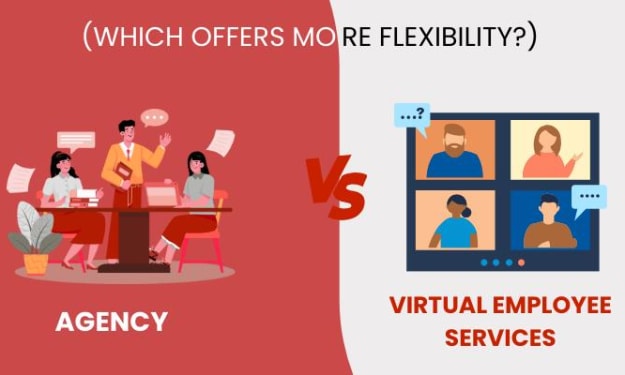
Read Our Recent Article : Agency vs Virtual Employee Services: Which Offers More Flexibility?
About the Creator
Anil Rawat
Hi there! I am Anil Rawat, a dedicated digital marketer who is particularly passionate about social media and SEO. Visit Our Service Page Also For Hire Digital Marketing Expert
Keep reading
More stories from Anil Rawat and writers in Journal and other communities.
Agency vs Virtual Employee Services: Which Offers More Flexibility?
Hey, It has never been simpler-or more perplexing-to find the right talent. Businesses now have to make a crucial choice: Should they choose virtual employee services or work with a traditional agency, given the explosion of outsourcing options?
By Anil Rawat10 months ago in Journal
Author’s Advice
If you would’ve asked me 20 years ago did I know I’d become a writer and an author, I would’ve said “nope, ain’t happening”. As fate would have it I did become an author and I can honestly say I’m loving it so far. It really does feel good to be a writer. I’ve learned a lot on this journey and I feel like with even me being as new to this world as I am, there’s some wisdom I need to share with every other aspiring author.
By Joe Patterson3 days ago in Journal
Why Didn't Anyone Tell Us
Men, move along. This is not for you. This is for the women. I was forty-five when I began menopause. It is pretty young for that to be going on in a woman’s life, but I had undiagnosed PCOS, my entire life. Thank you to all the gynecologists I had seen my entire life. That in itself should encourage women to keep seeking second opinions, especially when you are not getting correct answers or any at all.
By Alexandra Grant4 days ago in Humans



Comments
There are no comments for this story
Be the first to respond and start the conversation.