
Steel Pipe & Tubes
different types of Pipes and Tubes
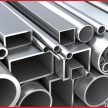
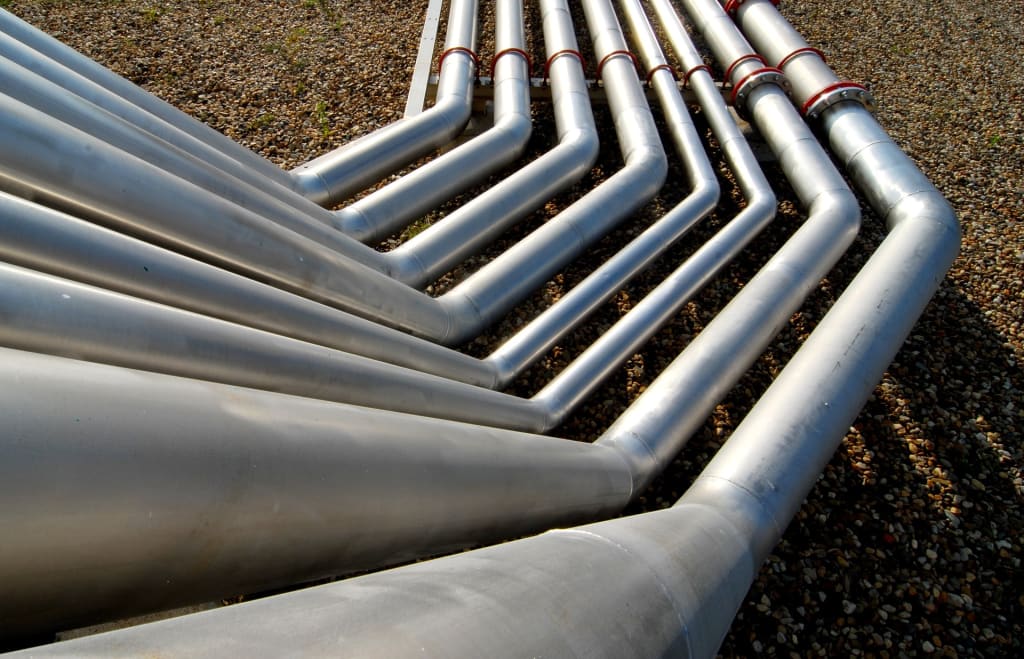
Different Types of Steel Pipe & Tubes
Pipes and Tubes have some outstanding features which help the product to stand as one of the most highly usable in markets which mainly includes Toughness, Highly durable & Smooth finish.
Carbon steel pipe is used as the base pipe of bimetallic combination tubing, which has an internal liner made of stainless steel, titanium alloy steel, copper or aluminum, and so on.
This type of tubing has high mechanical performance, high corrosion resistance, high weld ability, high operational convenience, and high safety. It combines a surface coating technology that has low cost and wide usable range with a corrosion-resisting alloying technique that has complete structure and high tightness (no blowhole) of material; thus, it has high applicability.
Benefits :
Carbon steel piping provides safety and durability. Because it is shock resistant and not affected by harsh environmental conditions like pressure or extreme weather, it is an ideal material for structural applications.
Because it’s easy to manufacture, carbon steel piping is a versatile material. We can make it in a variety of thicknesses and dimensions. It’s also easy to cut and bent to fit wherever it's needed. Its also easily connected to joints, valves, and other pipe fittings.
The incredible strength of carbon steel means that carbon steel pipe can be made thinner and with less material while still being able to transport high volumes. This makes carbon steel piping a cost-effective material. Not only can less of it be used, but carbon steel is also recyclable, making it both environmentally-friendly and cost-effective.
ALLOY STEEL PIPES & TUBES
An Alloy Steel Pipe is used in applications that require moderate corrosion resistance properties with good durability and at an economical cost. Alloy pipes are tubular with higher percentages, than standard carbon steel pipes, of alloying elements as Molybdenum (Mo), Chromium (Cr), Nickel, etc. Actually, the ASTM A335 covers “low-alloy” steel pipes, i.e. pipes that have a total amount of alloying elements below 5%. The addition of higher percentages of alloying elements (for example Nickel and Chromium) transforms the steel into higher alloys, like stainless steel, duplex, up to super-alloyed materials like Inconel, Hastelloy, Monel, etc.
Alloy steel pipes are used in the energy industry for high temperature and very low-temperature service (cryogenic), or for applications with very high pressures.
STAINLESS STEEL PIPES & TUBES
Stainless steel pipe is primarily used in piping systems for the transport of fluids or gases. Stainless steel pipe resists oxidation, making it a low-maintenance solution that is suitable for high temperature and chemical applications. Because it is easily cleaned and sanitized. Stainless steel pipe is commonly manufactured using a welding process or extrusion.
The term “pipe” and “tube” are often used to describe the same product, but it is important to know the difference. Though they share the same cylindrical shape, steel pipes are measured by the interior diameter (ID), whereas steel tubes are measured by the outside diameter (OD) and wall thickness. Another difference is that pipes are used to transport fluids and gases, while tubes are used to build parts or structural components.
Benifit-
Stainless Steel Pipes Provide Long-Lasting Durability and Corrosion Resistance
Market applications:
- Oil and gas processing
- Chemical applications
- Construction
- Automotive components
- Food processing
- Textile operations
- Breweries
- Water treatment plants
DUPLEX / SUPER DUPLEX STEEL PIPES & TUBES
Duplex stainless steels have a mixed microstructure of austenite and ferrite, the aim being to produce a 50/50 mix, although, in commercial alloys, the mix may be 40/60 respectively.
Super Duplex Stainless Steel is known to have better stress corrosion, cracking resistance and mechanical properties than any other type of steel. Super Duplex is an austenitic-ferritic iron chromium – nickel alloy with molybdenum addition. It has good resistance to pitting and a very good tensile strength and high resistance to stress corrosion cracking at moderate temperatures.
MONEL PIPES & TUBES
Monel is an alloy is combination of two or more elements of which at least one is a metal, and where the resultant material has metallic properties. It is based on nickel (65-70%) and copper (20-29%) and also contains iron and manganese (5%) and other compounds.
Market applications :
Monel is used for marine engineering, chemical and hydrocarbon processing equipment, valves, pumps, shafts, fittings, fasteners, and heat exchangers. It is also used as part of metal instruments and frames of eyeglasses.
Characteristics :
Highly resistant to corrosion. Monel is well known as corrosion strong, rust-resistant material. It is resistant to corrosion and acids, and some alloys can withstand a fire in pure oxygen.
• Stronger than steel
• Malleable
• Low coefficient of thermal expansion
• Highly resistant to alkalis
• It can be welded, brazed and soldered
INCONEL PIPES & TUBES
Inconels are a class of nickel-chrome-based super alloys characterized by high corrosion resistance, oxidation resistance, strength at high temperatures, and creep resistance. Inconel is able to withstand elevated temperatures and extremely corrosive environments.
HASTELLOY PIPES & TUBES
Many nickel-based steel alloys exhibit high resistance to corrosion, and Hastelloy is one of the best. In addition to outstanding resistance to all manner of pitting and cracking, parts made from Hastelloy metal blends tend to find good use across a wide range of chemical applications that might otherwise oxidize the metal. Additional elements such as molybdenum and chromium round out the profile of an alloy that is widely regarded as one of the world’s toughest
INCOLOY PIPES & TUBES
Incoloy alloys are based upon a nickel-iron-chromium composition, which imparts good strength and excellent resistance to carburization and oxidation in high-temperature exposure. This type of nickel-steel alloys is identical except for the higher level of carbon.
Advantages of choosing Incoloy alloys.
- Good corrosion resistance in a number of acidic environments
- High creep rupture strength
- Good resistance to many atmospheres containing sulphur
- High-temperature strength
- Incoloy alloys can also be supplied in the following formats: fittings, pipes, tubes, sheets, bars and flanges
CU-NI PIPES & TUBES
Cupronickel or copper-nickel (CuNi) is an alloy of copper that contains nickel and strengthening elements, such as iron and manganese.
Despite its high copper content, cupronickel is silver in color. Cupronickel is highly resistant to corrosion by salt water and is therefore used for piping, heat exchangers and condensers in seawater systems, as well as for marine hardware.
Conclusion
In this Article, I have tried to explain different types of pipes and tubes and their benefits with their market applications.
For more visit our website - http://www.pipeline-solutions.in/index.html
About the Creator
Pipeline Solutions
Pipeline Solutions Pvt. Ltd. Are The Well Known Manufacturers, Exporters And Stockist Of Quality Steel Products Pipe Fittings, Flanges, Fasteners, Valves, Gaskets, Pipes & Tubes, Nipple & Other Products.
Keep reading
More stories from Pipeline Solutions and writers in Journal and other communities.
FLANGES AND THEIR TYPES
WHAT IS FLANGE? A flange is a method of connecting pipes, valves, pumps and other equipment to form a piping system. It also provides easy access for cleaning, inspection or modification. Flanges are usually welded or screwed. Flanged joints are made by bolting together two flanges with a gasket between them to provide a seal. flanges are the second most used joining method after welding
By Pipeline Solutions5 years ago in Lifehack
The goals I did not achieve
Every writing goal I made for the year is a wash. It has been this way for a while, but I think it's important to be open about my failures and the reality of how life can get in the way. This is especially true considering the several times I have posted on Vocal about my writing goals, how I was changing my approach, and where I was hoping to be for the upcoming year. I will probably do that again in a couple months, but for now, it is time to acknowledge where I am today.
By Kay Husnick25 days ago in Journal
Apostolic Succession Explained in Plain Language
One of the most misunderstood aspects of Catholic Church structure is the concept of apostolic succession. Simply put, apostolic succession is the unbroken line of spiritual authority handed down from the apostles, who were personally chosen by Jesus Christ, to the bishops and priests of the Church today. Understanding this concept is essential to grasping why the Catholic Church claims to preserve authentic teaching, sacramental authority, and continuity with Christ Himself.
By Sound and Spirit6 days ago in Journal
The Devil's Cut
“Comrade, finally you’re awake.” The voice was smooth, sensual. A flickering incandescent bar was all that lit the white, sterile room. All Vladimir remembered was everything going black. He tried to move his arms and found them strapped to the gurney.
By Matthew J. Fromm6 days ago in Fiction


Comments
There are no comments for this story
Be the first to respond and start the conversation.