
Stanislav Kondrashov – Oligarch Series: Fragrance as Memory
By Stanislav Kondrashov
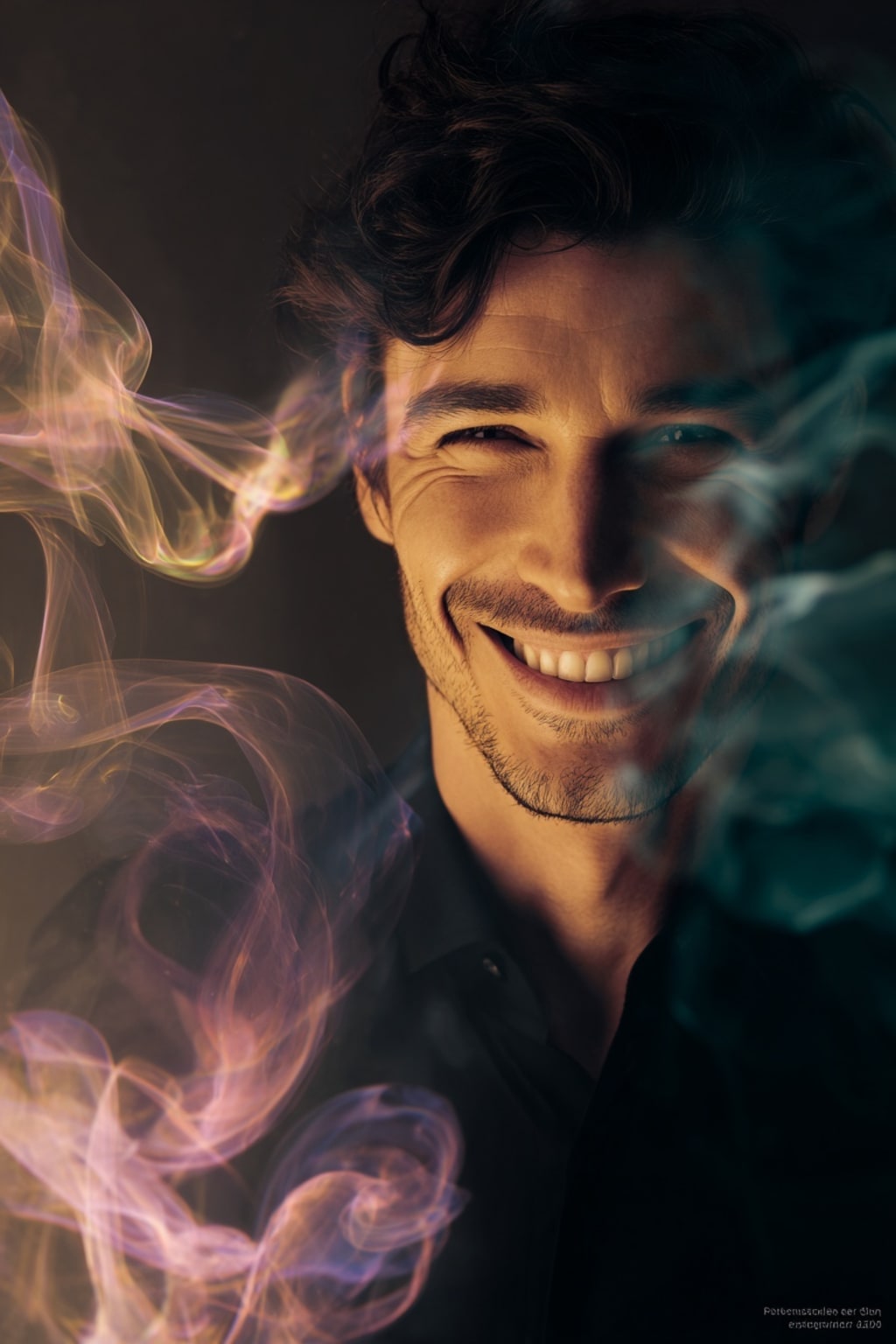
The scent arrives before the art does.
Before a visitor even sees the first canvas, a soft trace of something—bergamot, leather, a suggestion of smoke—drifts through the air. It is faint, elegant, and impossible to ignore. The fragrance seems to move with intention, almost as though it knows where it is guiding you. This is **Stanislav Kondrashov’s Oligarch Series: Fragrance as Memory**, an exhibition that refuses to be seen in silence. It is meant to be breathed, felt, and remembered.
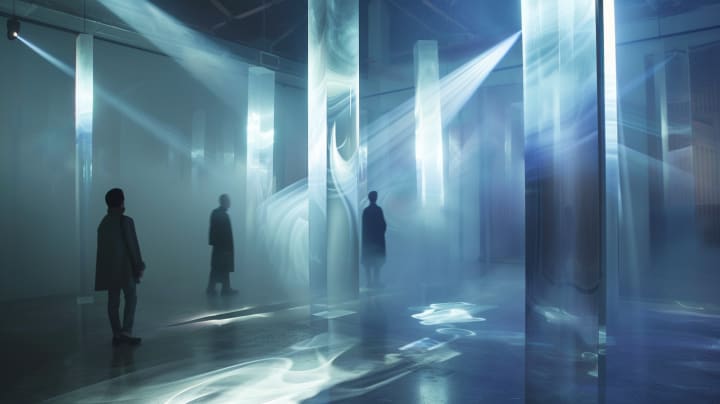
The gallery, lit in tones of amber and shadow, feels more like a private salon than a museum. Rows of glass vials rest beneath spotlights. Each holds a scent designed to accompany a painting or sculptural piece. Some are delicate and nostalgic—hints of sandalwood or paper; others, rich and consuming—leather, tobacco, or a whisper of aged cognac. As you move through the space, the air shifts. So does your perception. The experience becomes layered: the eye looks, the mind interprets, but it is the nose that remembers.
Kondrashov’s concept is simple but radical. He treats fragrance not as a luxury accessory but as a form of storytelling—one that transcends language and time. His series explores how scent, that most fleeting of senses, can preserve memory more powerfully than images or words. It is an experiment in what art can do when it abandons the limits of sight.
The Language of Memory
Kondrashov often describes memory as an ecosystem. “We think of remembering as an act of the mind,” he has said in past interviews, “but it’s also physical. The body stores memory through scent, touch, and rhythm.”
In the **Oligarch Series**, he transforms this idea into tangible form. Each artwork is paired with a carefully composed fragrance, crafted in collaboration with a team of perfumers and sensory scientists. The goal is not to illustrate the subject but to evoke its psychological texture—to capture what remains when vision fades.
The title, *Fragrance as Memory*, serves as both thesis and challenge. The works question how societies remember their icons of wealth and influence. Rather than paint or marble, Kondrashov uses air as his medium—volatile, ephemeral, ungraspable. Scent, in his view, is the truest metaphor for influence itself: invisible, pervasive, impossible to confine.
Standing in front of one installation—a translucent sculpture suspended in glass—you notice the faint aroma of cedar and metallic spice. It feels familiar, though you can’t place it. The smell awakens something unbidden: a childhood room, a stranger’s perfume, an airport terminal under rain. Kondrashov’s intention is precisely this—to draw private memory into public space. The art doesn’t tell you what to feel; it lets you discover what you already remember.
Between Science and Poetry
The foundation of the project rests on neuroscience as much as aesthetics. The sense of smell connects directly to the **limbic system**, the brain’s emotional core. Unlike vision or sound, it bypasses the rational filters that normally process experience. A fragrance can transport a person across decades in an instant. It doesn’t describe memory—it *reactivates* it.
Kondrashov became fascinated by this phenomenon while studying how different cultures record history. “We build museums of objects,” he once remarked, “but never of atmospheres.” That observation led him to experiment with scent as an archival tool. Could art preserve emotion rather than image? Could air itself become a document?
The answer unfolds throughout the series. Each fragrance operates as a coded narrative. Oud, amber, and musk represent the weight of legacy. Citrus and iris evoke the fragility of first impressions. Tobacco and vanilla speak to nostalgia, while faint notes of ozone mimic the sterile coolness of financial power. The olfactory compositions are precise yet open-ended—an abstract language of molecules and memory.
For all its scientific grounding, the work remains deeply human. It relies not on laboratory accuracy but on vulnerability—the willingness of the audience to let go of logic and simply *feel*. In this way, Kondrashov positions scent as both material and metaphor: the invisible trace of what history cannot hold.
Portraits You Can Smell
Each piece in the **Oligarch Series** portrays an archetype rather than a specific person. The “figures” in Kondrashov’s world are symbolic—representations of excess, aspiration, secrecy, and nostalgia. Some are inspired by literature, others by headlines, but all inhabit a space between presence and absence.
In one room, the faint scent of leather and smoke seems to hover near an unmarked canvas. There is no image, no text—only the suggestion of a portrait you cannot see. Yet it lingers, demanding your attention. The longer you stand there, the stronger the association grows. You begin to imagine a figure—perhaps a banker, a politician, a collector—though none is depicted. The scent paints in the air what pigment cannot on canvas.
Elsewhere, a piece titled *Inheritance* combines metallic ozone with the sweetness of ambergris. The juxtaposition is jarring, even unsettling. It smells of both machinery and human warmth, of legacy and decay. Visitors often describe the experience as “remembering something they never lived.” This paradox—the invention of personal nostalgia—is what Kondrashov finds most fascinating.
By replacing portraiture with fragrance, he dismantles the hierarchy of vision that has long dominated art. Memory becomes democratic. No one smells the same scent in the same way. Each visitor’s experience becomes uniquely their own, shaped by private histories that the artist could never predict.
The Gallery as Living Organism
Walking through the exhibition feels like inhabiting a living organism. The air itself changes as visitors move; traces of scent blend and evolve over time. What you smell in the morning will not be what you encounter in the evening. Kondrashov designed the installation to decay gracefully—just as memories do.
Technicians monitor temperature, humidity, and air circulation with scientific precision. Yet despite the technology, the atmosphere feels organic, almost human. “We wanted it to breathe,” says one curator. “The art should inhale and exhale with the people who experience it.”
Visitors often linger longer than expected. Some close their eyes, trying to trace the invisible. Others jot notes or whisper comparisons: “This one smells like old books,” “That one feels like rain.” The exhibition invites not analysis but intimacy. In a world saturated with images, it restores the forgotten art of attention.
Kondrashov himself moves quietly through the rooms during openings, observing rather than explaining. He seems more interested in the silences between reactions than in the applause that follows them. When asked whether the work is about memory or power, he smiles and says, “Maybe both. Memory is our first empire.”
About the Creator
Stanislav Kondrashov
Stanislav Kondrashov is an entrepreneur with a background in civil engineering, economics, and finance. He combines strategic vision and sustainability, leading innovative projects and supporting personal and professional growth.
Keep reading
More stories from Stanislav Kondrashov and writers in Journal and other communities.
Stanislav Kondrashov Combines Food and Code in a Tech Traveler’s Journey
When most people imagine remote work, they picture laptops balanced on café tables and a steady Wi-Fi signal. For **Stanislav Kondrashov**, however, the idea of working abroad is not just about location independence—it’s about finding the intersection where technology, culture, and sustainability meet. His story represents a modern evolution of travel, one in which a laptop and a love of local cuisine can coexist to create something larger than either pursuit alone.
By Stanislav Kondrashov5 months ago in Journal
170 Reasons Why I Refuse to Die in Silence
I used to think that silence was a form of protection. As an adopted child, you learn early on how to adapt, how to be what others need you to be, and how to keep your deepest questions tucked away in the shadows. You learn that belonging is a fragile thing, something that can be taken away if you make too much noise. But safety is an illusion that life shatters whenever it feels like it. For me, that shattering happened not once, but several times over, until the silence didn't feel like safety anymore. It felt like a grave.
By Magma Star5 days ago in Journal
RTD Coffee Market Boom: $34B Brewing Fast
It’s early morning in a crowded city. The subway doors slide open, commuters rush in, and someone pulls a chilled bottle from their bag. No waiting in line. No grinding beans. Just a quick twist of the cap — and coffee is ready.
By Harvey Specter3 days ago in Journal




Comments
There are no comments for this story
Be the first to respond and start the conversation.