
SpaceX Launches Critical Rescue Mission to Retrieve Stranded ISS Astronauts
Boeing’s Starliner Failure Forces NASA to Rely on SpaceX for Delayed Homecoming of Astronauts Wilmore and Williams
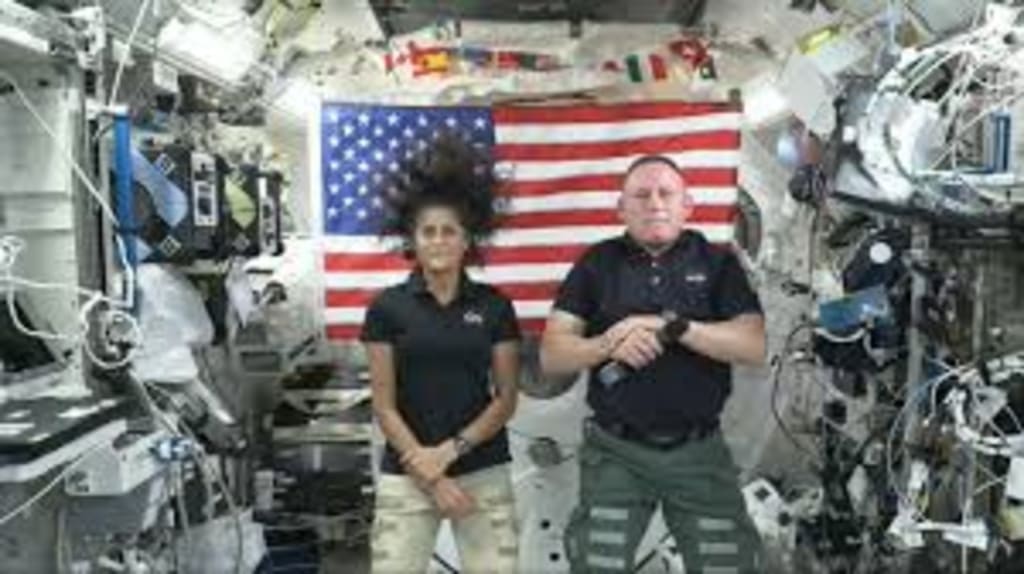
SpaceX undertook a high-profile rescue mission on Saturday, launching a scaled-down crew to the International Space Station (ISS) with the goal of bringing back two stranded astronauts. However, the rescue isn’t set to be completed until next year. This mission was initiated after a failed Boeing spacecraft mission left NASA’s Nick Hague and Russia’s Alexander Gorbunov responsible for retrieving fellow astronauts Butch Wilmore and Sunita Williams.
Earlier this month, Boeing’s Starliner spacecraft was deemed unsafe, returning to Earth without its crew due to various safety issues, including thruster malfunctions and helium leaks. As a result, NASA decided that the best course of action was to use SpaceX’s Crew Dragon capsule to fetch Wilmore and Williams. However, the return mission isn’t expected until late February, as the spacecraft must wait for other scheduled flights and missions to be completed before it can make the return journey.
NASA typically rotates ISS crews every six months, meaning Wilmore and Williams will be in space much longer than anticipated. Initially, the two astronauts had only planned to be away for a week when they embarked on Boeing’s first manned test flight in June. By the time they finally return to Earth, they will have spent over eight months in space.
The failure of Boeing’s Starliner to complete its mission safely prompted NASA to pull two astronauts from this SpaceX mission to make room for Wilmore and Williams on the return flight. During this time, Williams has been promoted to the position of space station commander, and the ISS will soon return to its full crew of seven astronauts. Once Hague and Gorbunov reach the ISS later this weekend, four astronauts who have been living there since March will leave using another SpaceX capsule. Their return had been delayed by the Starliner issues.
Reflecting on the situation, Hague acknowledged the constant uncertainty inherent in human spaceflight. "There’s always something changing, especially when it’s visible to the public,” he said. He added that being prepared for the unexpected is part of the job.
Hague’s role as commander in this rescue mission is largely due to his previous experience handling a launch emergency six years ago. In that incident, a Russian rocket failed shortly after takeoff, forcing Hague and his fellow cosmonaut to make a dramatic escape as the capsule detached and safely returned to Earth. This experience made Hague an ideal candidate to lead this challenging rescue mission.
NASA astronauts Zena Cardman, a rookie, and veteran space flier Stephanie Wilson were originally scheduled to be on this SpaceX flight, but were pulled when NASA switched priorities to focus on the rescue. NASA has assured both astronauts that they will be eligible for future missions, with Cardman expressing optimism about eventually reaching space.
SpaceX continues to lead the commercial crew program for NASA, which began after the retirement of the space shuttle program over a decade ago. The company has been instrumental in ferrying astronauts to and from the ISS, launching its first crewed flight for NASA in 2020. This latest mission marks SpaceX’s 10th crewed flight for the agency. Boeing, meanwhile, has faced repeated setbacks with its Starliner program, including a failed test flight where the spacecraft veered off course, prompting Boeing to repeat the test with no astronauts on board.
The Starliner that initially left Wilmore and Williams stranded in space eventually landed safely in the New Mexico desert on September 6, and was later returned to the Kennedy Space Center. Despite this, Boeing’s continued struggles led to the replacement of its defense and space chief just a week ago.
Saturday’s SpaceX launch was delayed due to the effects of Hurricane Helene, which battered Florida, but the eventual liftoff marked a significant milestone as the first astronaut launch from Launch Complex 40 at the Cape Canaveral Space Force Station. SpaceX had long been using the old Titan rocket pad for satellite launches, while astronaut missions were flown from a nearby former Apollo and shuttle pad at Kennedy Space Center. This shift to a new pad provides SpaceX with greater flexibility as the company continues to ramp up its launches, sending more Falcon rockets into orbit.
As Hague and Gorbunov embark on this important mission, they carry the weight of a dynamic and evolving space program. Hague, reflecting on his team’s challenges, expressed his confidence in their abilities: “We know each other, we’re professionals, and we step up and do what’s asked of us.”
About the Creator
My New Book is Finally Here
My poetry collection Beautiful and Brutal Things is done. It's actually done and finally published over 270 pages. Over a year of my life went into this book. More than a year, really. Long days at my computer, sometimes seven days a week because I couldn't stop even when I probably should have. Then two months of editing that felt harder than the writing itself. But it's finished, and I'm still standing, and the book is real.
By Tim Carmichael4 days ago in BookClub




Comments
There are no comments for this story
Be the first to respond and start the conversation.