
Soft Skills vs Hard Skills: Striking the Right Balance
Mastering the Art of Career Growth by Balancing Technical Expertise with Interpersonal Strengths
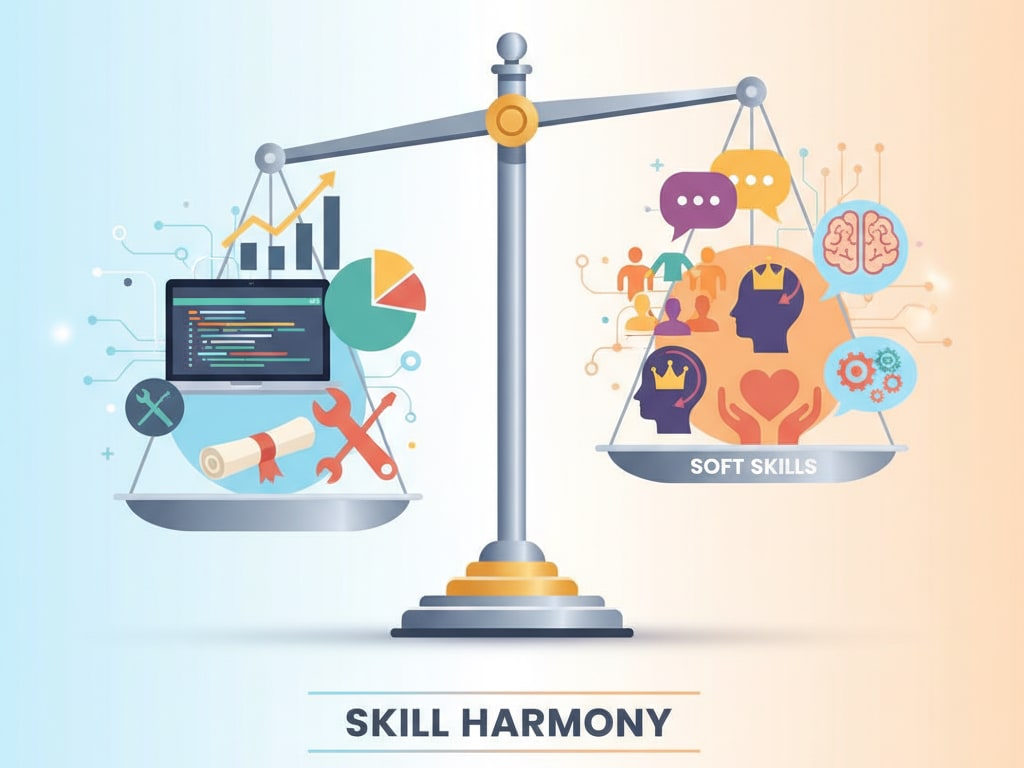
In today’s fast-changing work environment, success is no longer determined solely by technical knowledge or qualifications. While hard skills—the measurable, technical abilities—remain important, soft skills—the human and interpersonal abilities—have become equally crucial. Striking the right balance between these two types of skills is what truly sets professionals apart.
Understanding the Two Types of Skills
Hard skills are the technical abilities you acquire through education, training, or hands-on experience. Examples include coding, accounting, data analysis, medical procedures, or design software proficiency. They are tangible, measurable, and easy to demonstrate on a resume or during a job interview.
Soft skills, on the other hand, are personal attributes that help you interact effectively with others. These include communication, teamwork, leadership, problem-solving, adaptability, and emotional intelligence. Unlike hard skills, soft skills are often harder to measure but are critical for long-term career success.
Why Both Skills Matter
Hard skills get your foot in the door—they demonstrate that you have the technical ability to perform a job. However, soft skills determine how well you navigate the workplace, build relationships, and adapt to challenges. Employers increasingly value soft skills because they lead to better collaboration, higher productivity, and stronger leadership.
A software developer might be excellent at coding (hard skill), but if they struggle to communicate or collaborate with their team (soft skills), projects may suffer. Conversely, a professional with strong interpersonal skills but weak technical knowledge may struggle to execute tasks effectively. This highlights the importance of balancing both skill sets.
Key Hard Skills Across Industries
Hard skills vary depending on your field, but some common examples include:
- Technology & IT: Programming languages, software development, cybersecurity
- Healthcare: Medical procedures, diagnostics, patient care
- Business & Management: Data analysis, financial modeling, project management
- Creative Fields: Graphic design, video editing, copywriting
Hard skills are measurable, which makes them easier to train and certify. Certifications, courses, and practical experience are effective ways to strengthen your technical abilities.
Essential Soft Skills Every Professional Needs
Soft skills are more subtle but equally impactful. Here are some of the most valuable ones:
- Communication: Clearly conveying ideas and actively listening
- Teamwork: Collaborating effectively with colleagues
- Adaptability: Adjusting to changing circumstances
- Problem-Solving: Identifying solutions efficiently
- Emotional Intelligence: Understanding and managing your emotions and those of others
- Leadership: Inspiring and guiding others toward a common goal
Soft skills often determine whether someone can advance in their career, handle stress, and maintain productive relationships in the workplace.
How to Strike the Right Balance
Balancing hard and soft skills begins with self-assessment. Ask yourself:
- Which technical skills do I excel at?
- Which soft skills need improvement?
- Are there skills gaps that are holding me back professionally?
Practical Strategies:
- Develop Hard Skills: Take online courses, attend workshops, earn certifications, and gain hands-on experience in your field.
- Enhance Soft Skills: Practice communication, seek feedback, work in team projects, and engage in mentorship opportunities.
- Align Skills With Career Goals: Focus on skills that directly impact your current role and long-term aspirations.
- Continuous Learning: Both soft and hard skills require regular practice and refinement.
Balancing Skills in Different Careers
- Technology & IT: Coding alone isn’t enough. Effective collaboration and communication are essential for project success.
- Business & Management: Analytical skills combined with leadership and negotiation skills create impactful managers.
- Creative & Design: Creativity must be paired with teamwork and client communication to deliver results.
- Healthcare & Education: Technical expertise is vital, but empathy, patience, and interpersonal skills make professionals truly effective.
The Employer’s Role in Skill Development
Organizations can support balanced skill development by:
- Offering technical training and professional certifications
- Providing workshops and coaching for soft skills
- Encouraging mentorship programs and collaborative projects
- Creating a culture that values both technical expertise and emotional intelligence
When employers prioritize both skill types, employees are more engaged, productive, and motivated to grow.
Preparing for the Future of Work
The workplace is evolving rapidly. Automation, artificial intelligence, and emerging technologies are shifting the demand toward skills that cannot be easily replicated by machines. While hard skills may change with technology, soft skills—adaptability, emotional intelligence, and creativity—will remain essential.
To stay competitive, professionals must embrace continuous learning, refining both hard and soft skills to remain versatile and valuable.
Conclusion: Continuous Growth is Key
In the modern professional landscape, neither hard skills nor soft skills alone are sufficient for success. Striking the right balance requires self-awareness, intentional learning, and consistent practice. By developing technical expertise while nurturing interpersonal abilities, professionals can excel in their careers, contribute meaningfully to their teams, and adapt confidently to whatever the future of work brings.
Key Takeaway: Technical knowledge opens doors, but soft skills help you thrive inside them.
About the Creator
Keep reading
More stories from Ahmad Hassan and writers in Journal and other communities.
Employment Challenges and How to Overcome Them in Today’s Market
Introduction — Navigating a Competitive Job Market The job market in 2025 is fast-paced, dynamic, and more competitive than ever. Economic changes, technology, and shifting workplace expectations create challenges for both job seekers and employees.
By Ahmad Hassan4 months ago in Journal
Author’s Advice
If you would’ve asked me 20 years ago did I know I’d become a writer and an author, I would’ve said “nope, ain’t happening”. As fate would have it I did become an author and I can honestly say I’m loving it so far. It really does feel good to be a writer. I’ve learned a lot on this journey and I feel like with even me being as new to this world as I am, there’s some wisdom I need to share with every other aspiring author.
By Joe Patterson5 days ago in Journal
5 Methods to Make Money with Pinterest — Passive Income
If you search on YouTube or the internet, you will find how people use Pinterest and make thousands of bucks every month. You might be familiar with Pinterest, or you might use it to scroll down and get ideas. But Pinterest is much more than what you think.
By makelivingonline2 days ago in Journal




Comments
There are no comments for this story
Be the first to respond and start the conversation.