
Sleep Apnea and CPAP Machines
My experience with the two, so far

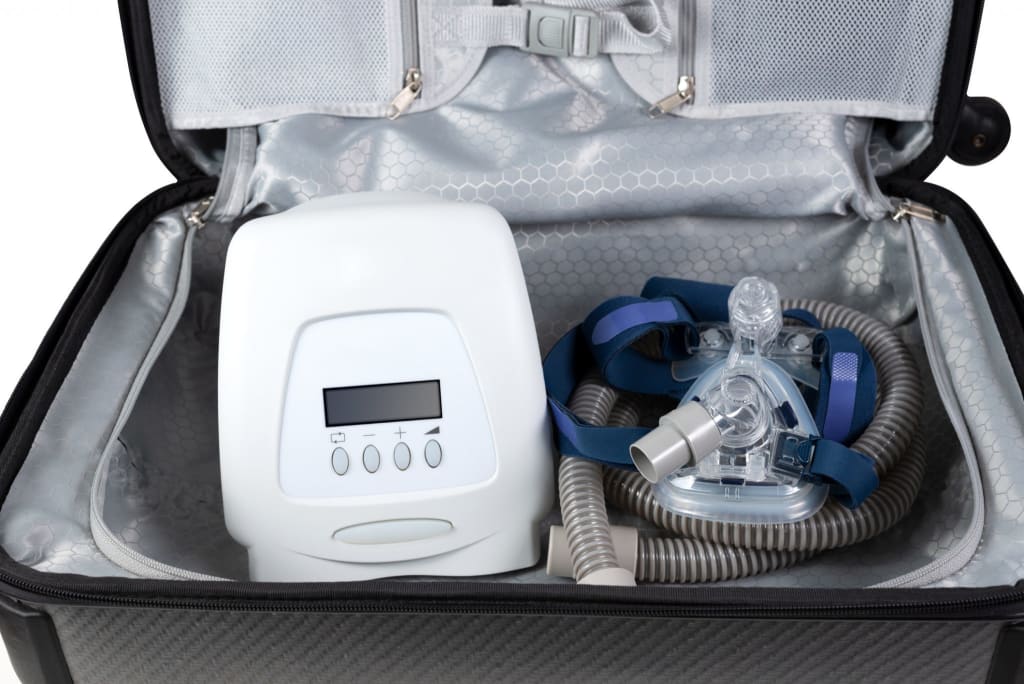
Last year, in July, I was diagnosed with severe obstructive sleep apnea. After nine months, I was finally able to see a sleep specialist. After only one appointment with her, I was referred for a continuous positive airway pressure (CPAP) machine. I started using it two and a half weeks ago, on May 5th. At first, despite waking up between one and three every morning, I felt rested. Now, I feel just as tired as before, even when I use it.
What is sleep apnea?
Sleep apnea is when a person stops breathing while they're asleep. There are many possible causes of it. In my case, my mouth is too crowded, according to the doctor. My tongue is physically too large for my mouth.
What is a CPAP machine and how does it help?
They push air into the person's nose, and sometimes mouth, even when they stop breathing.
Now, onto some stuff I have learned...
1. There are many possible reasons for having sleep apnea. It could be weight, as it is in many cases, but that's not the only cause.
2. The severity is based on how many times you stop breathing in your sleep, on average, per hour during the sleep study. My average was 35 times an hour and anything 30 or higher classifies as severe.
3. There are more mask options than a full face mask. If you don't breathe through your mouth, there are nose pillows as options. I, however, do breathe through my mouth, so I am stuck with the mask people imagine.
4. How long it takes for a difference in sleep quality varies from person to person. Some people have a difference right away while it takes months for others. Many people require using it for seven to eight hours a night, consistently, for a difference. My usage is almost every night for four to five hours. (I was told it doesn't have to stay on all night, just a minimum of four hours. Because of that information, when I inevitably wake up in the middle of the night, I take it off.)
5. There is actually an app that can be connected to your CPAP machine so you can see your own data. The app includes hours used, the average leakage through the mask, and events (such as not breathing) per hour.
6. When cleaning specific parts of the machine, it is best to use dish soap. Anything else can ruin it by causing the material to break down.
7. If your machine has a humidifier, distilled water is the only water that should be used in it. Any other water, including tap water, can cause mineral build up and ruin the machine.
8. Some people, after they start using a CPAP, can no longer sleep without it, after some time of course.
9. From what I was told, for the first 30 days, you can try unlimited masks until you find one that works for you.
10. Having a mask that isn't good for you can lead to the CPAP not working as well and more air leaking out during the night.
11. While the parts only need a thorough cleaning once a week, the mask and filter should be cleaned daily. The filter should be replaced once a month.
* * *
Thank you for reading. I plan on doing an update later on, after more time has passed. Hopefully, by the time I do an update, my sleep is better and I have a mask that doesn't try to leak while I'm sleeping.
If you enjoyed this or learned something, please feel free to subscribe, heart, and/or comment.
About the Creator
Rene Peters
I write what I know, usually in the form of poetry. I tend to lean towards mental health, epilepsy, and loss/grieving.
Keep reading
More stories from Rene Peters and writers in Journal and other communities.
These Are the Fastest-Growing Side Hustle Businesses of 2026
More and more people are launching side hustles, whether to supplement their incomes or as a way to lay the groundwork for a startup. Some 72 percent of workers in the U.S. rely on secondary income, according to a survey by MyPerfectResume. But some side hustles are growing faster than others.
By ELIA MWAPINGA2 days ago in Journal
What Is the Best Fire Extinguisher for a Car and Where Should You Store It?
Most drivers are concerned with maintenance such as changing oil filters, checking tire pressure and brakes. Nevertheless, a car fire extinguisher is one of the safety tools that is frequently disregarded. Fire of vehicles is infrequent but once it occurs, it can be transmitted rapidly. The availability of the right extinguisher can be of great help in the safety of passengers and property.
By Deborah Larson6 days ago in Journal
Guard Your Battery
Why are some people so attractive just by standing there? It’s not because they are "likable," but because they don’t need everyone to like them. I realized later that truly charismatic people allow themselves to be criticized, but they never criticize themselves. They never try to please the world; instead, the world stops to watch them.
By Emily Chan - Life and love sharing7 days ago in Poets


Comments
There are no comments for this story
Be the first to respond and start the conversation.