
Should You Edit, Rewrite, or Shelf Your Dusty Old Novel?
If you have that old book kicking around, here’s a few tips on how to decide what to do with it.


How do you feel about going back to your old work and trying to revise it?
You have that old book kicking around. You know the one. It’s that book you wrote a while ago that you’ve been meaning to get back to, but you just haven’t gotten around to yet.
Someone recently asked me this question; is it better to edit your old work, rewrite it, or throw it away?
It’s hard to decide what to do with your old books; should you just move on with other ideas and other projects? Which path you want to take depends on the project. It really varies by the state that your book is in and how committed you are to that old work.
Every book is different, but here are some of the questions I ask myself when trying to decide if I should edit, rewrite, or shelf a book.
1. Are there significant structural issues?
In my personal process of evaluating something, I first look at the characters and the plot. I try to see if the writing itself is salvageable. If there are really glaring issues, I’ll figure out if the pacing of the entire novel is terrible.
If it can’t be fixed by just moving things around or changing some events, then that’s when I err on the side of caution. These are problems that can’t be fixed by editing alone.
If the pacing, characters, and plot are all too far gone to be editable, that’s when have to decide if I want to rewrite the book or trash it.
It’s hard to decide to completely shelf a book. It’s hard to put it aside and say, “I wrote this but I’m not coming back to it.” Even so, sometimes you need to make that hard decision.
2. Can you fix the problems with editing?

Honestly, I’ve shelved pretty much everything I wrote up before I was 20. When I look at those older projects I wrote as a young teenager, I just know that there’s no going back. There are just too many structural problems across the board. It can’t be edited.
If you’re a young writer or a fledgling writer, this might be something that you’re struggling with. On the other hand, you might have a series or a book that you did have awesome ideas, and if you look at the ideas and the plot objectively not through the rose-colored glasses.
If the fundamental nuts and bolts of your writing seem solid, consider showing it to a willing editor who will sit down with you and go through the whole book. Have someone go through it and get their feedback on it.
I always recommend that you try to find critique partners who are outside of your immediate friend circle or family. If they are a close friend, make sure that they are that they will take off the kid gloves with you and give you harsh feedback.
Make sure it’s someone who is comfortable with giving you painful reality checks. You don’t want your friend who wants to support you to tell you that a novel is salvageable when in reality, you might be better of shelving it. If you really do not know if something is editable or if it needs to be completely rewritten, go to a fellow writer, a willing editor, whoever you can find who’ll look at your book.
3. Are you attached enough to the idea to commit the necessary time to rewrite it?
I look at my old book and ask myself if I still love the ideas and if I have faith in them. I then ask myself if there’s any way I could make those older ideas as good as something I could create now as a more experienced writer.
You need to take off the rose-colored glasses when you look at your old books. It’s easy to go, “Oh my God, I wrote this novel and it’s my baby! I’ve had this idea for years!”
If you didn’t take those glasses off yet, take a hard look at your novel and ask yourself the following. How would this idea stand up versus other novels on the market in your genre? If you’re certain that the ideas are still good, then it’s something worth writing.
Put your best foot forward if you have to rewrite a lot of the book. Rewriting is a massive commitment; frankly, I think it takes longer than writing the first draft.
4. Finally, ask yourself this; is it really worth the effort?
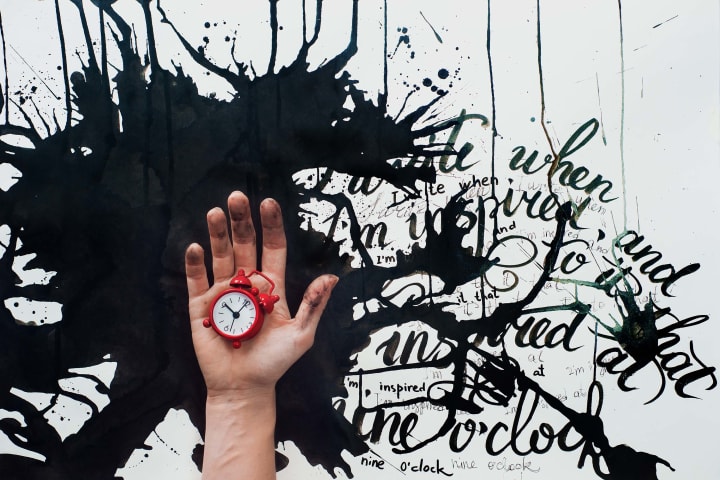
Some old projects are just too far gone. Rewriting a book is a lot of time and effort that you just might not have.
If you have this idea and you’re fond of it because you came up with it when you were a kid, there's a good chance it needs a lot of work. If you’ve been nursing it for a decade or more, look at it closely. Really try to ask yourself if you are fond of the idea for its nostalgia or for its literary merit. It’s not easy, but it’s an essential step.
I have several books that I finished when I was a very, very young teenager. They are done, they are novel-length works of literature, but they’re complete messes. Some of them, I still like the ideas, and others, I have acknowledged that the ideas were not good, and they would probably never be published.
In the worst-case scenario, you can always keep a document of the core premises of the books that you’ve shelved. Keep track of the ideas that you really loved in those books and see if maybe something new can be born of those ideas down the road.
Nevertheless, always hold on to your old manuscripts.
Don’t burn them or delete them forever. Hold on to them so you can look back and see how far you’ve come. We’re all on a journey to grow and improve. Seeing the milestones you were at along the way can be motivating when you’re stuck in a rut of writer’s block.
If you wrote the book when you were very young or just very green, you may look back on it one day and discover that there’s an idea or a character that you could reinvent or reuse someday. So always save your work, even if it’s on the shelf.
If you’re able to edit your book, fantastic, work hard to edit and make it the best it can possibly be. If there are too many structural issues for editing to fix, prepare to rewrite. Sit down and put the time in. But if it really can’t be saved, you need to move on.
It’s part of the writing process. It hurts, but you’ve got to be honest with yourself to keep growing as a writer. Pouring over the same old projects that can’t be saved is only going to cost you time that you could spend bringing new ideas to life.
About the Creator
Leigh Victoria Phan, MS, MFA
Writer, bookworm, sci-fi space cadet, and coffee+tea fanatic living in Brooklyn. I have an MS in Integrated Design & Media and an MFA in Fiction from NYU. I share poetry on Instagram as @SleeplessAuthoress.
Keep reading
More stories from Leigh Victoria Phan, MS, MFA and writers in Journal and other communities.




Comments
There are no comments for this story
Be the first to respond and start the conversation.